Tag: China
-
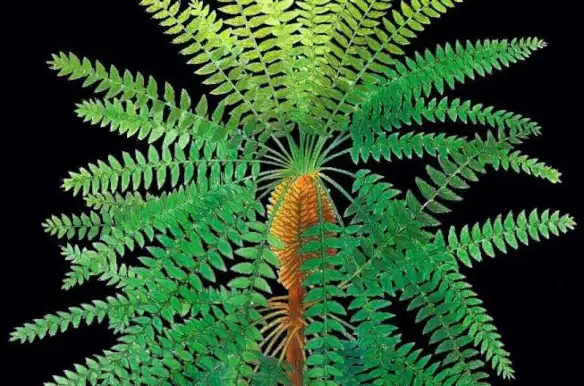
Phys.org: ‘Pompeii of prehistoric plants’ unlocks evolutionary secret: study
Phys.org has a story about some Pennsylvanian fossil plants from China. The species of plants, Paratingia wuhaia, which belong to a group called Noeggerathiales, were highly successful. They survived from about 325 million years ago in the Pennsylvanian Period until the Permian Mass Extinction about 251 million years ago. At one time, they were thought…
-
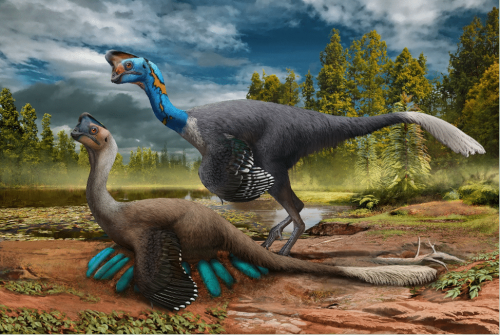
Researchers Announce World’s First Dinosaur Preserved Sitting On Nest of Eggs With Fossilized Babies
The Carnegie Museum of Natural History has announced an amazing dinosaur find. The fossils are of an adult oviraptorid theropod dinosaur sitting on a nest of eggs, The eggs include fossilized baby dinosaurs. This specimen was found in the Jiangxi Providence of southern China. The animal lived about 70 million years ago. Ironically, oviraptors, whose…
-
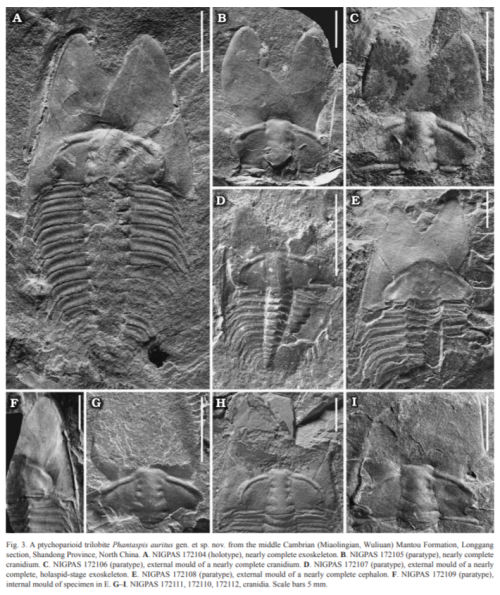
Trilobite Tuesday #28: A new middle Cambrian trilobite with a specialized cephalon from Shandong Province, North China
Acta Palaeontologica Polonica has a that describes newly discovered trilobites from the Middle Cambrian of Northern China. These trilobites had a strangely lobed cephalon that suggests “rabbit ears”. Actually, the species name Phantaspis auritus comes from the Latin aurītus, having ears; in reference to the cranidium having a pair of long “ears”. Trilobites achieved their maximum generic…
-
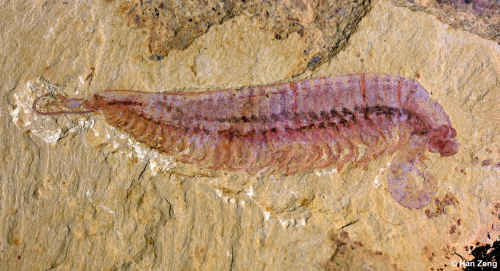
SciTechDaily: Five-Eyed 520-Million-Year-Old Fossil Reveals Arthropod Origin
SciTechDaily has a story about arthropod origins. Researchers from the Nanjing Institute of Geology and Palaeontology of the Chinese Academy of Sciences (NIGPAS) have revealed a new shrimp-like fossil with five eyes. The animal, called Kylinxia, lived about 520 million years ago in what is now China’s Yunnan Province. The paper describing this discovery appeared…
-

SciNews: New Pterosaur Species Unearthed in China
Sci-News has a story about a new pterosaur discovery in China. This new species is called Ordosipteris planignathus. It lived about 110 -120 million years ago during the Cretaceous Period in what is now Inner Mongolia, China. A paper describing this animal appeared the journal China Geology.
-

Trilobite Tuesday #18: Early trilobites had stomachs
Phys.org has a story about some interesting details of trilobite digestion. A paper, published in 2017 in the journal PLOS ONE, revealed that trilobites had a stomach structure about 20 million years earlier than what had been known. The exceptionally preserved specimens of Palaeolenus lantenoisi used in the study lived about 514 million years ago during the Cambrian. They are…
-

A ‘Jackalope’ of an ancient spider fossil deemed a hoax, unmasked as a crayfish
Phys.org has a post about a crayfish masquerading as a spider. It seems someone painted legs on a poorly preserved crayfish fossil from the Lower Cretaceous Yixian Formation of China. You can read about their detective work in a paper published in the journal Paleoentomology. The locals sold the fossil to scientists at the Dalian…
-
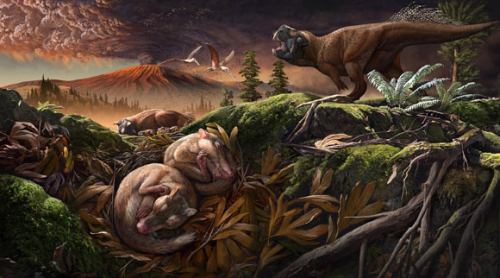
New Cretaceous-Period Mammal Unveiled
Sci-News has a story about a new mammal that lived along side the dinosaurs during the Mesozoic Era. The animal, named Origolestes lii, is part of the famous Jehol Biota, which dates to the Cretaceous Period 133 to 120 million years ago. This biota was a terrestrial and freshwater ecosystem found across the Chinese provinces…
-

SciNews: Devonian Fossil Forest Unearthed in China
SciNews has a post about a Devonian aged fossil forest discovered in China. The fossilized forest dates to 360 million years ago and was found near Xinhang in China’s Anhui province. It is the oldest known fossil forest in Asia. A paper describing the fossils appeared in the journal Current Biology. The Xinhang forest covered…
-
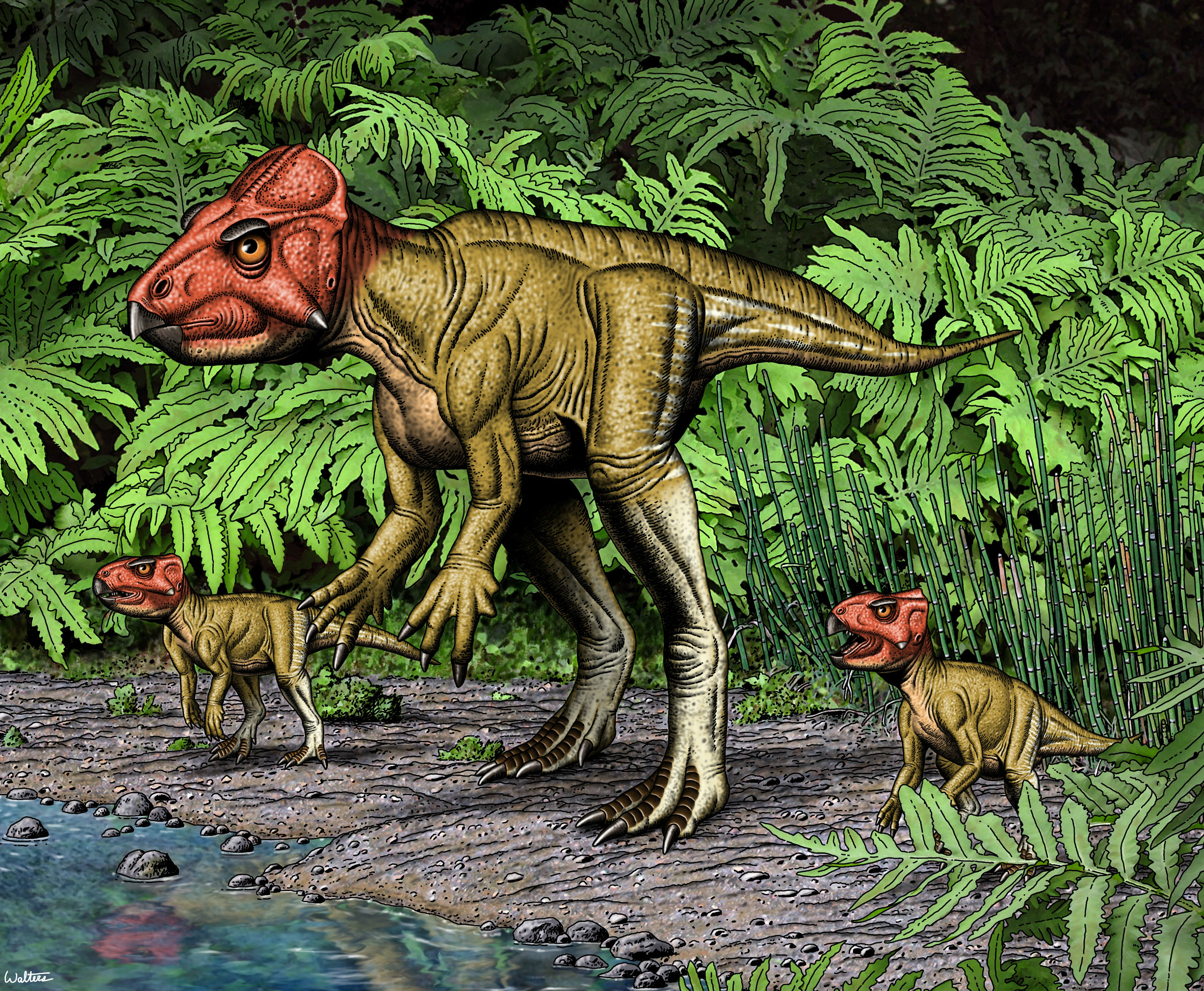
SciNews: Small horned dinosaur from China, a Triceratops relative, walked on two feet
SciNews has an article about a relative of the iconic dinosaur Triceratops. Auroraceratops rugosus lived about 115 million years ago in China’s Gansu Providence. It was discovered in 2005. And, in the intervening years, about 80 individuals have been found. Some recent analysis has led to the theory that Auroraceratops walked on two feet instead…
-

Newly Discovered Bat-Like Dinosaur Reveals the Intricacies of Prehistoric Flight
The Smithsonian has a story about a new “bat-like” dinosaur from China. This animal lived about 160 million years ago in the middle Jurassic. It’s called Ambopteryx longibrachium and it’s seems to be related to Yi qi, which was described back in 2015. The description of Ambopteryx appeared recently in the jounal Nature. About 160…
-
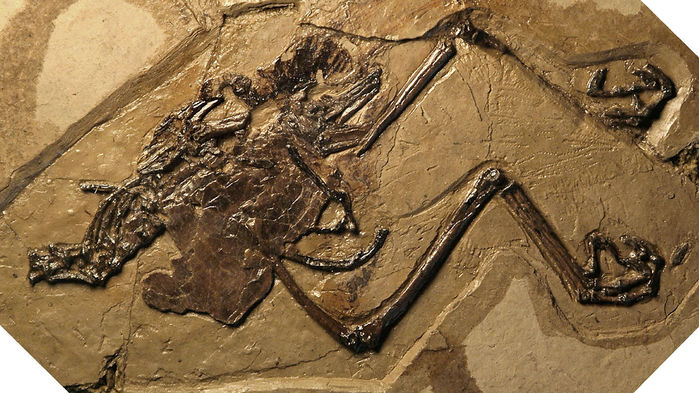
Unlaid egg discovered in ancient bird fossil
BARBARA MARRS ScienceMag has a post about the discovery of a fossil bird with an unlaid egg. The original paper appeared in the journal Nature Communications. For the first time, researchers have found an unlaid egg inside a fossilized bird. The find—belonging to a sparrow-size flyer that lived in northwestern China 110 million years ago—is…
-
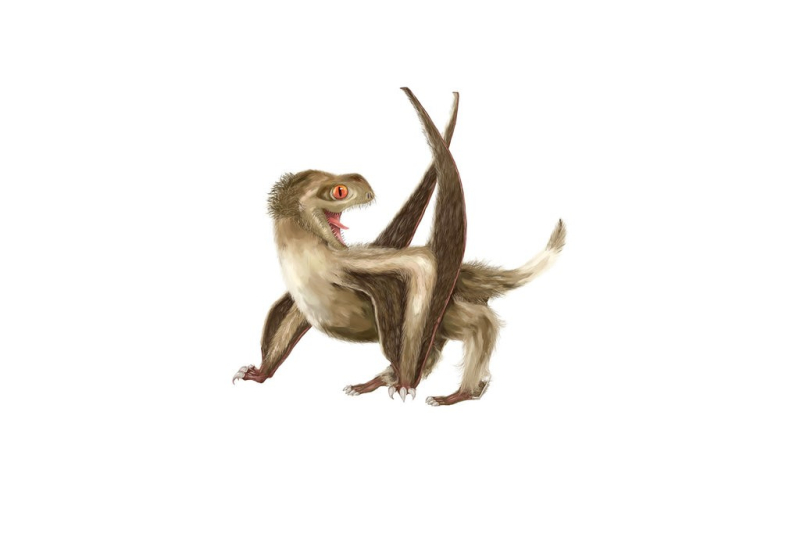
Feathers and Fur Fly Over Pterosaur Fossil Finding
An artist’s rendering of a short-tailed pterosaur. Scientists say they were covered with fuzzy, fur-like insulating structures over their heads, torsos, limbs and tails. And on their heads and wings, three types of curved, thread-like fibers resembling modern feathers.CreditCreditYuan Zhang/Nature Ecology & Evolution The NY Times Trilobites blog has a story about a new pterosaur…
-
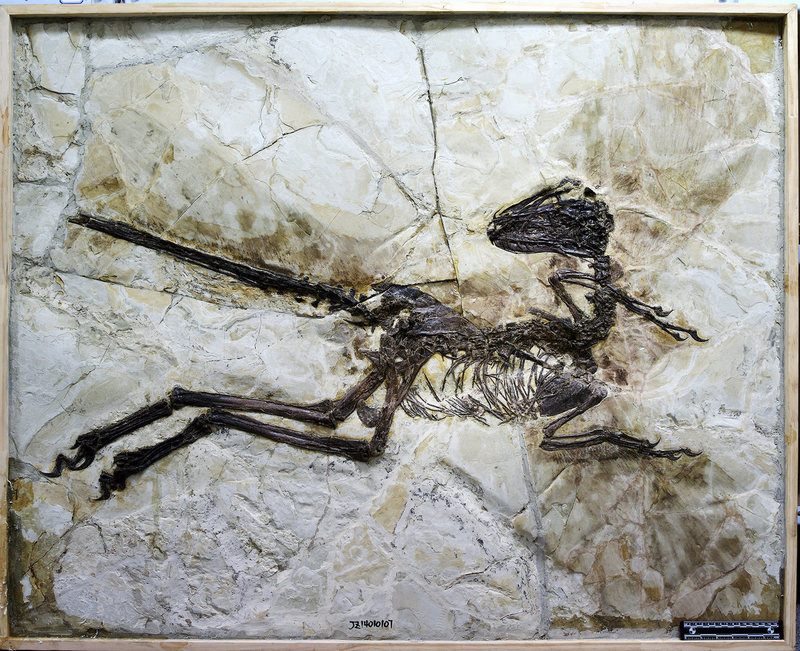
Paleontologists Are Still Digging Into the Origins of the ‘Chinese Pompeii’
AtlasObscura has an interesting story about the “Chinese Pompeii”. The Jehol Biota has long been known for its amazing preservation. WHEN SOMETHING DIES, NATURE ENSURES that its remains won’t stay intact. Microbes eat away at the soft tissue, and wind, rain, rivers, oceans, and scavengers shuffle around the hard segments of the corpse. As eons…
-
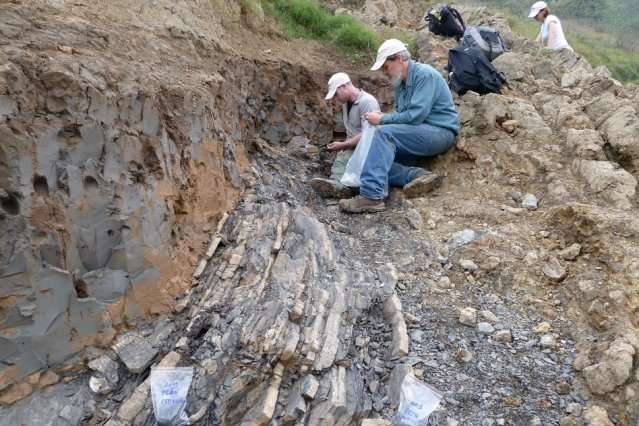
End-Permian extinction, which wiped out most of Earth’s species, was instantaneous in geological time
Phys.org has a story about new research into the Permian Mass Extinction. The research was detailed in a paper in the GSA Bulletin. The study was a collaboration between scientists at MIT, the Chinese Academy of Sciences, the National Museum of Natural History, and the University of Calgary. For over two decades, scientists have tried…
-
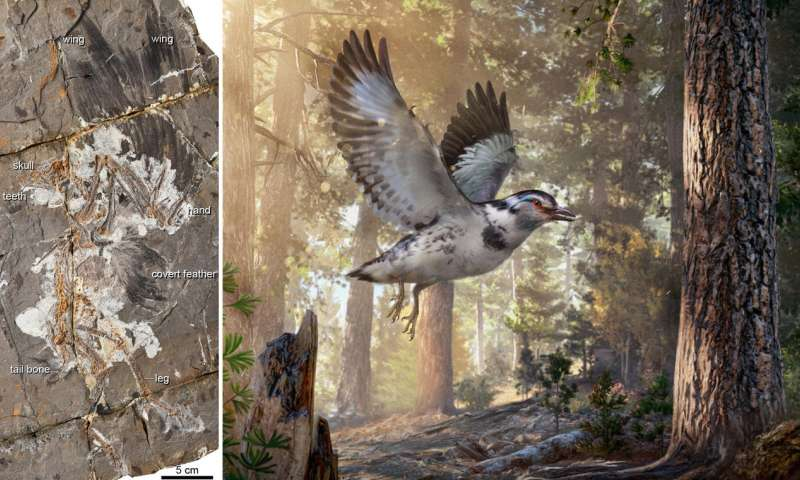
Chinese Cretaceous fossil highlights avian evolution
Phys.org has a story about a newly identified extinct bird species. The 127 million year old bird lived in what is now northeastern China. Its name is Jinguoforis perplexus and it provides new information about avian development during the early evolution of flight. Details are provided in a paper published in PNAS. Drs. Wang Min,…
-
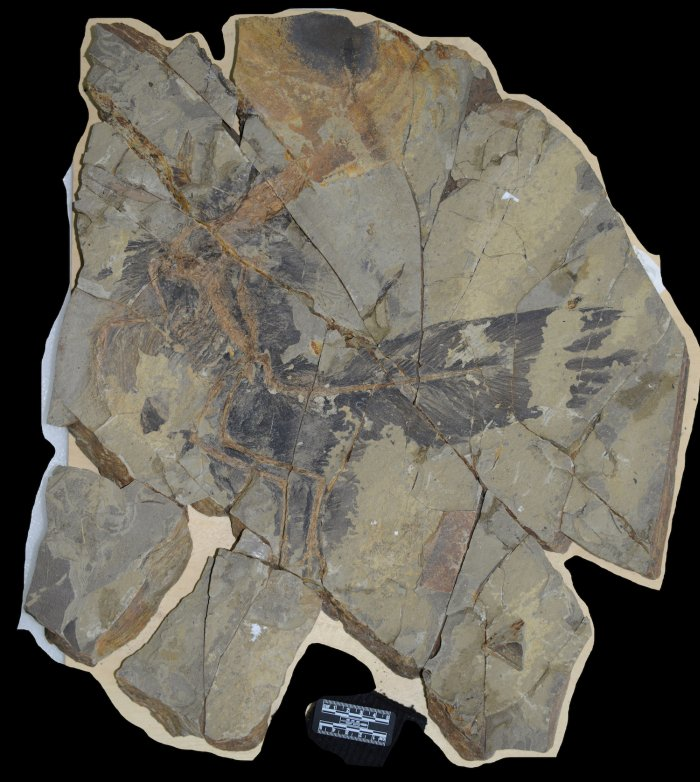
Stunning Fossil Discovery Reveals a New Dinosaur With Iridescent Feathers
ScienceAlert has a story about the discovery of a dinosaur with iridescent feathers. The new dinosaur named Caihong juji, which means “rainbow with a big crest” in Mandarin, lived about 161 million years ago in China, during the Jurassic period. The research appeared in the journal Nature. “Iridescent colouration is well known to be linked…
-
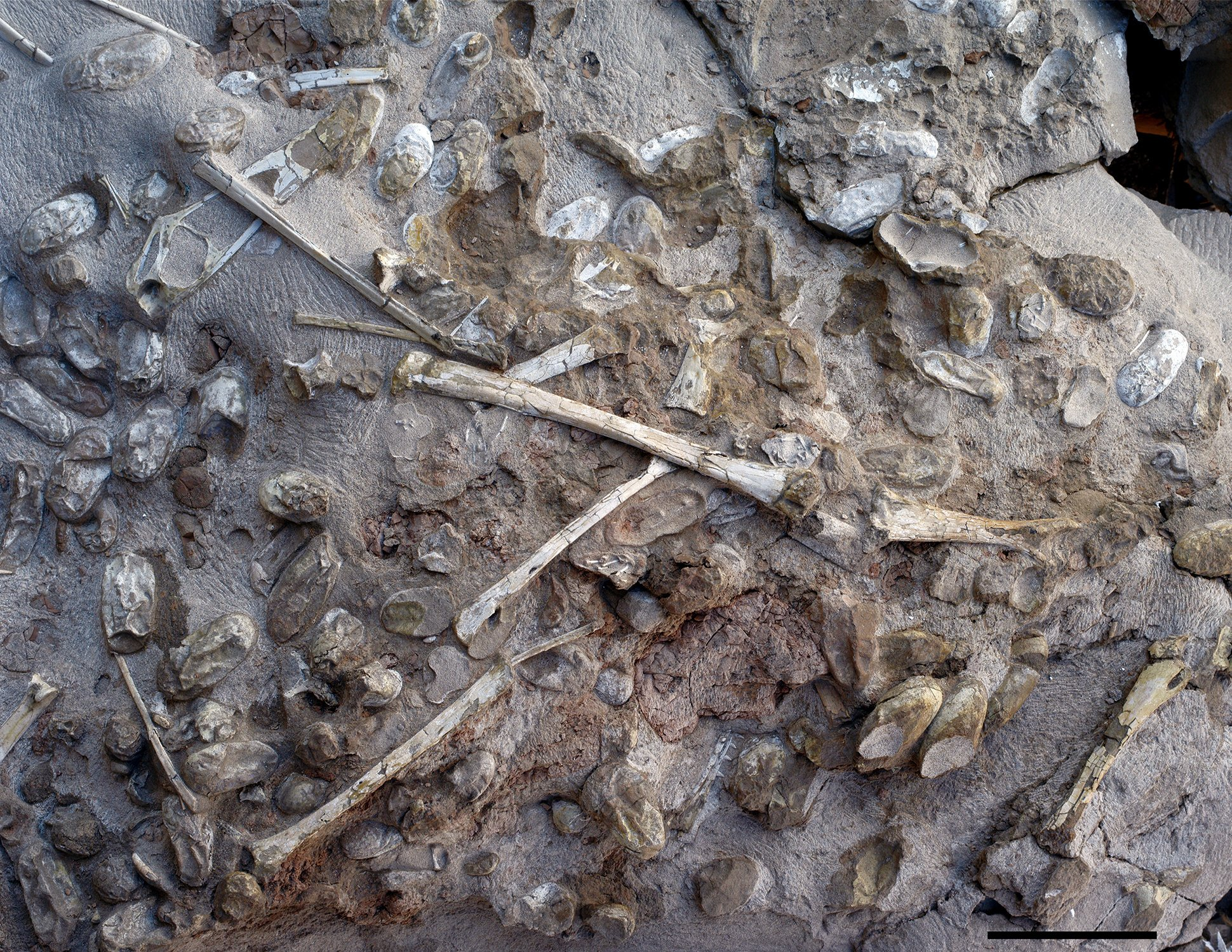
NY Times: Hundreds of Fossilized Pterosaur Eggs Uncovered in China
The New York Times’ Trilobite blog has a story about the discovery of a more than 200 fossilized Pterosaur eggs. The species of pterosaur is known as Hamitpterus tianshanensis and it lived in the early Cretaceous period in what is now north western China. Xiaolin Wang discovered the eggs in a 120 million year old…
-
3,000 Yr. Chinese Fruit Cellar
Via XinHua: Chinese archeologists have found an ancient fruit cellar containing well-preserved apricot and melon seeds from more than 3,000 years ago in today’s Shaanxi Province. The cellar was a rectangular pit about 105 cm long, 80 cm wide and 205 cm deep, said Dr. Sun Zhouyong, a researcher with the Shaanxi Provincial Institute of…
-
October 23, 2010
Do you know about the series of exploratory missions sent across the world in 1421? Come and learn more on Saturday night at 7:30 as we view the evidence of China’s early discoveries.
