Tag: China
-
Behold, The World’s Oldest Amber – a Record of a World 385 Million Years Ago
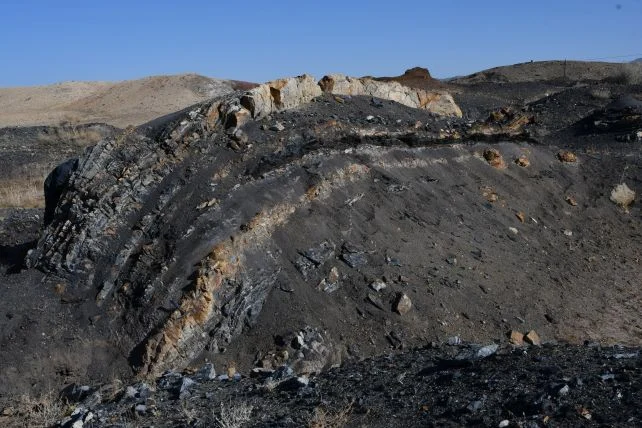
Science Alert has a story about the discovery of the oldest known amber. The amber dates to the Middle Devonian Period, some 385 mullion years ago and about 65 million years older than the previous record holder. Amber is fossilized tree resin, so land plants needed to evolve before amber was possible. This particular amber…
-
Early Triassic Cyclidan Crustacean Had Powerful Jaws
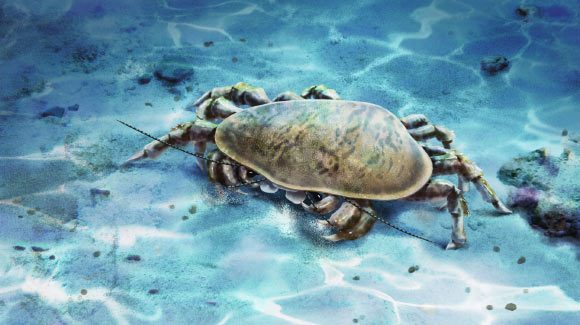
Sci-News has an article about a distinctive, but enigmatic, group of arthropods called Cyclidans. Cyclidans appeared during the Carboniferous and hung around until the Late Cretaceous.
-
2026 ESCONI Gem, Mineral, and Fossil Show – Preview #22: Valentinite after Stibnite on Barite
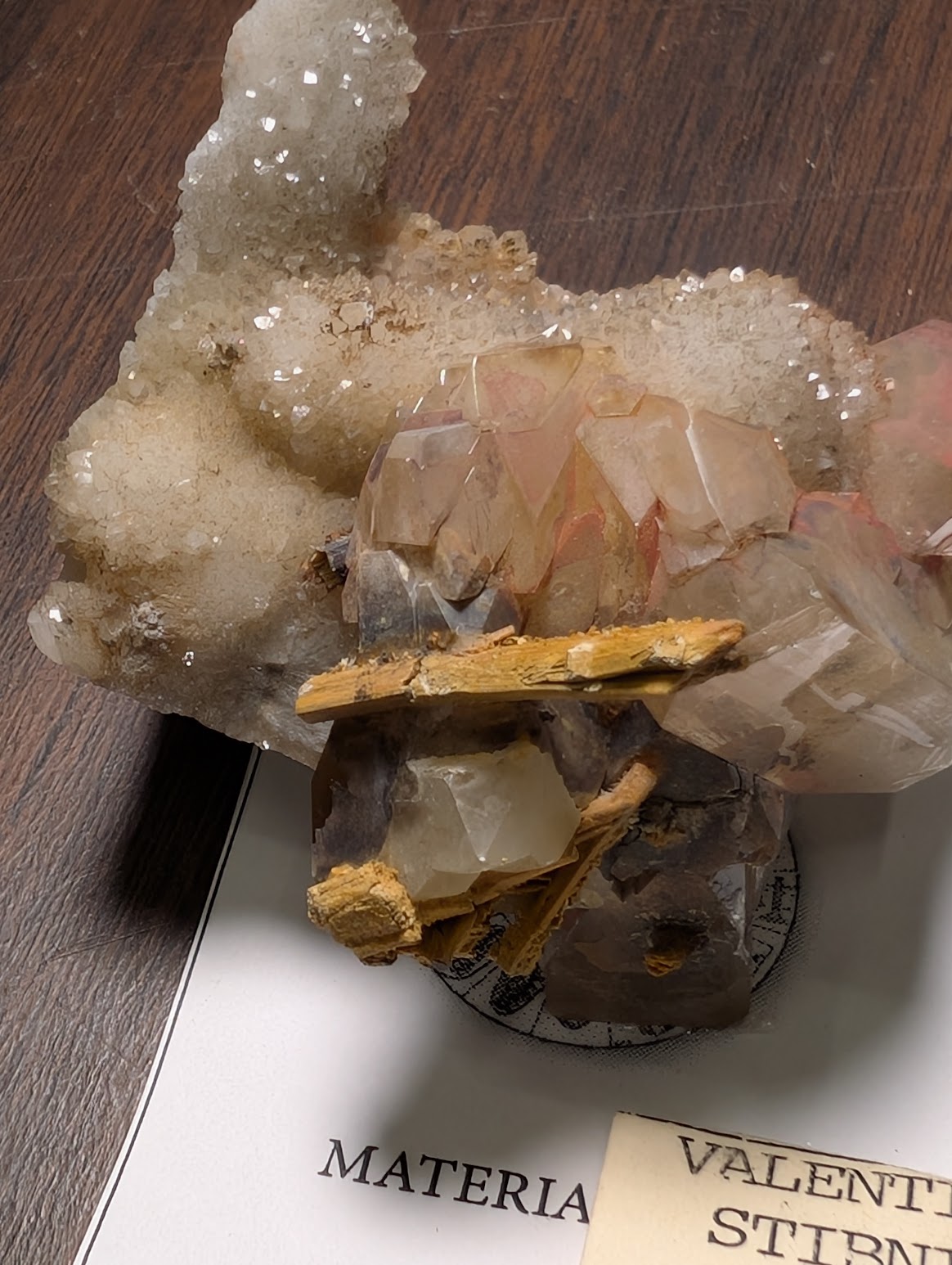
How about this beautiful specimen of Valentinite after Stibnite on Barite? It was collected from the Xikuangsthan Mine in Lengshuijiang, Hunan Province, China. Come on out and see it close up in less than 2 days!
-
Stunning Fossil Site Reveals Life Rebounding After Major Extinction Event
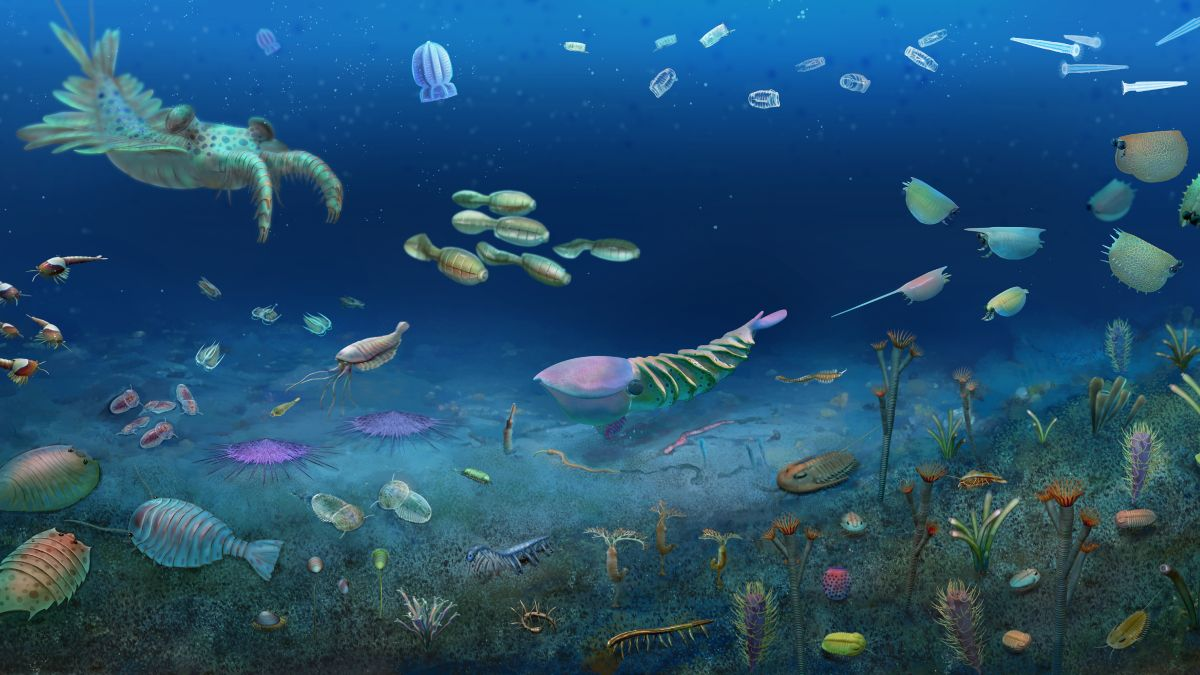
Science Alert has a story about the discovery of a new Cambrian lagerstatte in China. The site preserves an entire ecosystem in stunning detail. There are about 40 Cambrian sites worldwide that exhibiting exquisite preservation of rarely preserved, non-mineralized soft tissue. Add this newly discovered 512 million years old fossil site in Hunan, South China, named…
-
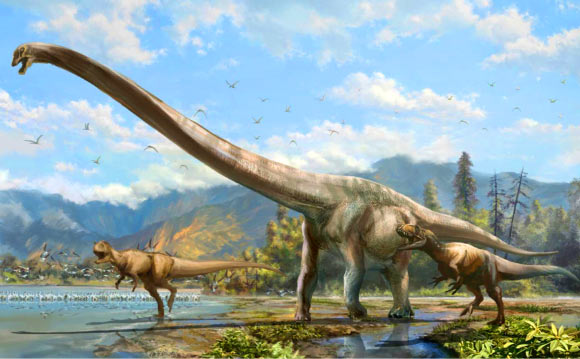
New Species of Jurassic Herbivorous Dinosaur Discovered in China
SciNews has a story about the discovery of a new species of eusauropod. Jinchuanloong niedu lived during the Middle Jurassic Period some 165 million years ago. The fossil bones were found near Jinchang city, Gansu province, northwestern China. The specimen includes of a nearly complete skull with mandible, five cervical vertebrae and 29 caudal vertebae. …
-

Refuge from the worst mass extinction in Earth’s history discovered fossilized in China
Live Science has an interesting piece about refugia during the “Great Dying”. The End Permian mass extinction was Earth’s worst with an an estimated 80% of life going extinct. A new paper “Refugium amidst ruins: Unearthing the lost flora that escaped the end-Permian mass extinction” in the journal Science Advances, describes a refuge from the…
-

125-Million-Year-Old Scorpion Fossil Uncovered in China
SciNews has a story about a 125 million year old scorpion. The amazing fossil was discovered in the Yixian Formation at Heishangou village, Chifeng city, Nei Mongol, China. The fossil animal has been named Jeholia longchengi and dates to the early Cretaceous Period. The paper “First Mesozoic scorpion from China and its ecological implications” was…
-

2025 ESCONI Gem, Mineral, and Fossil Show – Preview #18: Green Fluorite from China
This is the preview post #18 for the 2025 ESCONI Gem, Mineral, and Fossil Show Live Auction. The ESCONI Gem, Mineral, and Fossil Show for 2025 will be held on March 15th and 16th at the DuPage Fairgrounds in Wheaton, IL, which is the same location as last year. All details can be found here.…
-
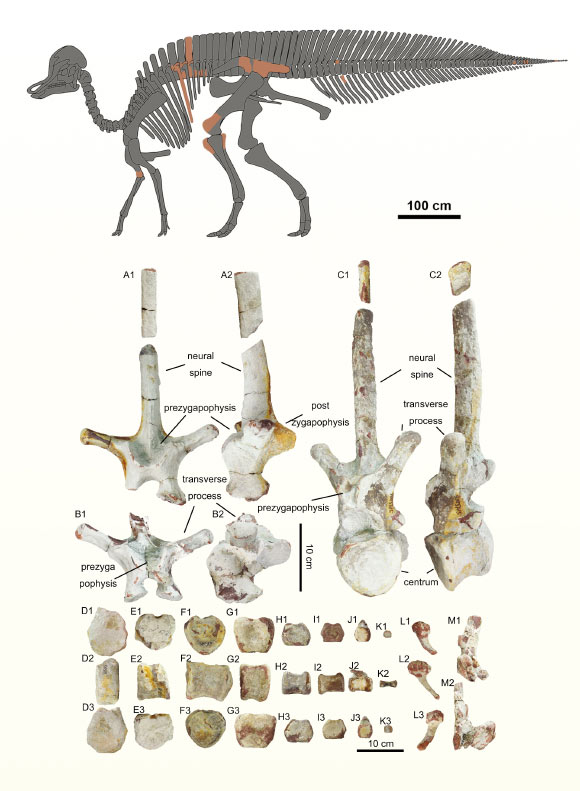
New Duck-Billed Dinosaur Unearthed in China
SciNews has a story about the discovery of a new dinosaur in China. The unnamed animal lived between 70 and 67 million years ago during the late Cretaceous Period, in what is now the Sanshui Basin in the northwestern part of the Pearl River Delta in South China. It represents the first lambeosaurine known from…
-

PBS Eons: What Killed These Sleeping Dinosaurs?
PBS Eons has a new episode. This one is about the fossils of Liaoning in northwestern China… amazingly, beautifully preserved dinosaurs that give us insight into dinosaur and bird evolution. Since the 1990s, paleontologists have been pulling 125-million-year-old complete dinosaur skeletons from the rocks of the Lujiatun in Northwestern China, most seemingly posed in perfect…
-

World’s Largest Gold Deposit Found, Worth Over US$80 Billion
(bodnarchuk/Getty Images) Science Alert has a story about the discovery of a huge gold deposit in China. The deposit may contain 1000 metric tons (1,100 US tons) and is thought to be the largest ever found. It’s located in the northeast Hunan county of Pingjiang at a depth of around 2 kilometers. The Geological Bureau…
-

Paleontologists Discover Dinosaur Fossils in Hong Kong for the First Time
Smithsonian Magazine brings news of the first discovery of dinosaur fossils in Hong Kong. The fossils were identified as a “large, aged dinosaur”. They were found on the tiny uninhabitied Port Island. The animal lived during the Cretaceous Period. China—along with Argentina, Canada and the United States—is one of the main geographical regions for identifying…
-

Dinosaurs unearthed in China may have ended with a collapse, not a catastrophe
NPS has news of an interesting new theory of how a group of dinosaurs were preserved in China. Recent research offers a new perspective on the preservation of dinosaur fossils in China’s Yixian Formation, often dubbed the “Chinese Pompeii.” Previously, the exceptional preservation of these Cretaceous-period fossils was attributed to periodic volcanic eruptions over a…
-
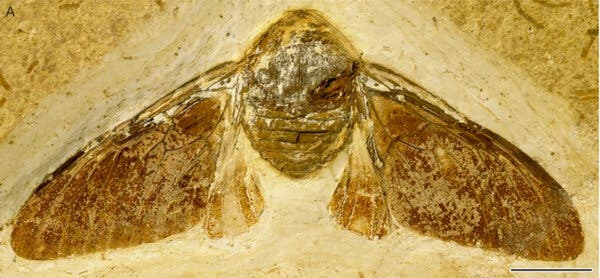
The Early Bird Got the Cicada, Then an Evolutionary Air War Started
The New York Times has a story about the evolution of flight in cicadas. New research published in the journal Science Advances found that cicadas likely evolved sleeker and more powerful wings due to the existential threat posed by birds. The researchers, including Chunpeng Xu a scientist at the Nanjing Institute of Geology and Palaeontology…
-

Paleontologists Discover Massive Dinosaur Tracks in China, Hinting at One of the Largest Known Raptors
Smithsonian Magazine has a post about fossil tracks of one of the largest known raptors. The tracks were found on what was once a muddy river plain in what is now southwestern China. The dinosaur, named Fujianipus (meaning “foot of Fujian”) yingliangi, lived about 96 million years ago during the middle Cretaceous Period. The footprints were discovered during…
-
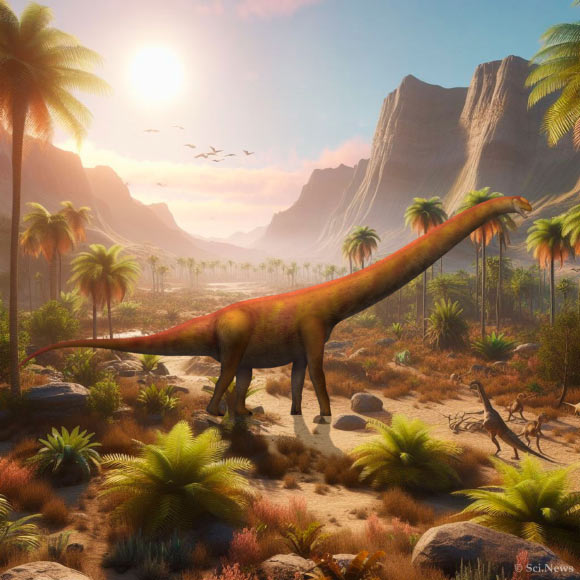
New Species of Titanosaur Unearthed in China
SciNews has a story about the discovery of a new Titanosaur. The animal, Jiangxititan ganzhouensis, lived between 72 and 66 million years ago during the Cretaceous Period. The fossils were found in the Nanxiong Formation near Tankou Town in Ganzhou City, the Chinese province of Jiangxi, which is commemorated in the name. J. ganzhouensis is…
-

Three-eyed distant relative of insects and crustaceans reveals details of early animal evolution
Phys.org has a story about the evolution of insects and crustaceans. Kylinxia zhangi is an early arthropod related to insects and crustaceans. It lived about 520 million years ago during the Cambrian Period. It was part of the famous Chengjiang fossil locality, which is located in the Yunnan Province in southern China. A team…
-
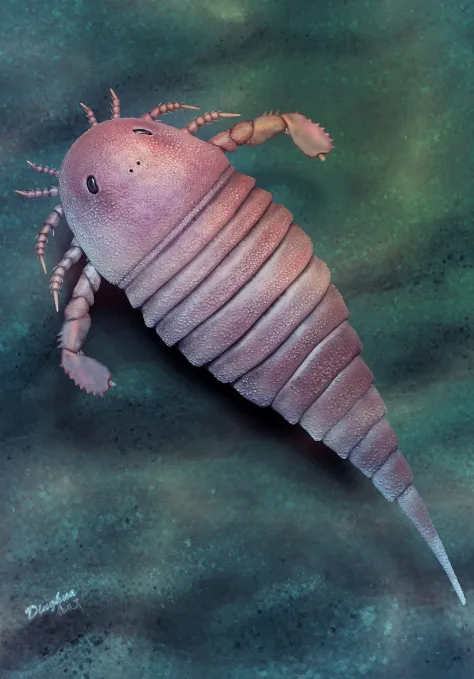
Earliest sea scorpion from China found in end-Ordovician Anji Biota in Zhejiang
Phys.org has a story about sea scorpions. Eurypterids are iconic animals of the Paleozoic. They first show up in the fossil record during the Darrowillian stage of the Ordovician 467 million year ago and go extinct at the end Permian mass extinction event about 250 million years ago. Now, a new paper published in the…
-

A Unique Discovery: Researchers Have Uncovered an Ultra-Rare Piece of Evidence That Dinosaurs Ate Mammals
SciTechDaily has a story about the diet of dinosaurs. Microraptor zhaoianus was a small bird like dinosaur that lived between 120 and 125 million years ago in the early Cretaceous Period in what is now northeastern China. A particular specimen, described in a recent study in the journal Vertebrate Paleontology, was found to have eaten a…
-
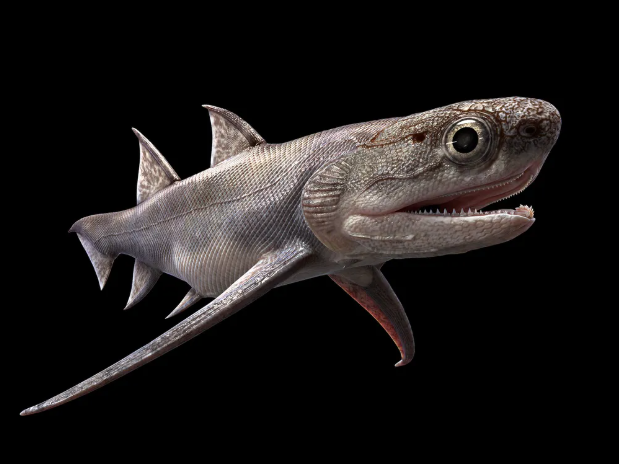
Haul of Fossil Fish Pushes Back the Origin of Teeth and Jaws
Smithsonian Magazine has a post about some amazing fish fossils. A series of papers published in the journal Nature shed light on the evolution of teeth and jaws. The discovery of these fossil fish from the Silurian of China has pushed back the oldest jawed fish to about 436 million years ago. Previously, the oldest…
-
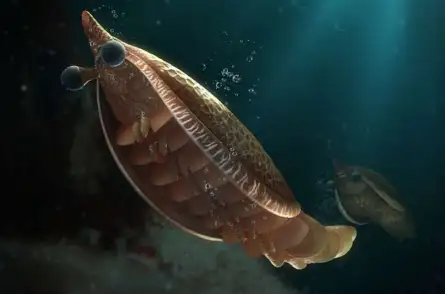
New fossil reveals origin of arthropod breathing system
Phys.org has a story about a new Cambrian arthropod. Erratus sperare was discovered in the Chenjiang Fossil Site in Yunnan, China. That site dates to about 520 million years ago during the Cambrian Period. The researchers were looking for evidence of the evolution of biramous limbs from specialized flaps. In both cases, the limbs are…
-

NYT: How 2 Pterosaurs’ Last Meals Ended Up in the Fossil Record
Two pterosaur fossils from China dating to the Late Jurassic, with green arrows indicating the pellets; the yellow arrows indicate fish scales.Credit…Jiang et al., Philosophical Transactions of the Royal Society B, 2022 The New York Times Trilobite column has a story about some Chinese pterosaurs. A paper in the journal Philosophical Transactions of the Royal…
-
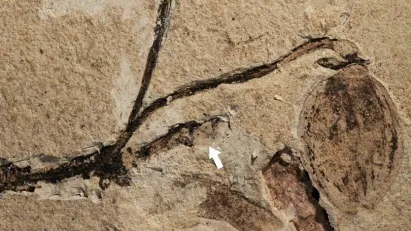
164 million-year-old plant fossil is the oldest example of a flowering bud
LiveScience has a story about the oldest known example of a flower bud. Researchers in China have discovered a fossil flower bud from 164 million years ago. The new plant species, Florigerminis jurassica, was found in Inner Mongolia. The description was published in the journal Geological Society of London. There are two main types of…
-
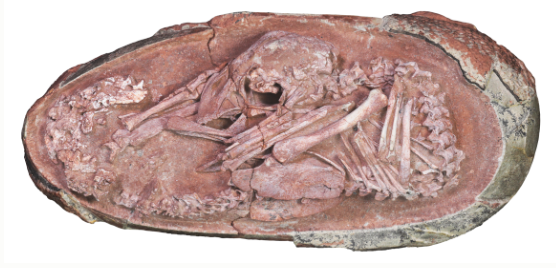
Breathtaking Fossil of Baby Dinosaur Tucked in Its Egg Yields New Evolutionary Clues
Nature’s Science Alert has a story about a stunning dinosaur fossil. Found in China, a oviraptor egg has a baby dinosaur preserved in breathtaking detail. The egg dates to between 72 and 66 million years ago. The fossil was described in a paper in the journal iScience. A rare and exquisitely preserved dinosaur embryo tucked…
-
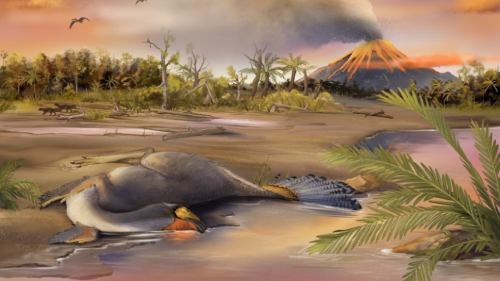
These 125 million-year-old fossils may hold dinosaur DNA
LiveScience has an article about the potential discovery of the remnants of dinosaur DNA. A study published in the journal Communications Biology looked at fossilized cartilage from a Caudipteryx, which was a feathered, peacock-like dinosaur that lived about 125 million years ago in what is now China. The study’s researchers found what appears to be…
-

Ancient dog-size sea scorpion unearthed in China
LiveScience has a story about the recent discovery of a Euryperid. Eurypterids were the apex predators of their time. This one, Terropterus xiushanensis, lived about 435 million years ago during the lower Silurian in what is now modern-day China. It was described in a paper in the journal Science Bulletin.
-

Volcanic Eruptions Helped Dinosaurs Dominate Planet Earth
The New York Times Trilobites column has an article about volcanic eruptions during the Triassic Period. Recently, a paper published in the Proceedings of the National Academy of Sciences describes striking evidence that volcanoes helped dinosaurs spread across the globe during the Triassic Period about 234 million years ago. It has long been debated what…
-

Thick-shelled turtle egg with embryo still inside from the Cretaceous period found in China
Phys.org has a story about the discovery of a turtle embryo in a fossilized egg. The fossil egg was found in China’s Henan Province and dates to the Cretaceous Period. The egg was described in a paper in the journal Proceedings of the Royal Society B. A team of researchers affiliated with several institutions in…
-

Paleonursery offers rare, detailed glimpse at life 518 million years ago
Phys.org has a story about a newly discovered fossil Lagerstatte. A paper published in Nature details the new deposit, which is located near Kunming, China. It dates to the middle Cambrian about 518 million years ago, which is same age as the Chengjiang locality. For reference, the Burgess Shale dates to about 508 million years…
-

Inverse: What Did Dinosaurs Look Like? An Unlikely Team Is Debunking Old Beliefs
Inverse has an interesting story about an effort to recreate models that show what dinosaurs really looked like. The effort is a combination of paleontology and paleoart. The work is based on a special fossil of Psittacosarurs discovered in China decades ago. That specimen had very fine preservation, included preserved soft tissues like skin and…

