Tag: Canada
-
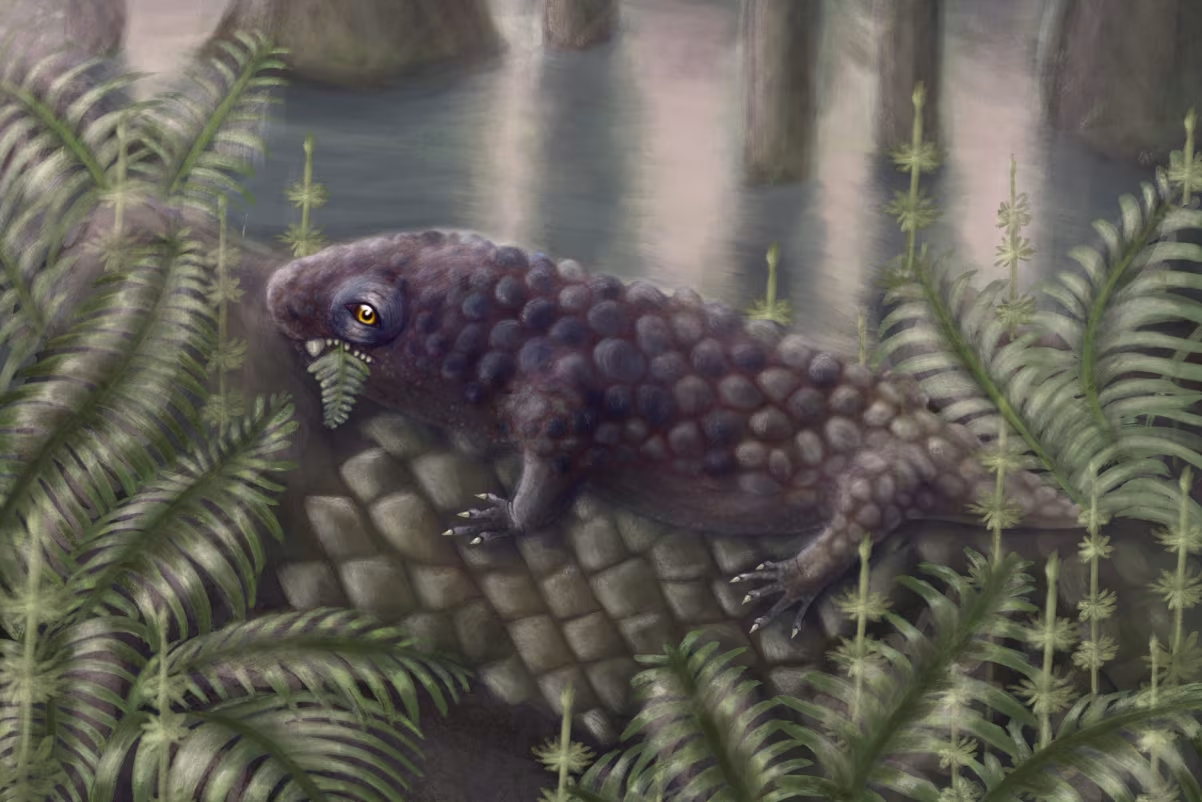
Mazon Monday #309: Herbivory is Older Than We Thought!
This is Mazon Monday post #309. What’s your favorite Mazon Creek fossil? Tell us at email:esconi.info@gmail.com. The Mann Lab at the Field Museum has been very busy. Their new paper “Carboniferous recumbirostran elucidates the origins of terrestrial herbivory” published in the journal Nature Ecology & Evolution has significant implications for the Mazon Creek ecosystem. This…
-
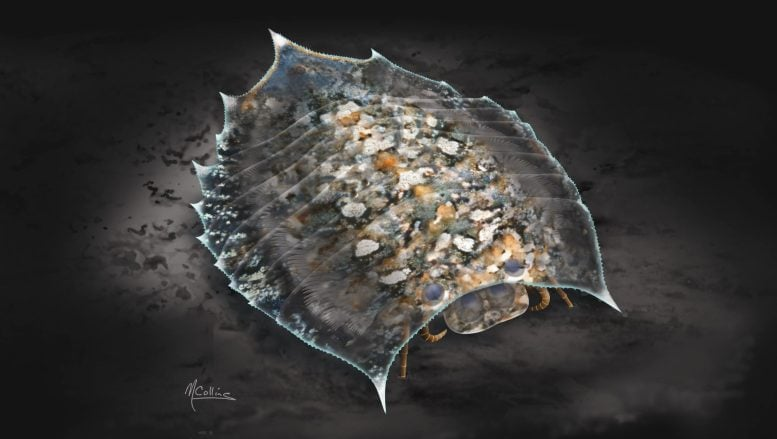
Harvard Scientists Solve 100-Year Mystery of Bizarre 508-Million-Year-Old Arthropod
SciTechDaily has an article about the strange arthropod Helmetia expansa. H. expansa was discovered by Charles Doolittle Walcott in 1918 in the Burgess Shale. It was initially identifed as a crustacean, however, it was never described. A new paper, in the Journal of Systematic Palaeontology, describes Helmetia expansa as a concilitergans, a group closely related…
-

Manitoba Museum: Introducing a NEW Fossil… from the Burgess Shale Comes Mosura fentoni”!
https://youtu.be/NiJFzNCbl98 Here is Dr. Joe Moysiuk, of the Manitoba Museum, introducting of a new fossil from the Burgess Shale… Mosura fentoni. There’s a new fossil in town! Meet “Mosura fentoni”. It was discovered by Curator of Palaeontology & Geology Dr. Joe Moysiuk, alongside colleagues from the ROM. Get to know this bizarre-looking little predator in…
-

Throwback Thursday #229: Happy 115th Birthday, Burgess Shale!
This is Throwback Thursday #229. In these, we look back into the past at ESCONI specifically and Earth Science in general. If you have any contributions, (science, pictures, stories, etc …), please send them to esconi.info@gmail.com. Thanks! Charles Doolittle Walcott discovered the Burgess Shale on August 30th, 1909. At the time, Walcott was head of the Smithsonian…
-

Meet this 500 million-year-old, taco-shaped marine creature that has 30 pairs of legs
Researchers have uncovered more about the ancient marine creature Odaraia alata, which they say could have swum upside down to gather food among the spines along its legs. (Danielle Dufault/Royal Ontario Museum) We’ve got another post about a Cambrian animal, today. This one comes from CBC News and is about some recent research on Odaraia alata. …
-

Rare 3D fossils show that some early trees had forms unlike any you’ve ever seen before
Phys.org has a story about the discovery of an amazingly preserved “tree” from New Brunswick, Canada. The fossils, which date to about 350 million years ago during the Mississippian Period, consist of multiple specimens with one preserving how the “leaves” were distributed in the crown of the tree. Usually, just the trunk of trees are…
-

New Herbivorous Dinosaur Species Identified in Canada
SciNews has a post about a new dinosaur from Canada. Gremlin slobodorum lived about 77 million years ago during the late Cretaceous Period. It’s a leptoceratopsid, which is a hornless dinosaur related to Triceratops. The animal lived what is now southern Alberta, Canada. The dinosaur was described in “A new Late Cretaceous leptoceratopsid (Dinosauria: Ceratopsia)…
-
Reminder: ESCONI November 2023 General Meeting – Friday, November 10th, 2023 at 8:00 PM via Zoom – “Finding Fossil Mammals in Canada’s High Arctic and Alaska”
The November 2023 General Meeting will feature Jaelyn Eberle, the Interim Director, University of Colorado Museum of Natural History and Curator of Fossil Vertebrates at the University of Colorado. She will present “Finding Fossil Mammals in Canada’s High Arctic and Alaska”. Jaelyn’s research focuses on the study of mammalian faunas during past intervals of climate…
-
ESCONI November 2023 General Meeting – Friday, November 10th, 2023 at 8:00 PM via Zoom – “Finding Fossil Mammals in Canada’s High Arctic and Alaska”
The November 2023 General Meeting will feature Jaelyn Eberle, the Interim Director, University of Colorado Museum of Natural History and Curator of Fossil Vertebrates at the University of Colorado. She will present “Finding Fossil Mammals in Canada’s High Arctic and Alaska”. Jaelyn’s research focuses on the study of mammalian faunas during past intervals of climate…
-
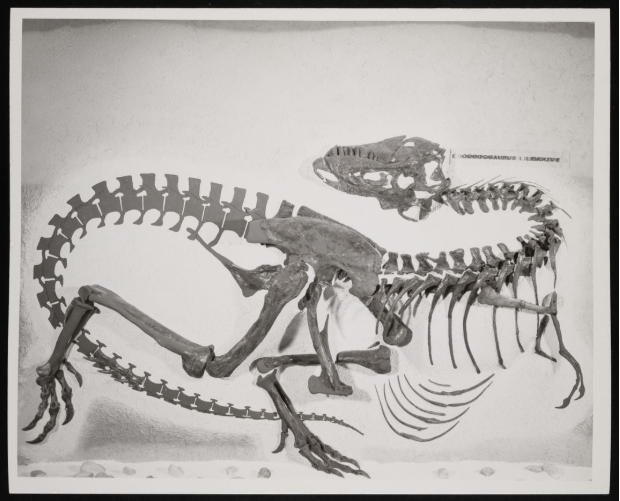
How Smithsonian Fossil Preparators Are Re-Excavating a Tyrannosaur from Its Past on Display
Smithsonian Magazine’s National Fossil Day post looks at a tyrannosaur specimen that has been on display for many years. The animal, Gorgosaurus libratus, had been at the museum since 1918. It was found in the rugged badlands around the Red Deer River in Alberta, Canada. It lived about 75 million years ago during the Cretaceous…
-

Throwback Thursday #176: Maple Leaf Field Trip 1997
This is Throwback Thursday #176. In these, we look back into the past at ESCONI specifically and Earth Science in general. If you have any contributions, (science, pictures, stories, etc …), please send them to esconi.info@gmail.com. Thanks! Late August 1997 saw a very ambitious ESCONI Field Trip. It lasted for eight days, from August 23rd…
-
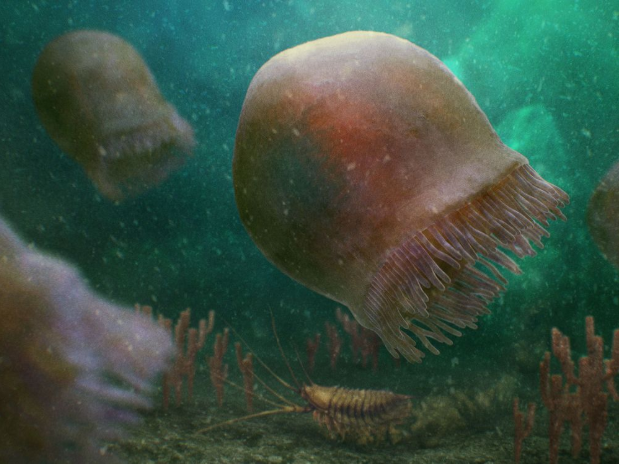
These 508-Million-Year-Old Fossils May Be Earth’s Oldest Swimming Jellyfish
Smithsonian Magazine has a story about ancient jellyfish… fossilized jellyfish. One of our favorite fossil localities, Mazon Creek, has abundant jellyfish fossils, but otherwise jellyfish are quite rare in the fossil record. A recent paper in the journal Proceedings of the Royal Society B described a new jellyfish, Burgessomedusa phasmiformis, which hales from British Columbia, Canada.…
-

Throwback Thursday #168: British Columbia in Nine Days
This is Throwback Thursday #168. In these, we look back into the past at ESCONI specifically and Earth Science in general. If you have any contributions, (science, pictures, stories, etc …), please send them to esconi.info@gmail.com. Thanks! Who’s up for a summer trip to the Burgess Shale in British Columbia? How about 9 days, with…
-
‘Dinosaur mummy’: Researchers believe they’ve found one of the best preserved dinosaurs ever
Credit: Royal Tyrrell Museum, Drumheller, Canada Phys.org has a story about the discovery of another “dinosaur mummy”. A few years ago, a nodosaur found in Alberta, Canada was said to be the best preserved dinosaur ever. Now, researchers say they may have found an even better one. This specimen is a hadrosaur found in Dinosaur…
-

These Fins Were Made for Walking … and Then Swimming
An artist’s reconstruction of Qikiqtania wakei, in light green, and its larger cousin, Tiktaalik roseae.Credit…Alex Boersma The New York Times has a story about a newly described fish from the Devonian. Qikiqtania wakei lived about 375 million years ago during the Devonian Period in what is now Nunavut, an Arctic territory of Canada. It was…
-
500-million-year-old fossilized brains of Stanleycaris prompt a rethink of the evolution of insects and spiders
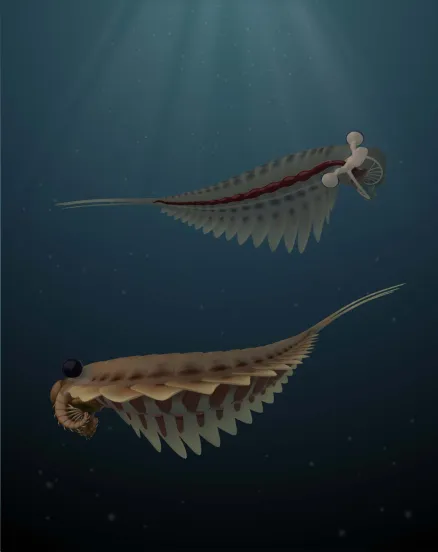
Phys.org has a story about fossilized brains…500 million year old brains. A recent paper from researchers at the Royal Ontario Museum in Toronto, Canada describes the fossilized brain in a species of Radiodont called Stanleycaris. The animal is related to Anomalocaris and distantly related to modern day spiders and insects. This amazing fossil was collected…
-
‘She’s perfect and she’s beautiful’: Frozen baby woolly mammoth discovered in Yukon gold fields
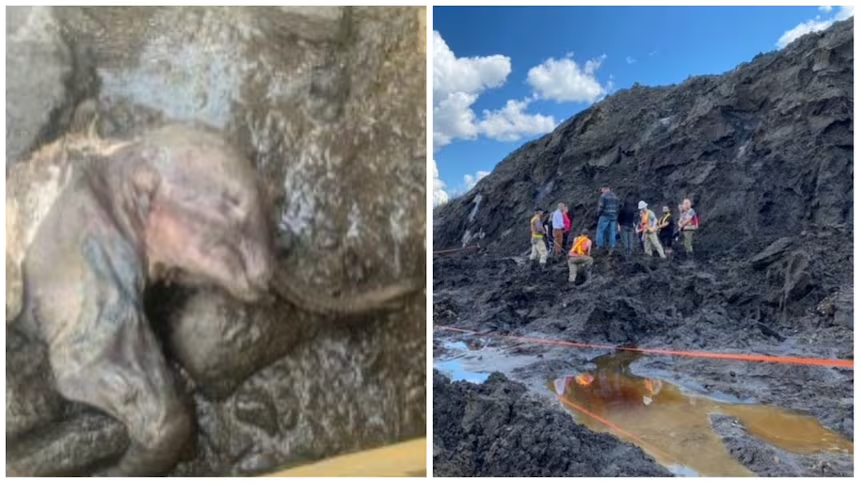
CBC News has a story about the discovery of a mummified baby woolly mammoth. The animal lived about 35,000 years ago in the Canadian Yukon Territory near Eureka Creek, south of Dawson Creek. A gold miner was digging through muck with a front end loader when he discovered the find of a lifetime. A perfect…
-

Burgess Shale Fossil Hunting in Walcott Quarry, Yoho National Park
Off Track Travel has a piece about the Burgess Shale. Located in Yoho National Park in British Columbia, Canada, the Burgess Shale is one of the most important fossil localities ever discovered. The post is a guide to taking a tour of the famous site.
-

NYT: One of Evolution’s Oddest Creatures Finds a Fossilized Family Member
The Trilobites column at the New York Times has a story about Opabinia, an enigmatic animal from the Burgess Shale. Stephen Pates, a paleotologist, discovered a strange animal in the collections at the Natural History Museum at the University of Kansas in 2017. The animal was classified as a radiodont, like Anomalocaris, but he was…
-

A Huge, Unknown Cambrian Bug Fossil Has Been Found in The Eerie Burgess Shale
Science Alert has a story about a new arthropod discovered in the Burgess Shale. The Burgess Shale is a fossil deposit located in British Columbia which gives visibility into the explosion of life during the Cambrian Period more that 500 million years ago. This new animal, Titanokorys gainesi, was more than a foot long, which…
-

Longest known continuous record of the Paleozoic discovered in Yukon wilderness
Phys.org has a story about ocean conditions in the early to mid Paleozoic Era. Using a newly discovered contiguous geologic record of the Paleozoic Era discovered in Canada’s Yukon, research, detailed in a recent paper in Science Advances, shows that the low oxygen ocean conditions of the Paleozoic lasted into the Devonian period, which is…
-
Phys.org: Cephalopods: Older than previously thought?
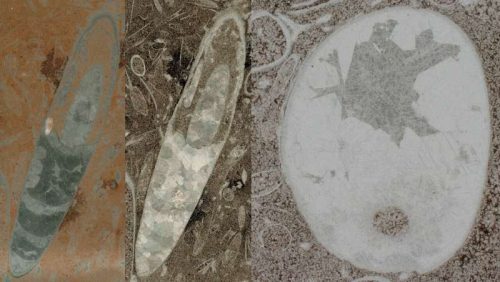
Phys.org has a piece on the discovery of some very old cephalopods. Found in Newfoundland, Canada on the Avalon Peninsula, the animals date to about 522 million years ago during the middle Cambrian. If really a cephalopod, these fossils would push their origin back about 30 million years from what is currently thought. Details can…
-
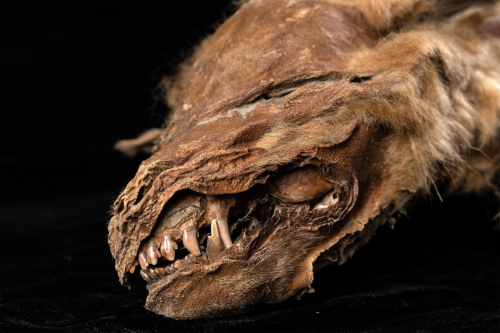
SciTechDaily: Exquisitely-preserved wolf pup mummy discovered in Yukon permafrost
SciTechDaily has a story about a mummified wolf puppy found in the Canadian Yukon. The gray wolf pup lived about 57,000 years ago, during the Pleistocene. It’s 100% intact and very well preserved. It was discovered by a gold miner that was using water to blast a wall of frozen mud. All the details are…
-
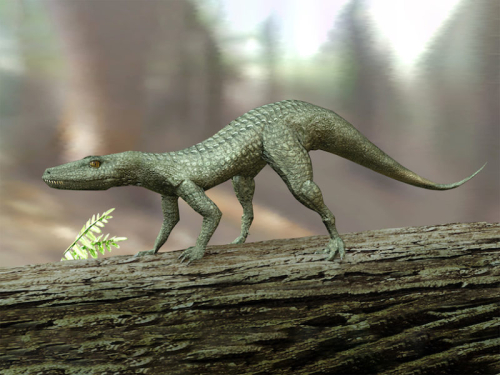
Eos: A Little-Known Mass Extinction and the “Dawn of the Modern World”
Eos has a story about a little known mass extinction that led to the rise of the dinosaurs. New research published in the journal Science Advances shows that climate change driven by volcanic eruptions in western Canada brought about the dinosaurs and eventually the modern world. The event is called Carnian Pluvial Episode. It occurred…
-
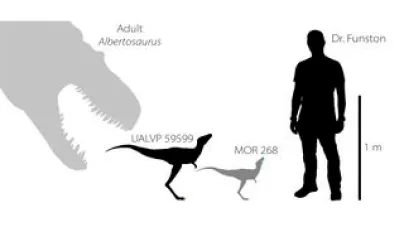
LiveScience: 1st of their kind baby tyrannosaur fossils unearthed
LiveScience has a story about the first baby tyrannosaur ever discovered. These new fossils, which may be a tyrannosaur embryo, were discovered in Montana in 1983. They were reexamined due to research into a toe claw of a baby tyrannosaur that was found in Alberta Canada in 2017. The research, which is not yet published…
-
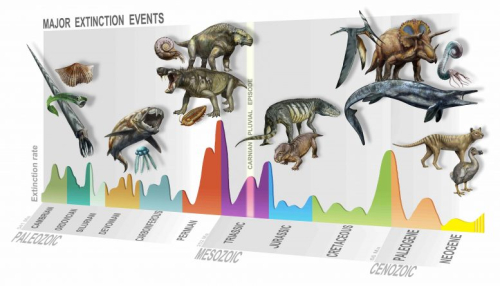
SciTechDaily: Discovery of a New Mass Extinction – Carnian Pluvial Episode – 233 Million Years Ago
SciTechDaily has a story about the identification of a new mass extinction. This one called the “Carnian Pluvial Episode”. It occurred about 233 million years ago during the Triassic Period. The cause is believed to be flood basaltic volcanic eruptions in western Canada. Some of the outcomes was the rise of the dinosaurs and the…
-
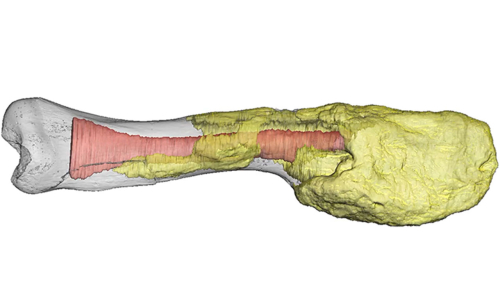
Doctors diagnose advanced cancer—in a dinosaur
Science Magazine has an article out of the Royal Ontario Museum about a malignant dinosaur bone. The dinosaur, Centrosaurus, lived about 76 million years ago in what is now Dinosaur Park in southern Alberta, Canada. It suffered from osteosarcoma of the fibula, which is a lower leg bone. In humans, osteosarcoma primarily attacks teens and…
-

PBS Eons: The Dinosaur Who Was Buried at Sea
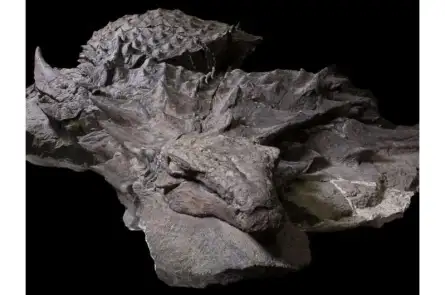
There’s a new episode of PBS Eons. This one is about an amazing specimen of Nodosaur discovered in Canada in 2011. It was found in a siderite concretion which formed in the ocean. Paleontologists have been studying nodosaurs since the 1830s, but nobody had ever found a specimen like Borealopelta before. The key to…
-
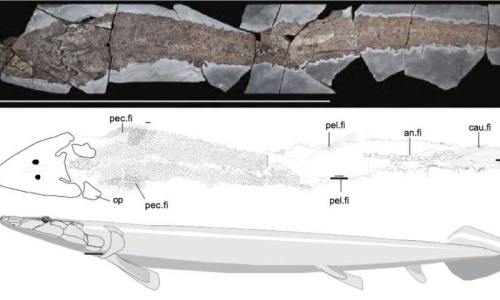
Phys.org: Ancient fish fossil reveals evolutionary origin of the human hand
Phys.org has a story about the evolution of the human hand. A new complete specimen of a tetrapod-like fish, Elpistostege, reveals new clues in the evolution of the human hand from fish fins. The paper describing this discovery can be found in the journal Nature. An ancient Elpistostege fish fossil found in Miguasha, Canada has…
-
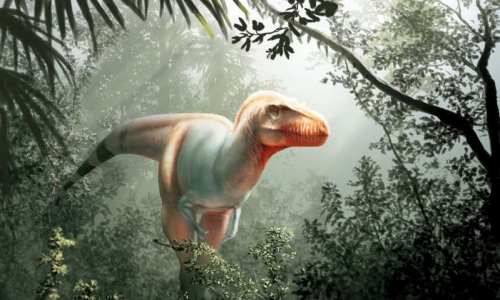
Phys.org: Meet T-Rex’s older cousin: The Reaper of Death
Phys.org has a story about a new tyrannosaur. This one is called Thanatotheristes degrootorum, Greek for “Reaper of Death”. It lived some 80 million years ago, during the Cretaceous Periond, in what is now Canada. Details were published recently in the journal Cretaceous Research. “We chose a name that embodies what this tyrannosaur was as…

