Tag: Burgess Shale
-
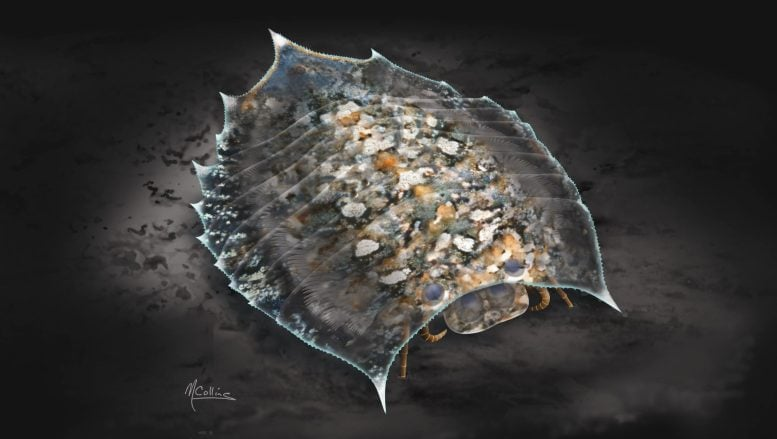
Harvard Scientists Solve 100-Year Mystery of Bizarre 508-Million-Year-Old Arthropod
SciTechDaily has an article about the strange arthropod Helmetia expansa. H. expansa was discovered by Charles Doolittle Walcott in 1918 in the Burgess Shale. It was initially identifed as a crustacean, however, it was never described. A new paper, in the Journal of Systematic Palaeontology, describes Helmetia expansa as a concilitergans, a group closely related…
-

Manitoba Museum: Introducing a NEW Fossil… from the Burgess Shale Comes Mosura fentoni”!
https://youtu.be/NiJFzNCbl98 Here is Dr. Joe Moysiuk, of the Manitoba Museum, introducting of a new fossil from the Burgess Shale… Mosura fentoni. There’s a new fossil in town! Meet “Mosura fentoni”. It was discovered by Curator of Palaeontology & Geology Dr. Joe Moysiuk, alongside colleagues from the ROM. Get to know this bizarre-looking little predator in…
-

Throwback Thursday #229: Happy 115th Birthday, Burgess Shale!
This is Throwback Thursday #229. In these, we look back into the past at ESCONI specifically and Earth Science in general. If you have any contributions, (science, pictures, stories, etc …), please send them to esconi.info@gmail.com. Thanks! Charles Doolittle Walcott discovered the Burgess Shale on August 30th, 1909. At the time, Walcott was head of the Smithsonian…
-

Meet this 500 million-year-old, taco-shaped marine creature that has 30 pairs of legs
Researchers have uncovered more about the ancient marine creature Odaraia alata, which they say could have swum upside down to gather food among the spines along its legs. (Danielle Dufault/Royal Ontario Museum) We’ve got another post about a Cambrian animal, today. This one comes from CBC News and is about some recent research on Odaraia alata. …
-

Was This Sea Creature Our Ancestor? Scientists Turn a Famous Fossil on its Head
The fossil of Pikaia, a creature that lived 508 million years ago and may have been a close relative of vertebrates.Credit…Mussini et al., Current Biology 2024 Carl Zimmer writes about Pikaia in his ORIGINS column in the New York Times. Discovered in 1909 by Charles Walcott in the Burgess Shale, Pikaia gracilens, which lived during…
-
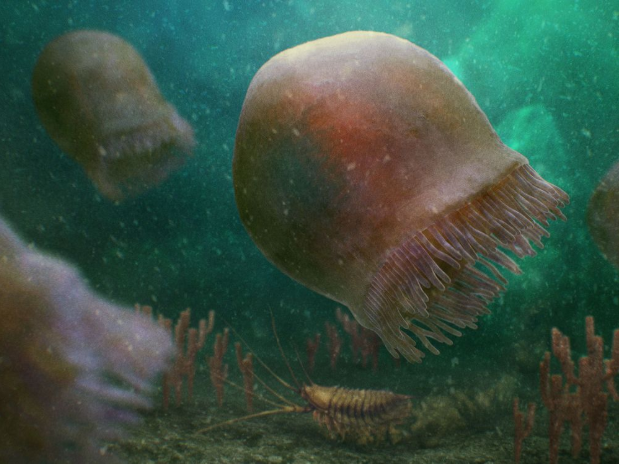
These 508-Million-Year-Old Fossils May Be Earth’s Oldest Swimming Jellyfish
Smithsonian Magazine has a story about ancient jellyfish… fossilized jellyfish. One of our favorite fossil localities, Mazon Creek, has abundant jellyfish fossils, but otherwise jellyfish are quite rare in the fossil record. A recent paper in the journal Proceedings of the Royal Society B described a new jellyfish, Burgessomedusa phasmiformis, which hales from British Columbia, Canada.…
-
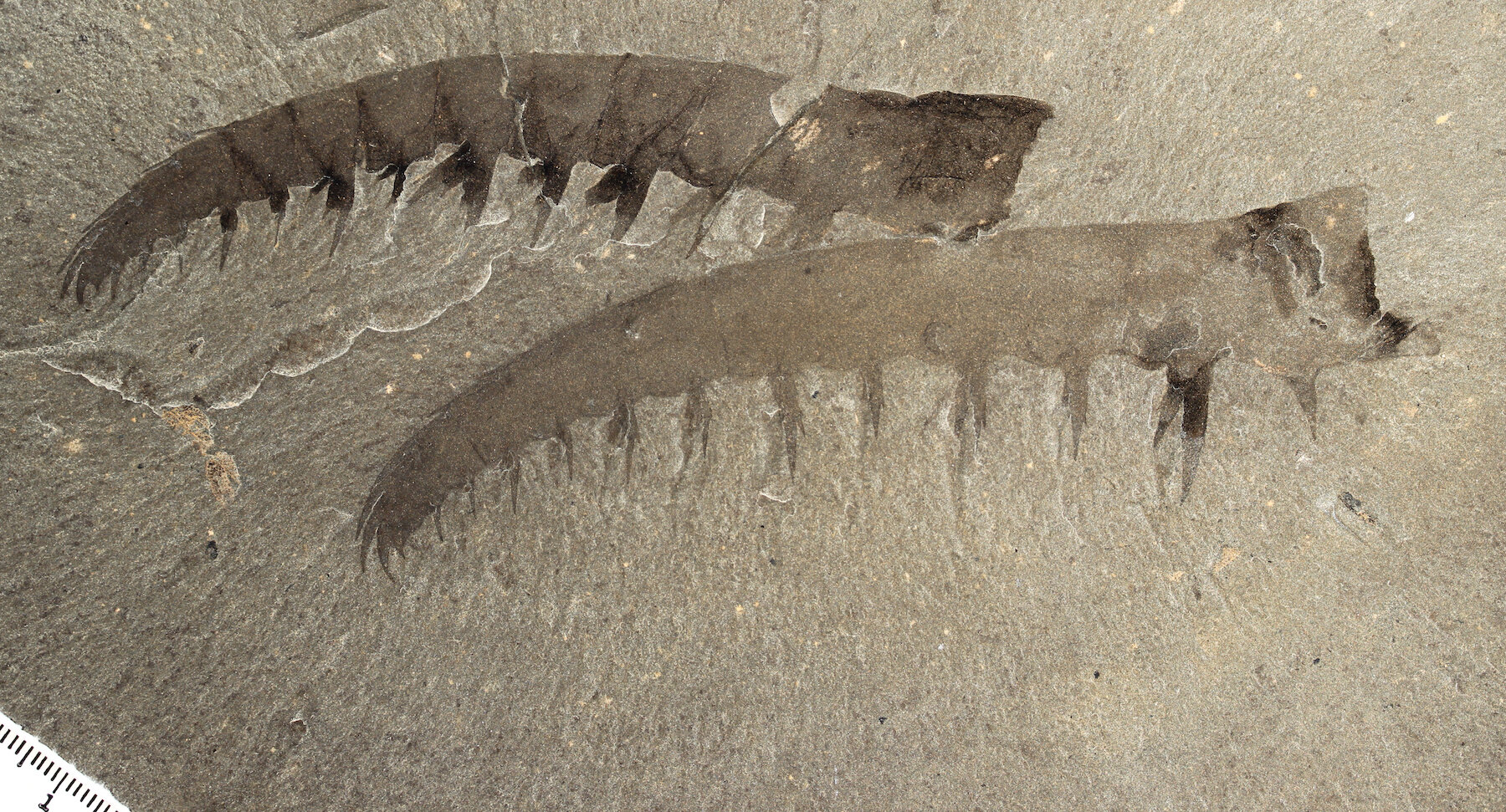
Apex predator of the Cambrian likely sought soft over crunchy prey
Phys.org has a story about one of the largest predators of the Cambrian Period. Anomalocaris canadensis, which means “weird shrimp from Canada”, was first discovered in the 1800’s in fossil deposits around Mt. Stephen in British Columbia. Until the discovery of the Burgess Shale, the front appendages and body fossils were thought to be separate…
-

Throwback Thursday #168: British Columbia in Nine Days
This is Throwback Thursday #168. In these, we look back into the past at ESCONI specifically and Earth Science in general. If you have any contributions, (science, pictures, stories, etc …), please send them to esconi.info@gmail.com. Thanks! Who’s up for a summer trip to the Burgess Shale in British Columbia? How about 9 days, with…
-
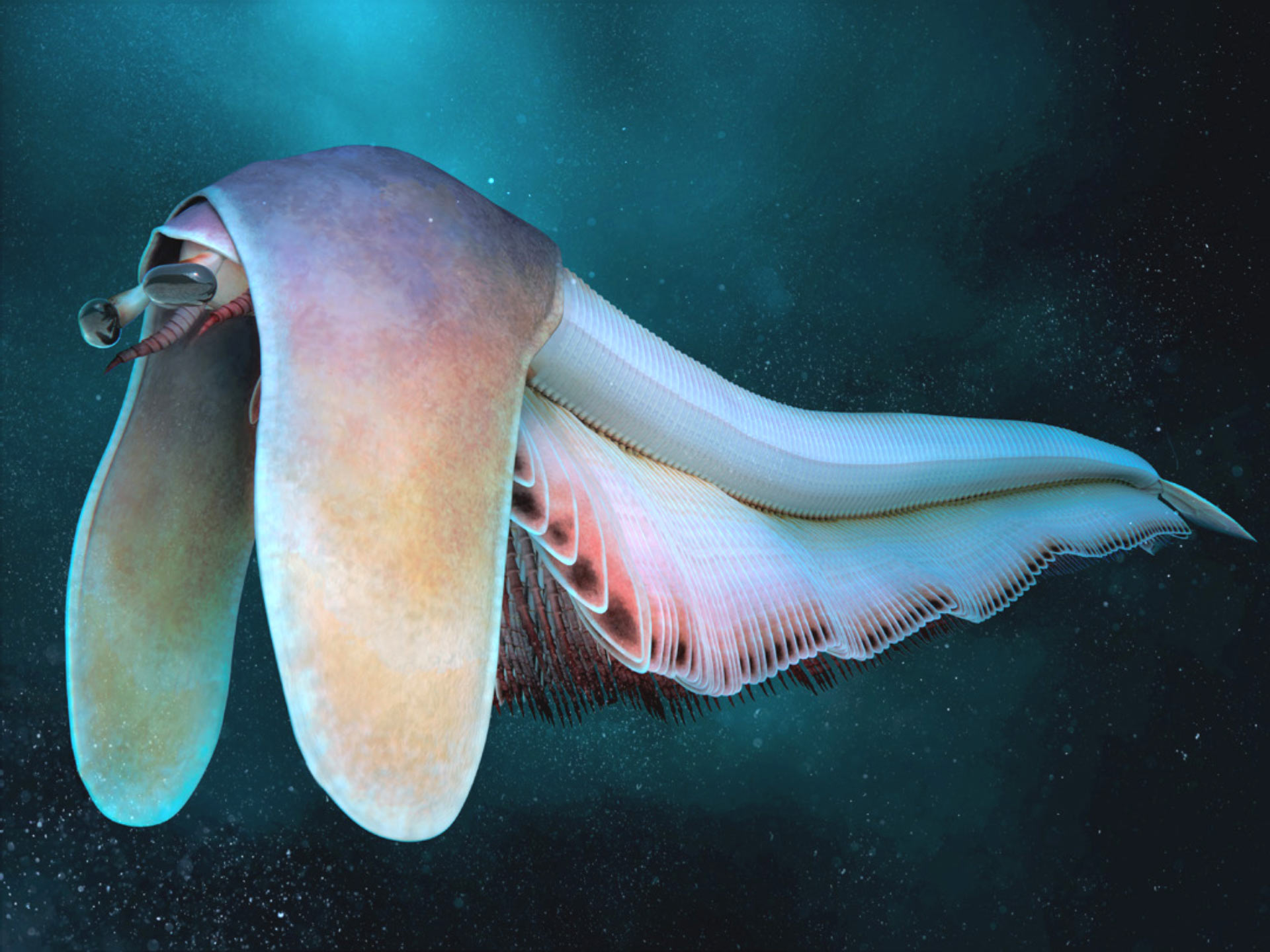
Cambrian Bivalved Arthropod Had Extremely Multisegmented Body
SciNews has a story about a large bivalved arthropod from the Burgess Shale. This animal, Balhuticaris voltae, lived about 506 million years ago in what is now British Columbia, Canada. It is one of the largest known Cambrian arthropods and the largest bivalved arthropod every found. The new species was described in a paper in…
-
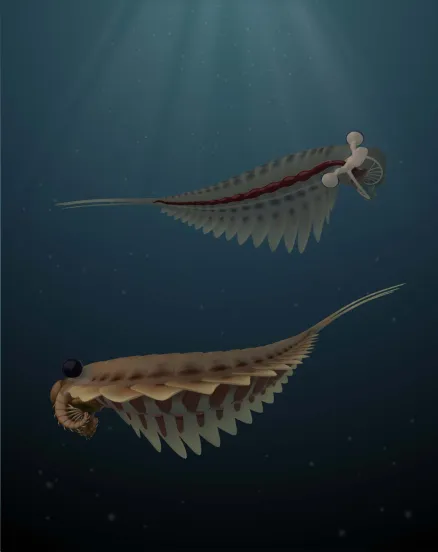
500-million-year-old fossilized brains of Stanleycaris prompt a rethink of the evolution of insects and spiders
Phys.org has a story about fossilized brains…500 million year old brains. A recent paper from researchers at the Royal Ontario Museum in Toronto, Canada describes the fossilized brain in a species of Radiodont called Stanleycaris. The animal is related to Anomalocaris and distantly related to modern day spiders and insects. This amazing fossil was collected…
-
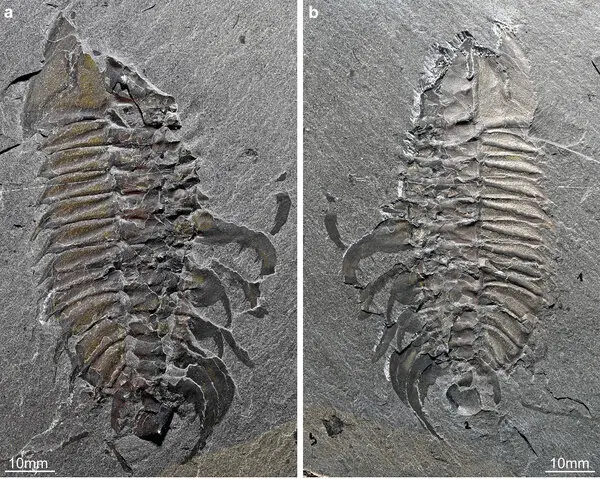
Trilobite Tuesday #39: Before There Were Birds or Bees, This Is How Trilobites Made Babies
The New York Times Trilobites column has a story about trilobite reproduction. Trilobites first show up in the fossil record back in the Cambrian Period, some 500 million years ago. Their closest living relative is most likely the horseshoe crab. Now, a team of paleontologists from Harvard have published a paper in the journal Geology that looks into the…
-

Burgess Shale Fossil Hunting in Walcott Quarry, Yoho National Park
Off Track Travel has a piece about the Burgess Shale. Located in Yoho National Park in British Columbia, Canada, the Burgess Shale is one of the most important fossil localities ever discovered. The post is a guide to taking a tour of the famous site.
-

NYT: One of Evolution’s Oddest Creatures Finds a Fossilized Family Member
The Trilobites column at the New York Times has a story about Opabinia, an enigmatic animal from the Burgess Shale. Stephen Pates, a paleotologist, discovered a strange animal in the collections at the Natural History Museum at the University of Kansas in 2017. The animal was classified as a radiodont, like Anomalocaris, but he was…
-

A Huge, Unknown Cambrian Bug Fossil Has Been Found in The Eerie Burgess Shale
Science Alert has a story about a new arthropod discovered in the Burgess Shale. The Burgess Shale is a fossil deposit located in British Columbia which gives visibility into the explosion of life during the Cambrian Period more that 500 million years ago. This new animal, Titanokorys gainesi, was more than a foot long, which…
-
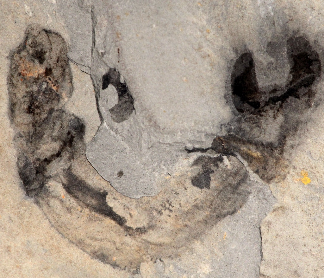
ESCONI May 2021 General Meeting – May 14th, 2021 at 8:00 PM via Zoom – “Enigmatic worms from the Burgess Shale reveal a novel symbiosis”
ESCONI is inviting you to a scheduled Zoom meeting. We hope to see you there! The Zoom link is below. Date/Time: Friday, May 14, 2021 – 8:00 PM Central Time (US and Canada) Topic: “Enigmatic worms from the Burgess Shale reveal a novel symbiosis.” Presented by: Paleontologist, Dr. Karma Nanglu, of the Smithsonian Institution. Excerpt from 5/7/16 New York…
-

Reminder ESCONI January 2021 General Meeting – January 8th, 2021 at 8:00 PM via Zoom – “New discoveries at the Burgess Shale”
The speaker at our January 2021 meeting via Zoom will be Dr. Jean-Bernard Caron from the University of Toronto and the Royal Ontario Museum (ROM). Dr. Caron studies the Burgess Shale, the Cambrian Explosion, and the origin of animals. The title of his program is “New discoveries at the Burgess Shale”. Join us via Zoom…
-

ESCONI January 2021 General Meeting – January 8th, 2021 at 8:00 PM via Zoom – “New discoveries at the Burgess Shale”
The speaker at our January 2021 meeting via Zoom will be Dr. Jean-Bernard Caron from the University of Toronto and the Royal Ontario Museum (ROM). Dr. Caron studies the Burgess Shale, the Cambrian Explosion, and the origin of animals. The title of his program is “New discoveries at the Burgess Shale”. Here’s a link to…
-

Happy 110th Birthday, Burgess Shale!
Charles Doolittle Walcott discovered the Burgess Shale on August 30th, 1909. At the time, Walcott was head of the Smithsonian Institution in Washington, DC. He came to Mount Stephen, British Columbia, which is in Yoho National Park, in 1907, because of reports of “stone bugs” reported by railway workers, surveyors, and others. In 1909, while…
-
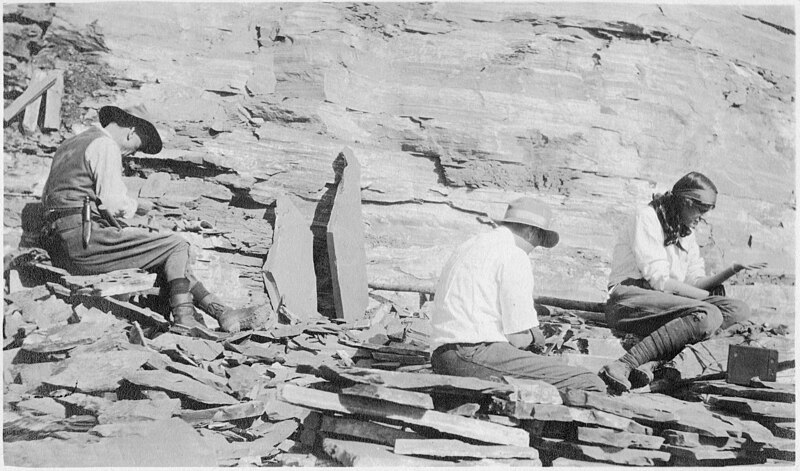
Happy Birthday, Burgess Shale – Discovered August 30th, 1909
The Burgess Shale was discovered 109 years ago today by Charles Doolittle Wolcott. The deposit dates to about 508 million years ago. Currently located high in the mountains of British Columbia, Canada, in life, it was located near the equator. It’s one of the most important fossil localities ever discovered, as it opened our eyes…
-
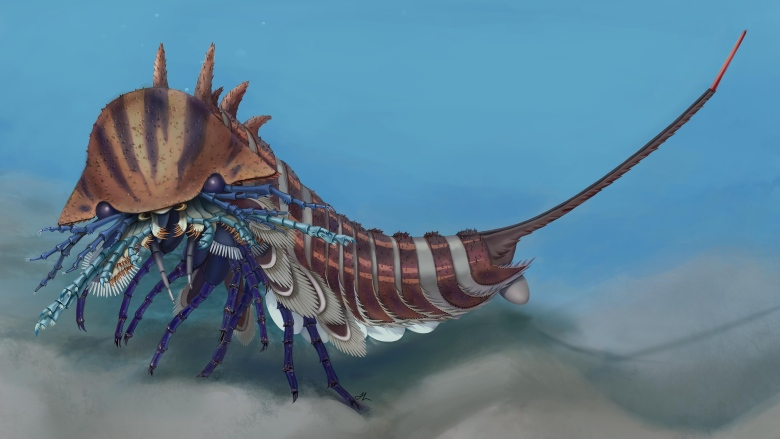
CBC: Ancient spider cousin had 5 sets of jaws for crushing its prey
Artistic reconstruction of Habelia optata on the Cambrian seafloor. Habelia is thought to have been an active predator, eating small animals with hard carapaces, such as trilobites. (Joanna Liang/Royal Ontario Museum) CBC has an article with new information about a Cambrian predator. The animal, Habelia optata, lived about 508 million years ago. It now appears…
