Tag: birds
-
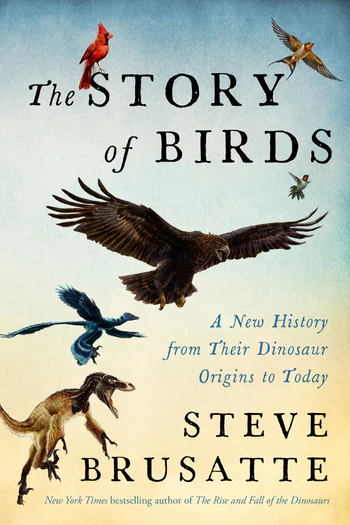
Science Quickly: The dinosaurs at your window: How birds survived the asteroid that killed all other dinosaurs
Scientific American’s “Science Quickly” had an interview with Steve Brusatte on a recent episode. Steve’s new book “The Story of Birds” is available to day April 28th, 2026.
-

Video for ESCONI January 2026 General Meeting – “Fossil Birds of Wyoming”
Jean-Pierre Cavigelli, of Casper College in Casper, WY, presented “Fossil Birds of Wyoming”. Wyoming’s fossil bird record spans much of the Late Cretaceous through the Cenozoic, though its completeness varies widely through time. The state’s oldest known bird fossils come from the late Cretaceous Mesa Verde Formation and Pierre Shale, dating to about 79 million…
-
ESCONI January 2026 General Meeting – January 9th, 2026 at 8:00 PM – “Fossil Birds of Wyoming”
Jean-Pierre Cavigelli, of Casper College in Casper, WY, will present “Fossil Birds of Wyoming”. Wyoming is well known for its fossils of all kinds. Dinosaurs are probably the most famous. They were first discovered here in the late 1800’s and are still being uncovered and studied nowadays. Fossil fishes from the southwest corner of the…
-
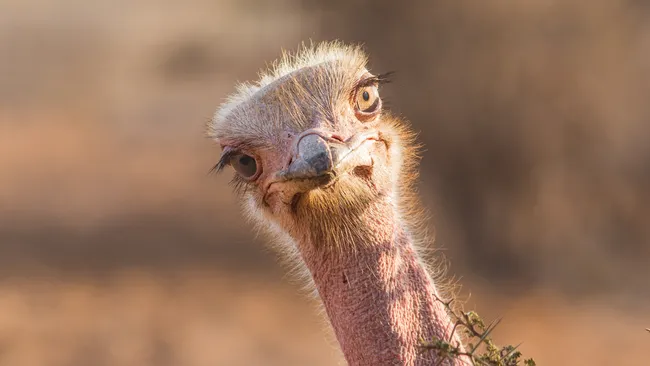
‘Rare’ ancestor reveals how huge flightless birds made it to faraway lands
LiveScience has a story that looks a paper about flightless birds and how they may have dispersed across multiple continents. The paper “Quantitative analysis of stem-palaeognath flight capabilities sheds light on ratite dispersal and flight loss” was published in the journal Biology Letters. Ostriches, emus, rheas and other large, flightless birds (paleognaths) are closely related,…
-

This Dinosaur Had Feathers and Probably Flew Like a Chicken
The New York Times has an article about the Chicago Archaeopteryx. The Field Museum unveiled the its Archaeopteryx in the Spring of 2024. Since then, the fossil has been revealing its secrets… some of them were published recently in the journal Nature. Archaeopteryx specimens have, “maybe more than any other fossil, changed the way that…
-
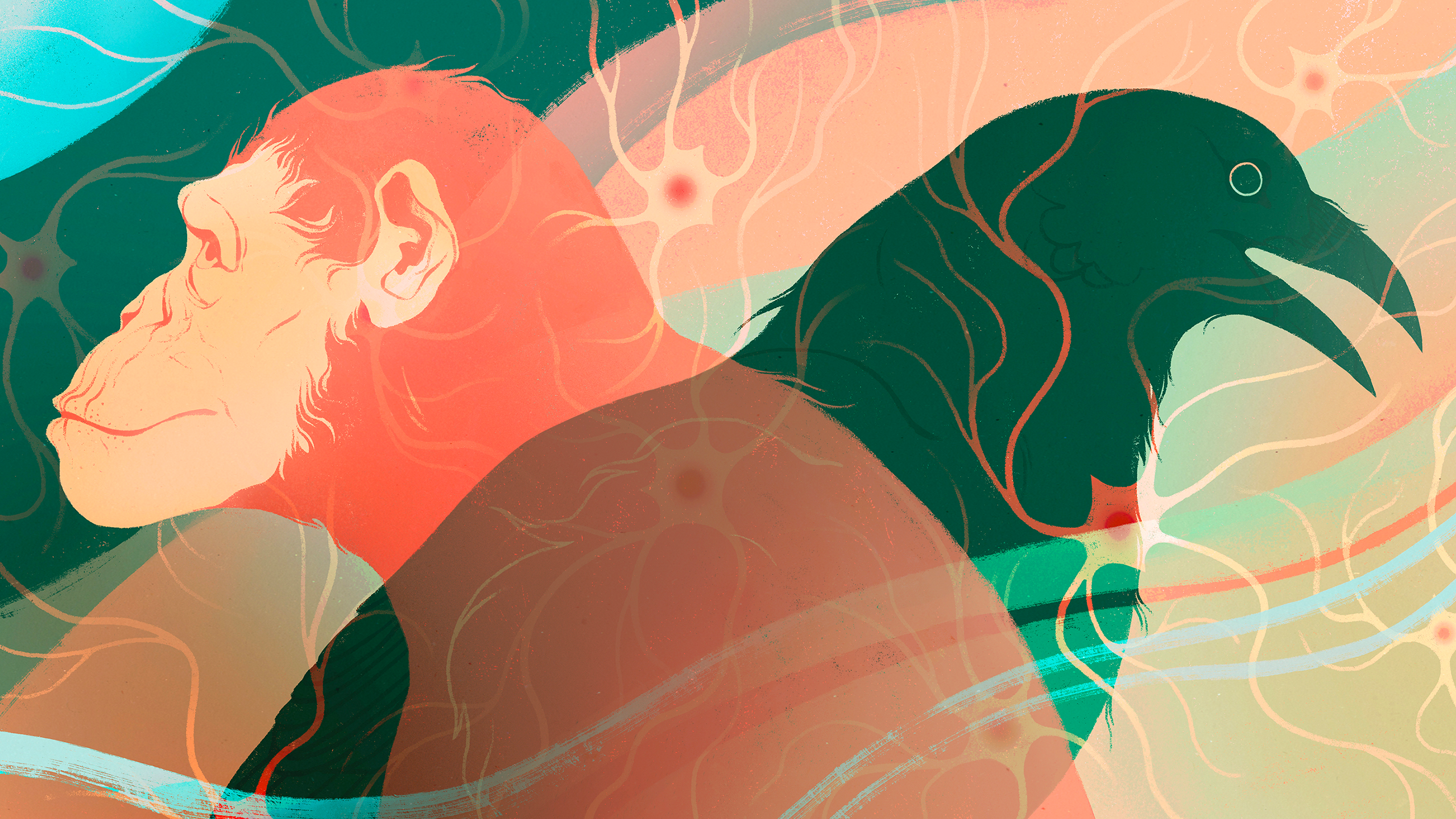
Intelligence Evolved at Least Twice in Vertebrate Animals
Quanta Magazine has an interesting piece about the evolution of intelligence. A variety of nonhuman species display intelligent behavior and advanced cognitive abilities. When did it evolve? Were the basic neural pathways inherited from a common ancestor or did it evolve separately in a case of convergent evolution? A series of studies published in the…
-
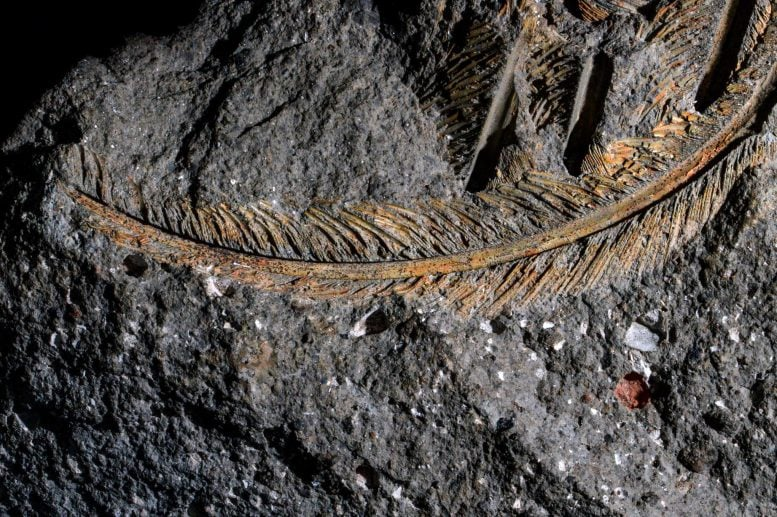
A 30,000-Year-Old Fossil Frozen in Volcanic Ash Holds an Unbelievable Secret
SciTechDaily brings news of a unique fossil discovery in Italy. A 30,000 year old fossil of a vulture shows that soft tissue can be preserved in volcanic rock deposits. The research was published in the journal Geology. The vulture fossil was originally discovered in 1889 near Rome by a local landowner, who recognized its exceptional…
-

PBS Eons: What Killed These Sleeping Dinosaurs?
PBS Eons has a new episode. This one is about the fossils of Liaoning in northwestern China… amazingly, beautifully preserved dinosaurs that give us insight into dinosaur and bird evolution. Since the 1990s, paleontologists have been pulling 125-million-year-old complete dinosaur skeletons from the rocks of the Lujiatun in Northwestern China, most seemingly posed in perfect…
-

Thanksgiving special: Dinosaur Drumsticks and the Story of the Turkey Trot
Yale News has a post about research into what makes "peacocks to strut, penguins to waddle, and turkeys to trot." See the study published in the journal Nature. Wings may be the obvious choice when studying the connection between dinosaurs and birds, but a pair of Yale paleontologists prefers drumsticks. That part of the leg,…
-
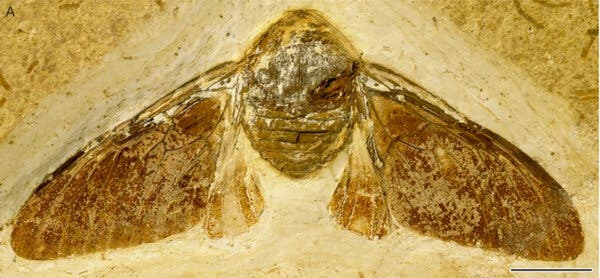
The Early Bird Got the Cicada, Then an Evolutionary Air War Started
The New York Times has a story about the evolution of flight in cicadas. New research published in the journal Science Advances found that cicadas likely evolved sleeker and more powerful wings due to the existential threat posed by birds. The researchers, including Chunpeng Xu a scientist at the Nanjing Institute of Geology and Palaeontology…
-
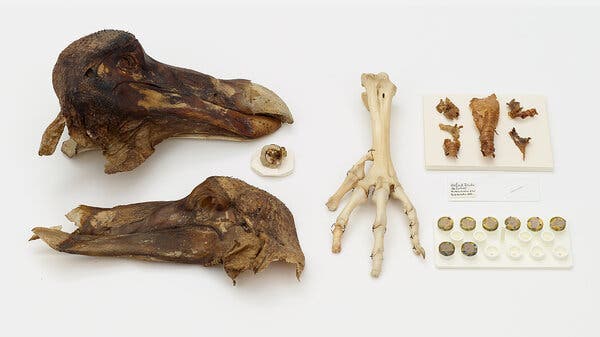
Who’s the Dodo Now? A Famously Extinct Bird, Reconsidered.
The New York Times has an interesting article about the Dodo. The Dodo, Raphus cucullatus, was a flightless bird that lived on the island of Mauritius. It was about the size of a male turkey. The Dodo has long been seen as and inept animal that slid into extinction because it was too stupid to…
-
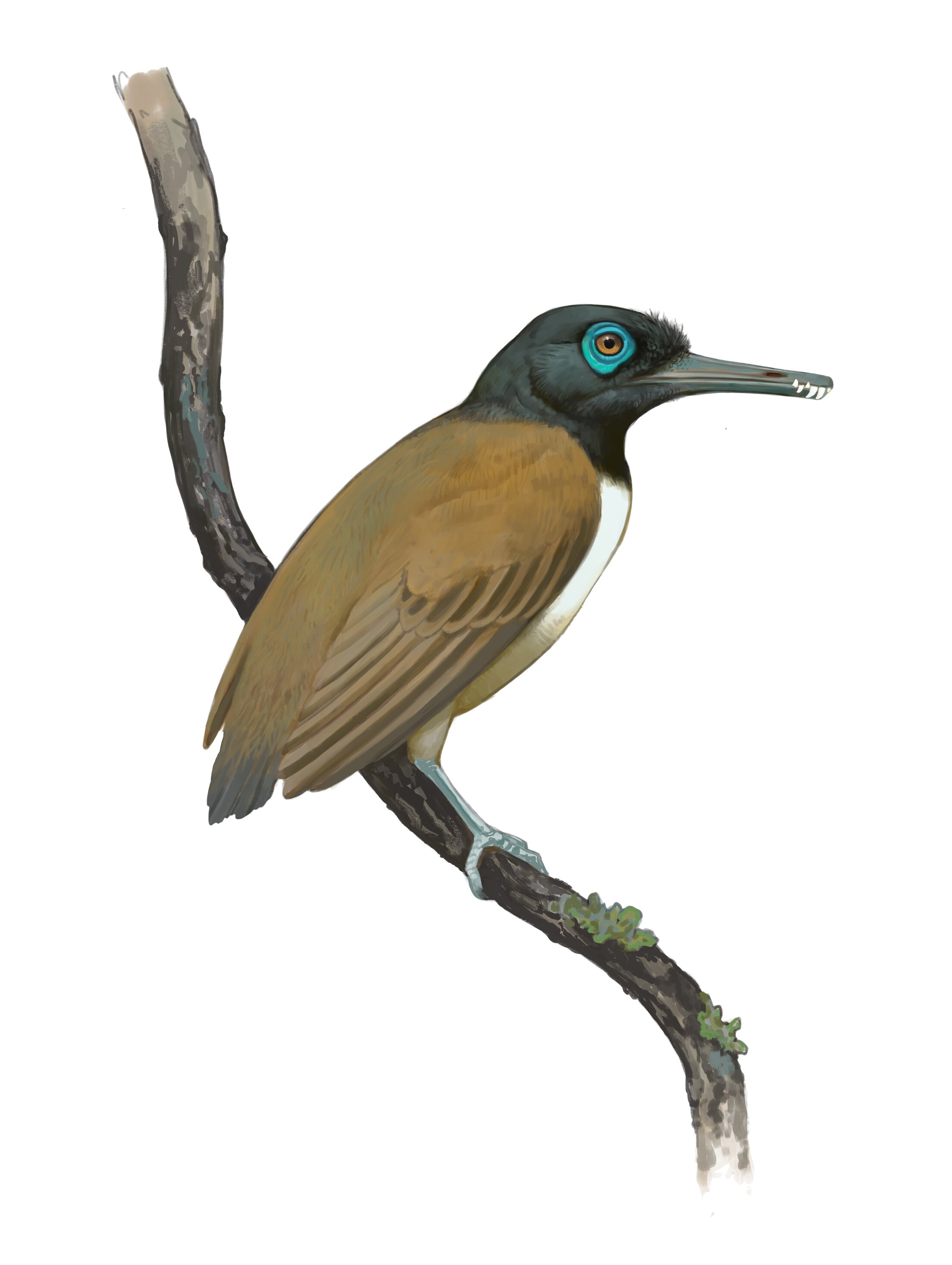
Paleontologists discover fossil birds with teeth had seeds in their stomachs, indicating that they ate fruit
Phys.org has a piece about birds with teeth. As rare as hen’s teeth is only a phrase for modern times… back in the Mezozoic – sometimes referred to as the “Age of Reptiles”, many birds had teeth. Longipteryx chaoyangensis is the subject of a new paper in the journal Current Biology. L. chaoyangensis lived during…
-
Dinosaurs at Dusk: The Origins of Flight
Triton College has a few more showings of their “Dinosaurs at Dusk: The Origins of Flight” movie. Dinosaurs at Dusk is a whirlwind adventure back in time to explore the Earth when it was teeming with Pterosaurs and other feathered dinosaurs, the ancestors of modern-day birds. Join Lucy and her father as they fly through the…
-
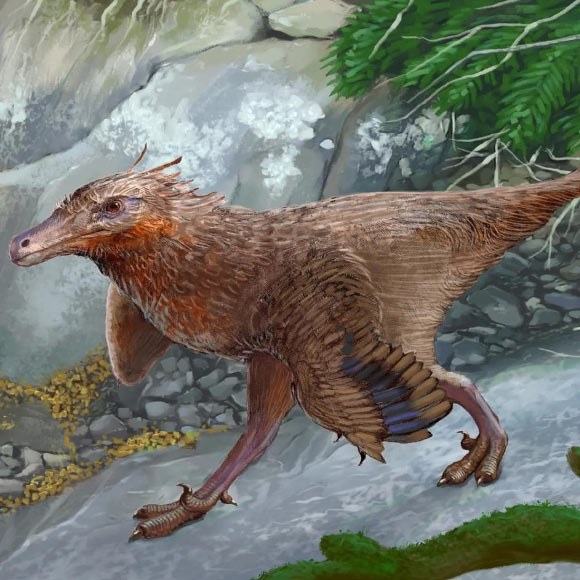
Paleontologists Discover New Bird-Like Dinosaur in Argentina
Life reconstruction of Diuqin lechiguanae. Image credit: Porfiri et al., doi: 10.1186/s12862-024-02247-w. SciNews has a story about the discovery of a bird-like dinosaur in Argentina. Its name is Diuqin lechiguanae and it lived about between 86 and 84 million years ago. It belongs to the subfamily Unenlagiine, which is a family of theropods in Dromaeosauridae. The animal…
-
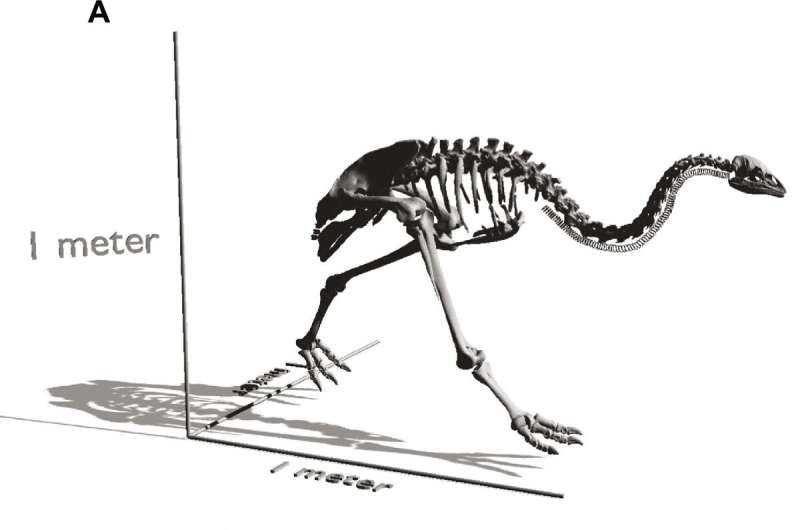
Researchers reconstruct genome of extinct species of flightless bird that once roamed the islands of New Zealand
Phys.org has a story about an extinct flightless bird from New Zealand. The genome of Anomalopteryx didiformis, the little bush moa, has been sequenced by a team of researchers that included scientists from Harvard University, the Max Planck Institute for Biological Intelligence, East Carolina University, Osaka University and the University of Toronto. A. didiformis went…
-
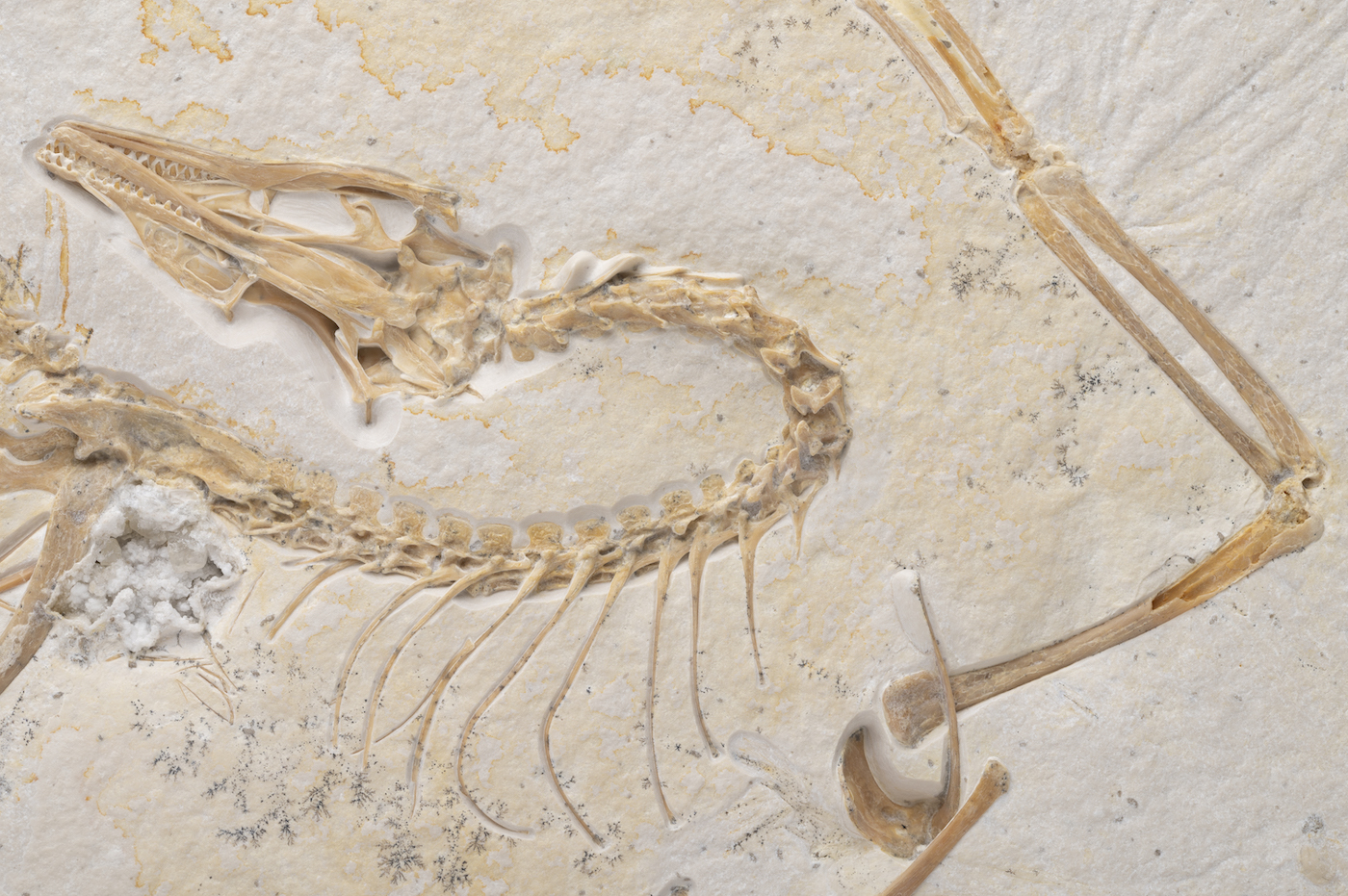
More on the Chicago Archaeopteryx
More about the new Chicago Archaeopteryx, This is the unveiling which happened on May 7th, 2024. It includes a great video of Paleornithologist Jingmai O’Connor describing the animal and its acquisition. More links…
-
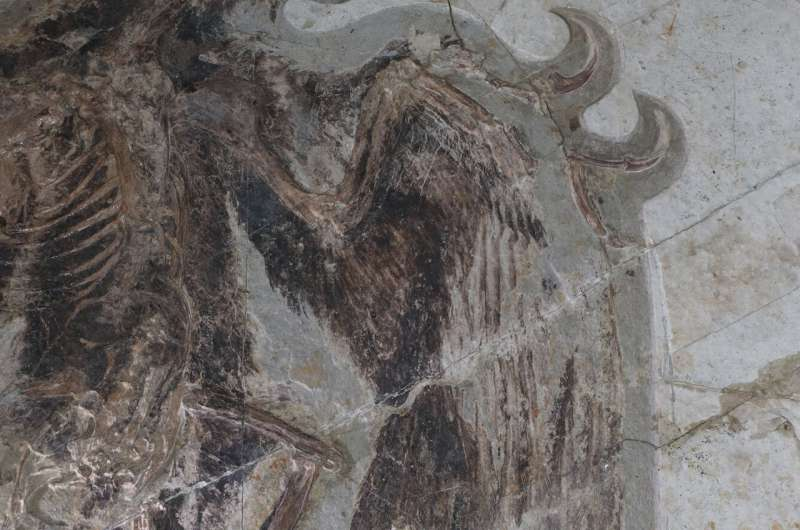
The hidden rule for flight feathers and how it could reveal which dinosaurs could fly
Phys.org has a story about flying dinosaurs. A new paper in the journal PNAS looked at hundreds of feathers in museum collections to determine which feather characteristics were common to flying birds. These characteristics were then used to create “rules”, which when applied to fossil dinosaur feathers might predict which dinosaurs were able to fly. …
-
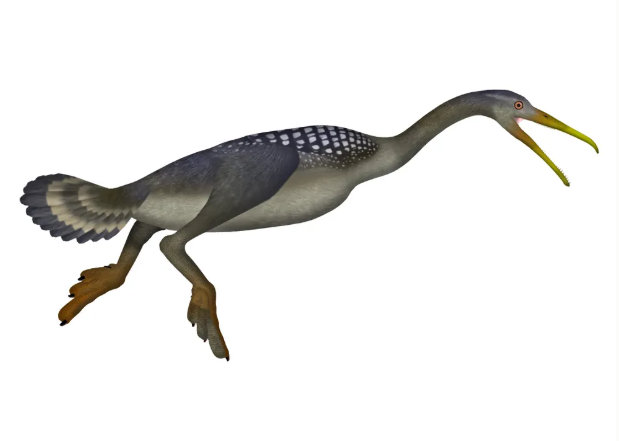
During the Age of Dinosaurs, Some Birds Sported Toothy Grins
Smithsonian Magazine has an interesting article about birds with teeth. Before the K-Pg event at the end of the Cretaceous Period, most birds had teeth, but those species are rarely discussed. One of the first toothed bird discovered, was Hesperornis in the 1870’s. Early birds such as Archaeopteryx don’t look all that different from the small, carnivorous dinosaurs they…
-
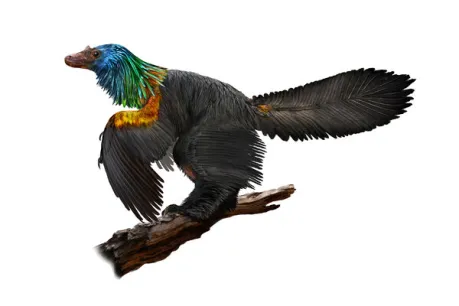
How Did Birds First Take Off?
Carl Zimmer has an interesting post on his Origins blog over at the New York Times. Scientists have long wondered how and when birds first take flight. It’s long been established that birds are dinosaurs. Early birds evolved into two divergent groups. Modern birds belong to ornithuromorphs, while the other group, the enantiornithines, actually dominated…
-
PBS Eons: It’s Becoming Very Clear That Birds Are Not Normal
PBS Eons has a new video over on Youtube. Birds are wierd. A new discovery raises an important question: from an evolutionary perspective, who really has the stranger wings?
-
PBS Eons: The Real Story Of The Dodo Bird’s (Current) Extinction
PBS Eons has a new episode. This one tells the whole story of the dodo bird. How did it evolve and how did it disappear? What’s the real story of the dodo? How did such a unique bird even evolve in the first place? And are we really responsible for its extinction?
-

‘Extremely rare’ fossilized dinosaur voice box suggests they sounded birdlike
Live Science has a story about the discovery of a dinosaur voice box. So, did T-rex sound like tweety bird? Probably not, but with the discovery of a larynx from a Pinacosaurus grangeri, we have a few clues of how they made sounds. This dinosaur was a armor plated ankylosaur that lived about 80 million…
-

A Unique Discovery: Researchers Have Uncovered an Ultra-Rare Piece of Evidence That Dinosaurs Ate Mammals
SciTechDaily has a story about the diet of dinosaurs. Microraptor zhaoianus was a small bird like dinosaur that lived between 120 and 125 million years ago in the early Cretaceous Period in what is now northeastern China. A particular specimen, described in a recent study in the journal Vertebrate Paleontology, was found to have eaten a…
-
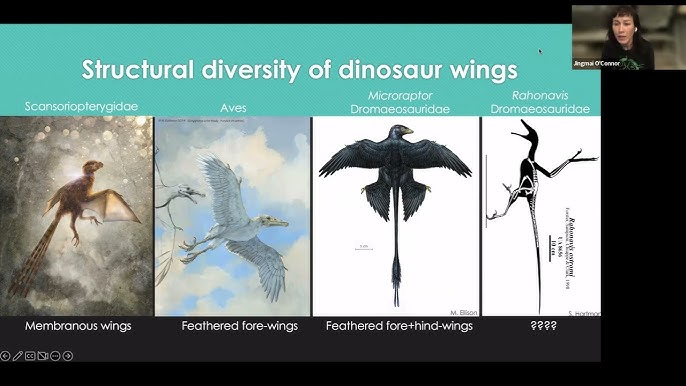
Video for the ESCONI December 2022 General Meeting – “The early diversification of birds: evidence from the Jehol avifauna”
December’s General Meeting was held on December 2nd, 2022. The presenter was Dr. Jingmai O’Connor Associate Curator of Fossil Reptiles at the Field Museum. The topic of her talk was “The early diversification of birds: evidence from the Jehol avifauna”. She calls herself a paleontologista aka a punk rock paleontologist. Her research includes work on birds, dinosaurs,…
-
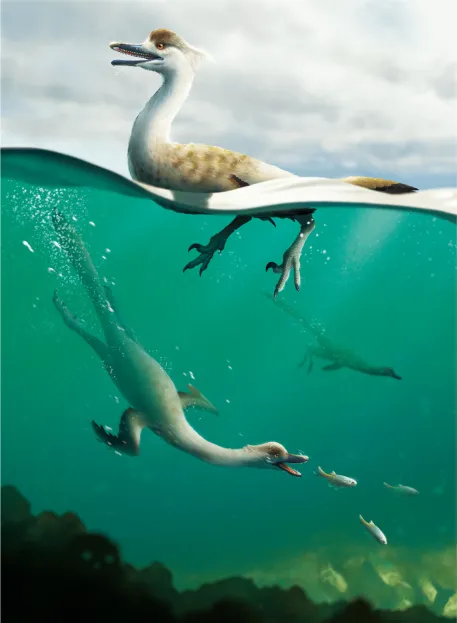
Mongolian fossil is first known species of streamlined non-avian theropod dinosaur to walk on two legs
Phys.org has a story about a new Cretaceous bird. The animal, named Natovenator polydontus, a non-avian theropod dinosaur was discovered in the Hermiin Tsav fossil formation in Mongolia back in 2008. It lived during the Cretaceous Period roughly 100 million to 66 million years ago. N. polydontus had teeth, which implies it had a varied…
-
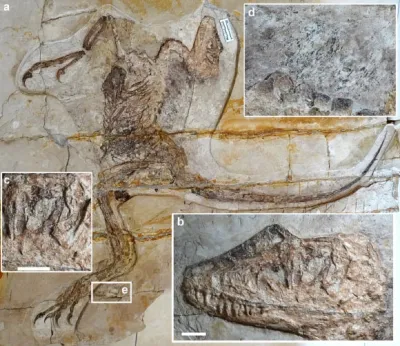
New Bird-Like Dinosaur Species Found with Remains of Frog in Its Stomach
SciNews has an article about the discovery of a new bird-like dinosaur. Daurlong wangi lived between 130 and 120 million years ago during the Cretaceous Period in what in now China. It was a dromaeosaur of medium size bird-like dinosaur. The animal, part of the famous Jehol Biota, was described in a paper, which appeared…
-
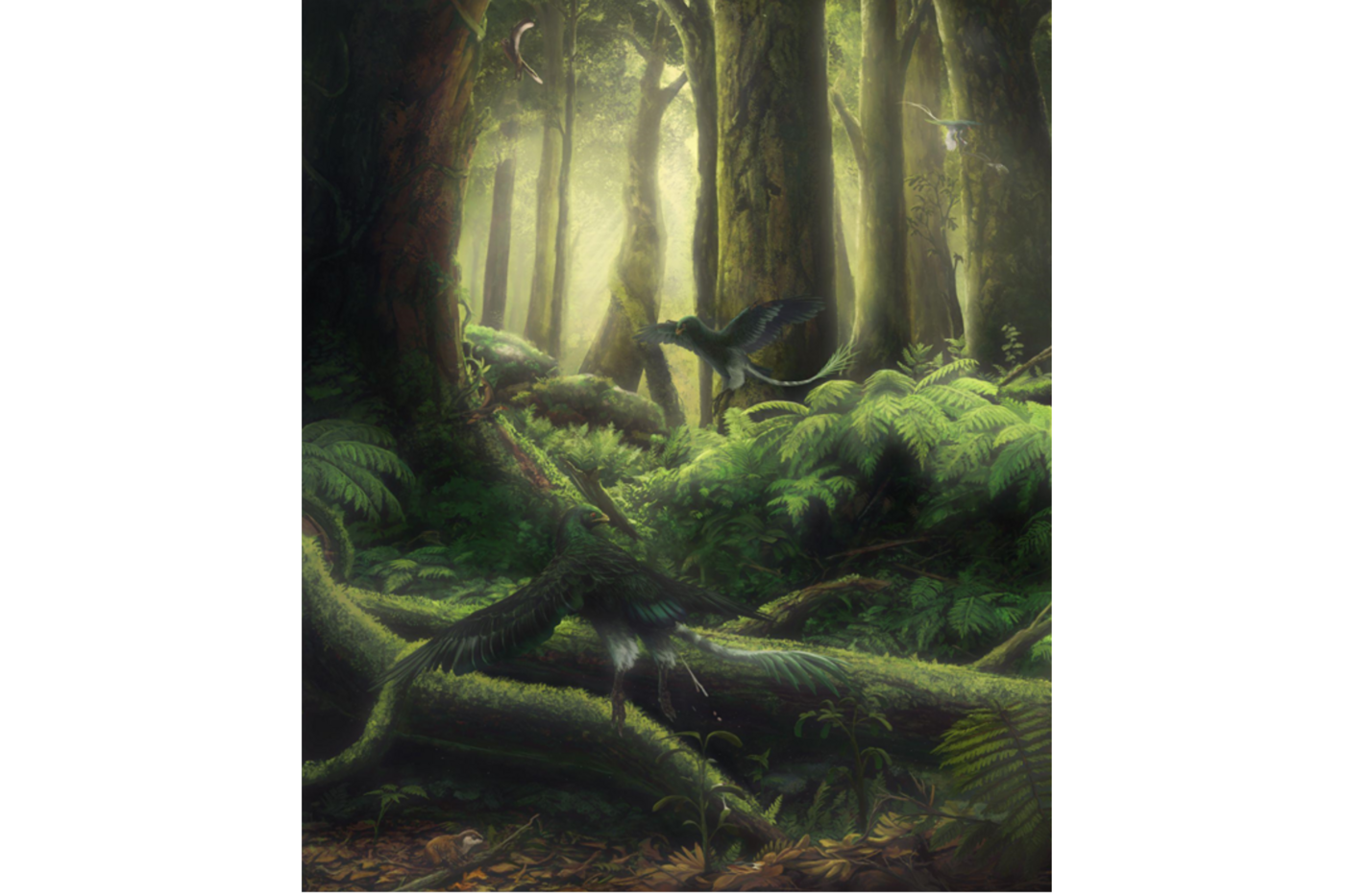
The early bird gets the fruit: Fossil provides earliest evidence of fruit-eating by any animal
The Field Museum has a press release about some recently published research about birds. Associate Curator of Fossil Reptiles Jingmai O’Connor co-authored a paper called “Earliest evidence for fruit consumption and potential seed dispersal by birds”, which has been published in the journal eLife. The paper looks at an exquisitely preserved new skull of Jeholornis. Previously,…
-
The early bird gets the fruit: Fossil provides earliest evidence of fruit-eating by any animal
Phys.org has a story about birds and fruit. Jingmai O’Connor of the Field Museum is co-writer of a paper (in the journal eLife) about the early bird Jeholornis, which is believed to lived on a diet of fruit about 120 million years ago during the Cretaceous Period. Jeholornis fossils have been found in China. “This is…
-
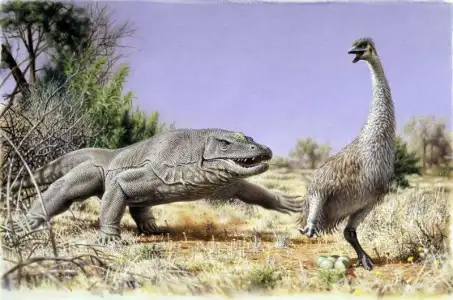
The first Australians ate giant eggs of huge flightless birds, ancient proteins confirm
Phys.org has a story about the extinction of the large flightless birds in Australia. An international team of scientists have found evidence that the earliest humans to arrive on Australia ate the eggs of the large flightless birds that lived in Australia 47,000 years ago. That evidence suggests humans had direct influence on the extinction. …
-

How did birds survive the dinosaur-killing asteroid?
Live Science has a story about the survival of the birds across the K-Pg boundary. A paper in the journal Science Advances looks at brain size of a fossil birds and theorizes that was a factor that helped them survive. When the dinosaur-killing asteroid collided with Earth about 66 million years ago, it triggered a…

