Category: Around the Web
-

Copper Mining in the News
Arizona Geology clues us into two recent articles about copper mining in Arizona. Image: Photos above by Lee Allison, Director of AZGS and Arizona State Geologist via the Arizona Geological Survey. The article with this photograph provides an interesting discussion about the geology of Arizona copper.
-
Lyme Disease Discussion
Anyone who collects fossils and minerals outside could be bitten by a tick and be infected by Lymes disease. So it is good to keep up to date on the subject matter. This informative radio show from Diane Rehm questions as to whether chronic Lyme disease exists, how to test for it, and how to treat…
-

Does More Boron Make a Diamond More Blue?
Via the New York Times: “The Hope Diamond’s 45.52 sparkling, steely blue carats make it the most famous diamond in the world — shrouded in mystery and intrigue since it was pulled out of the ground in 17th-century India… … Scientists already knew that natural blue diamonds had a smattering of boron. It gives them…
-
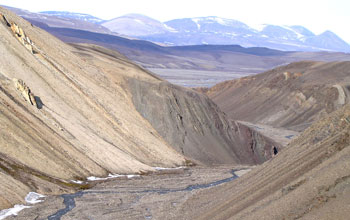
Are Mass Extinctions Always Sudden Events?
Via National Science Foundation: …The deadliest mass extinction of all took a long time to kill 90 percent of Earth’s marine life–and it killed in stages–according to a newly published report. It shows that mass extinctions need not be sudden events. Thomas Algeo, a geologist at the University of Cincinnati, and 13 colleagues have produced…
-
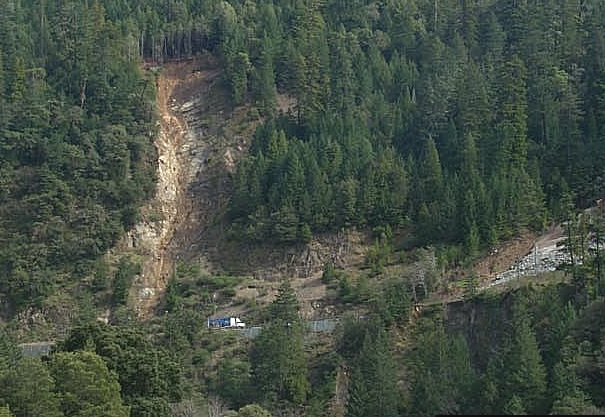
Analyzing Costs of Landslides in California
From LATimes via geology.com: An article in the Los Angeles Times reports that the California Department of Transportation would like to abandon State Highway 39 because landslide and other problems are costing $1.5 million per year to repair. Image from California Department of Conservation site.
-

Gemstone News
Image: Very fine, gem quality emerald crystal from Muzo Mine, Muzo, Vasquez-Yacopí Mining District, Boyacá Department, Colombia; photographer M.M. The Gemstone Forecaster includes many interesting articles this Winter issue, including an interview with C.R. “Cap” Beesley, as well as auction news. Excerpt: GF: What happened with the 74 Carat North Carolina Emerald and the GIA? CB: One…
-

Oldest Dinosaurs Found: Evidence of Organized Nesting
Image: Nobu Tamura, www.palaeocritti.com Article except via The Guardian: (click link to see beautiful photograph of fossils) Oldest dinosaur nests discovered in South Africa Massospondylus nesting site – with fossilised eggs and tiny footprints – is 100m years older than any previously discovered – A dinosaur nesting site older than any discovered before suggests that the creatures…
-
Age of Colorado River
Via geology.com from Arizona Geology Magazine: Arizona’s Grand Canyon reveals an enormous sequence of rocks that represent more than a third of the 4.5-billion-year age of the Earth. The canyon itself, however, is quite young in comparison, with most or all canyon incision occurring over the past 5 million years according to most interpretations. Careful…
-

Fossil LB1 Update Video
Via Past Horizons Archaeology TV: The Mystery of the Hobbit. Ian Tattersall, paleoanthropologist and curator at the American Museum of Natural History, describes the discovery of fossil LB1 – 12/6/11
-
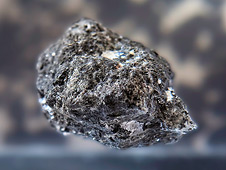
Rocks From Moon in Australia Contain Tranquillityite
Via Science: A mineral previously known only from moon rocks and lunar meteorites has now been found on Earth. Researchers discovered the substance—dubbed tranquillityite after the Sea of Tranquility, where Apollo 11 astronauts landed on the Moon in July 1969— at six sites in Western Australia. The mineral occurs only in minuscule amounts and has…
-
Dinosaur Artwork of the Past
Love in the Time of Chasmosaurs So many interesting photographs of dinosaur artwork and dinosaur parks, complete with commentary.
-
Princeton’s Art of Science Gallery 2011
Gorgeous photographs of artistic views of science – 2011 gallery from Princeton. You will have to click to see!
-
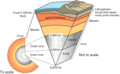
Age of Earth’s Core Older Than Thought
Via geology.com from Michigan Tech: Researchers at Michigan Tech, the University of Rochester and Yale University have determined that Earth’s core could be at least 1.2 billion years older than previously thought…. Image: USGS
-

Gift Ideas: New Books
A couple books come to mind. If you know of other books that you would recommend for a gift, put the information on the book in the comments. The Other Saber-tooths by Virgina Naples. Geology of Illinois, D. R. Kolata and C. K. Nimz, editors
-
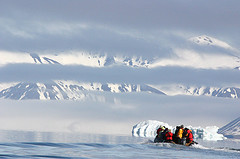
Death by Ice – Who Knew It Could Be So Quick?
One way to create the environment for a fossil to develop (must watch video upon clicking link). “A bizarre underwater “icicle of death” has been filmed by a BBC crew. With timelapse cameras, specialists recorded salt water being excluded from the sea ice and sinking. The temperature of this sinking brine, which was well below…
-
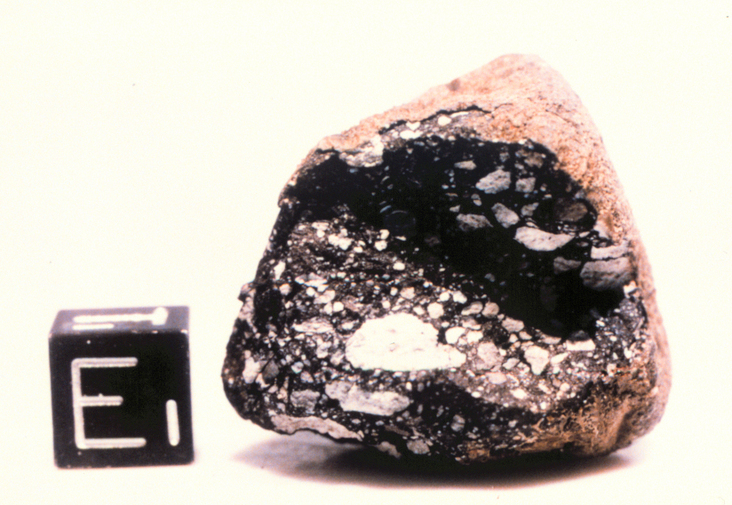
Gift Idea: Book on Meteorites
Geology.com posted on books about meteorites that you can buy from their site: Meteorite Hunting by Geoffrey Notkin, cohost of the Meteorite Men television series. Meteorites by Alain Carion. Both are available in the Geology.com Store. Photo: http://solarsystem.nasa.gov/multimedia/display.cfm?IM_ID=846
-

Looking for Mammalian Fossils in Antarctic
From the Antarctic Sun: …. But the big prize — Cretaceous mammalian fossils that could bolster theories about vertebrate dispersal through the southern hemisphere — still eluded him. “All the biogeographical indications are that mammals had to have been there,” said MacPhee, a curator in the mammalogy department at the American Museum of Natural History…
-
Historical Map Collection
From USGS via Geology.com: “Nearly 90,000 high resolution scans of the more than 200,000 historical USGS topographic maps, some dating as far back as 1884, are now available online. The Historical Topographic Map Collection includes published U.S. maps of all scales and editions.” Quoted from the USGS news release.
-
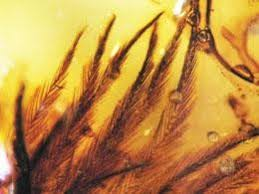
Preserved Dino Feathers found in Amber
From Science via NatureNews: The amber samples are between 70 and 85 million years old, and come from a site called Grassy Lake in western Canada that was once home to a conifer forest. The site is well known for the wide range of insects found preserved in its amber. Palaeontologist Ryan McKellar and his…
-

Paleobiology Database
The Paleobiology Database seeks to provide researchers and the public with information about the entire fossil record. You can use the site to find out about fossil collections, individual plants and animals, taxonomic groups, references to publications, stratigraphic units, time scales, and time intervals. All of our data can be downloaded, including collection, occurrence, or…
-
USGS Free Textbook on Hydrology
Via Geology.com from USGS: To learn about basic ground water concepts you can download and print a free copy of USGS Water Supply Paper 2220, Basic Ground-Water Hydrology by Ralph Heath. This is a large .pdf file but worth the download wait. A great free textbook for a college course.
-
Ancient Seas May Have Poisoned Life
Via Science News: Soon after complex animals made their first great strides onto the stage of life, the oceans brewed up a toxic chemical mix that put the brakes on evolutionary innovation, suggests a paper in the Jan. 6 Nature. The culprits? Too little oxygen and too much sulfur dissolved in coastal waters, reports a…
-
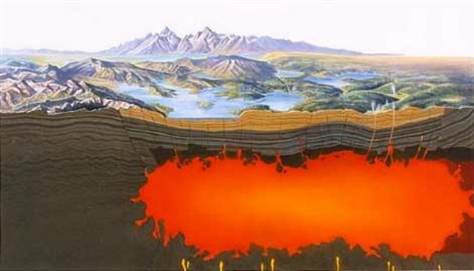
Yellowstone: No Big Eruption Soon
Via MSNBC from geology.com: It’s no mere doomsday pseudoscience: The Yellowstone supervolcano really could be the end of us all. When the Yellowstone Caldera — the name of the national park’s geographic structure, which roughly translates as “caldron” — blows its lid, much of the continental United States will get covered in a blanket of…
-
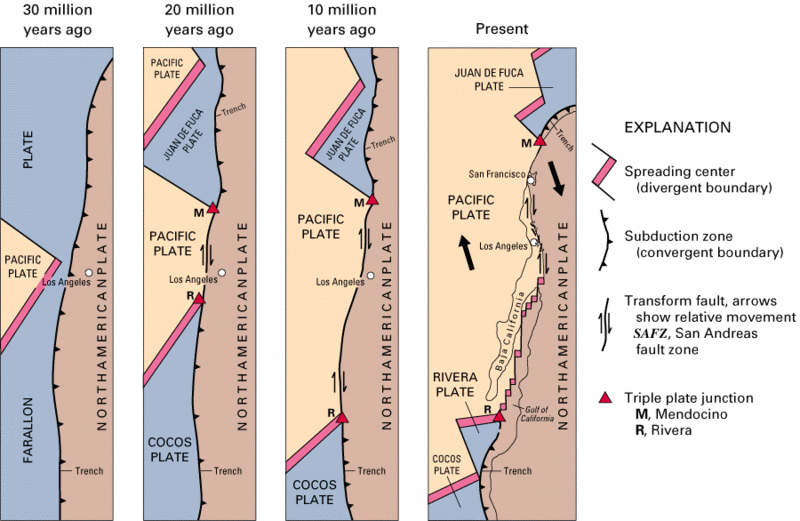
Tracking Tetonic Plates
From Anchorage News via geology.com: The Pacific Northwest is a restless place. The ground is being shoved by tectonic plates. Snow-capped volcanoes inflate and deflate in concert with the creep of molten rock. Coastlines bulge as tension builds on an offshore fault very like the one that snapped in Japan on March 11. Scientists now…
-

Olivine Rain
Geology.com: “NASA’s Spitzer Space Telescope detected tiny green crystals, called olivine, thought to be raining down on a developing star. This graphic illustrates the process, beginning with a picture of the star and ending with an artist’s concept of what the crystal “rain” might look like.” Quoted from the NASA press release.
-

Walt Whitman Poetry on Geology
The earth is rude, silent, incomprehensible at first, Nature is rude and incomprehensible at first, Be not discouraged, keep on, there are divine things well envelop’d, I swear to you there are divine things more beautiful than words can tell. — “Song of the Open Road” Photo: 21. Basal surge and nonwelded rhyolitic Nelson Mountain…
-

Ionosphere New Predictor of Earthquakes?
Via the ESCONI Yahoo Group Discussion Board from Technology Review: … They say that before the M9 earthquake, the total electron content of the ionosphere increased dramatically over the epicentre, reaching a maximum three days before the quake struck…
-

USGS Library
USGS Photo: St. Francis Dam Flood March 12-13, 1928. Flood-twisted railroad track between Castic Junction and Piru, California. March 18, 1928. From USGS via Geology.com: …Public users are welcome to visit any of the USGS libraries and use their collections; libraries are open Monday through Friday, except Federal holidays… To borrow materials from a USGS…
-
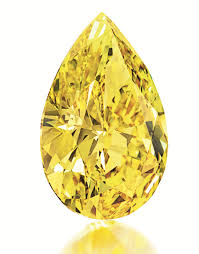
110 Carat Diamond at London Natural History Museum
From the Guardian: At 110 carats, the price of the Cora Sun-Drop is as closely guarded as the diamond itself. The stone, which took six months to cut and is the only pear-shaped yellow diamond in the world, goes on display on Friday at London’s Natural History Museum
-

Possible New Dinosaur Museum
Via Miami Herald: A German company has big plans to turn a struggling geological state park in the Keys into a prehistoric open-air museum with life-size dinosaurs and a Megalodon shark…. Image: “Calvert Marine Museum, Solomons, Maryland”
