Tag: vertebrate
-
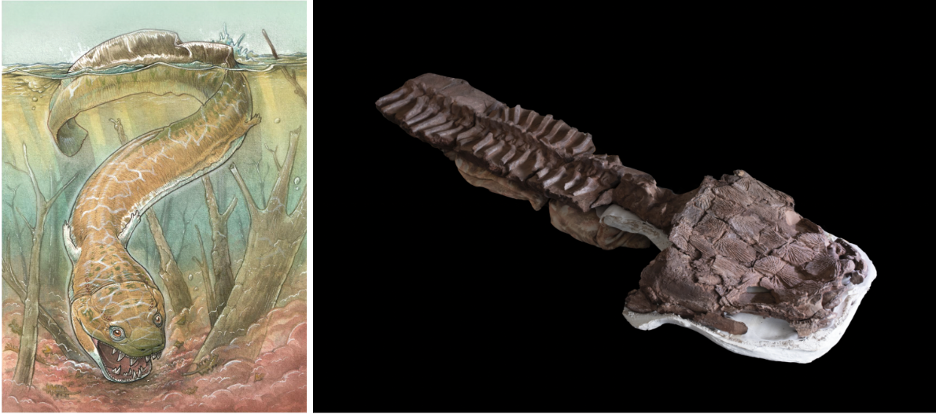
This Bigheaded Fossil Turned Up in a Place No One Expected to Find It
Left: Artist’s rendering of Gaiasia jennyae. Credit: Gabriel Lio. Right: Skeleton, including the skull and backbone, of Gaiasia jennyae. Credit: C. Marsicano. The New York Times has a story about a new stem tetrapod. Gaiasia jennyae lived 280 million years ago, which is about 40 million years before the evolution of the dinosaurs. It lived…
-

Was This Sea Creature Our Ancestor? Scientists Turn a Famous Fossil on its Head
The fossil of Pikaia, a creature that lived 508 million years ago and may have been a close relative of vertebrates.Credit…Mussini et al., Current Biology 2024 Carl Zimmer writes about Pikaia in his ORIGINS column in the New York Times. Discovered in 1909 by Charles Walcott in the Burgess Shale, Pikaia gracilens, which lived during…
-

Newly Discovered Fossil from the Smithsonian’s Collection Named After Kermit the Frog
Smithsonian Magazine has an article about a new species named for the Muppet character Kermit the Frog. Kermitops gratus lived during the early Permian in what is now Texas, about 280 million years ago. The paper’s authors Calvin So, Arjan Mann, and Jason Pardo describe the new species as a pro-amphibian. The skull fossil was…
-

PBS Eons: Why We Only Have Ten Toes (It’s a Long Story)
PBS Eons has a new episode. This one discusses the evolution of vertebrate limbs, especially hands and feet. So, how did we get to fix fingers and toes? Today, all mammals from humans to bats have five fingers or fewer. Yes, even whales, whose finger bones are hidden in their fins. Birds have four…
-
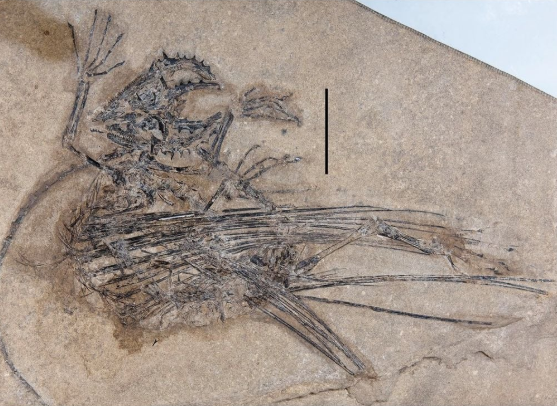
The Oldest Airborne Vertebrate Animal Was a Reptile With ‘Weird’ Wings
Smithsonian Magazine has a story about the first flying vertebrate. The fossil of Weigeltisaurus jaekeli was found in 1992 in Germany. It lived during the Permian Period over 250 million years ago. A new full analysis of the specimen was recently published in the journal PeerJ. Where the researchers theorize that the bony rods supported…
-

Paleonursery offers rare, detailed glimpse at life 518 million years ago
Phys.org has a story about a newly discovered fossil Lagerstatte. A paper published in Nature details the new deposit, which is located near Kunming, China. It dates to the middle Cambrian about 518 million years ago, which is same age as the Chengjiang locality. For reference, the Burgess Shale dates to about 508 million years…
-
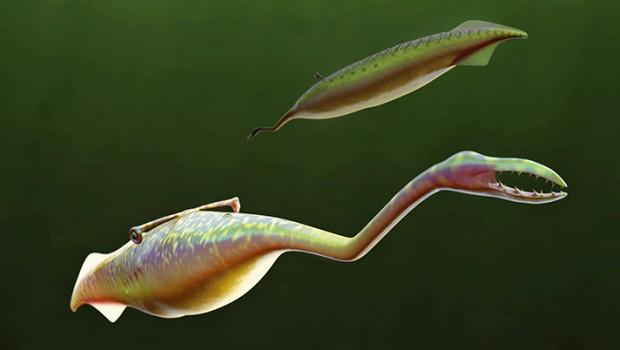
ScienceMag: 300-million-year-old ‘Tully Monster’ may not be the creature scientists thought it was
Science Magazine has a story about the Tully Monster. A paper, which appeared in the Proceedings of the Royal Society B, calls into question whether Tullymonstrum is a vertebrate. The new research found melanosomes in extant invertebrate eyes (Octopus and Squid). That was a key part of the previous argument as it was widely believed…
-
Carlton PhD Student: Filling in the Fossil Record
Carlton University in Ottawa, CA has a press release about the PhD student that has been involved in recently describing two new Mazon Creek vertebrates. Earlier this year, Diabloroter bolti (paper) and Infernovenator steenae (paper) were published. The research has been conducted by Arjan Mann, Jason D Pardo, and Hillary C Maddin of the Department…
-
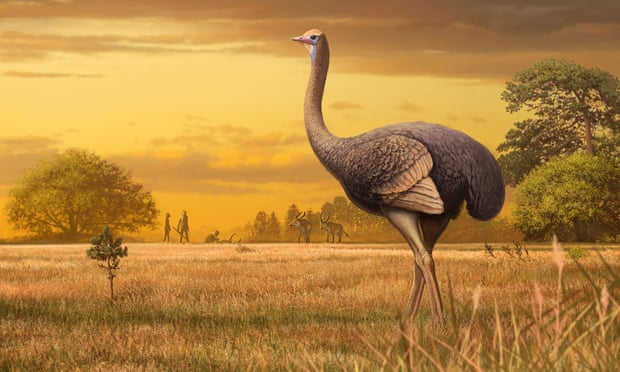
Half-tonne birds may have roamed Europe at same time as humans
The Guardian has a post about large flightless bird that might have roamed Europe at the same time. Researchers discovered the fossilized thigh bone of a giant bird in a cave on the Crimean peninsula. It belonged to an animal called Pachystruthio dmanisensis, which lived between 1.5 and 1.6 million years ago. This bone and…
-

Infernovenator steenae, a new serpentine recumbirostran from the ‘Mazon Creek’ Lagertätte further clarifies lysorophian origins
The Zoological Journal has another new paper describing a Mazon Creek vertebrate. This one is called Infernovenator steenae. The paper is authored by Arjan Mann, Jason D Pardo, and Hillary C Maddin of the Department of Earth Sciences, Carleton University in Ottawa, Ontario, CA. Earlier this year, Mann and Maddin published a description of a…
-
Palaeocast Episode 100: Tiktaalik
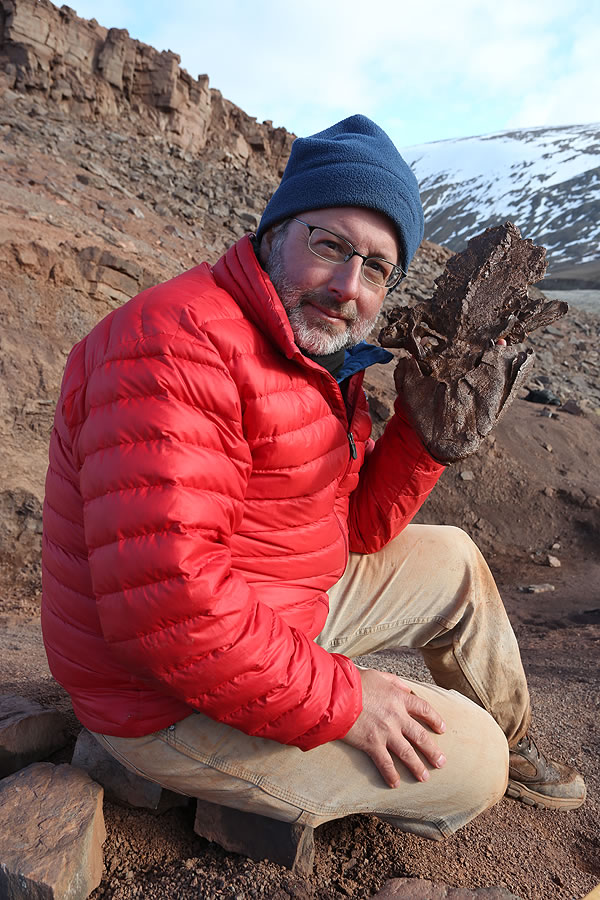
There’s a new episode of Palaeocast. It’s an interview of Neil Shubin. He talks quite extensively about the discovery of Tiktaalik, where to look for fossils, why development matters, and his deep involvement in science communications. One of palaeontology‘s great themes of questioning is the rise of novelty: how new structures and functions arise in…
-
Reminder: The General Meeting for April 20th, 2018 is at 7:30
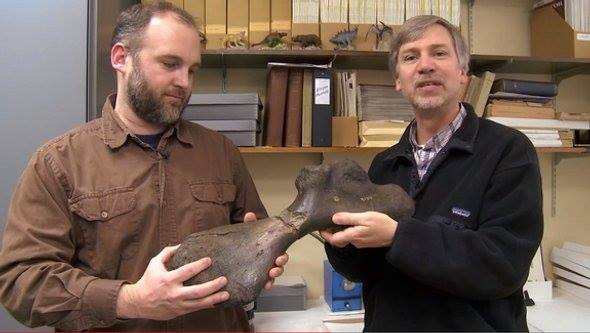
Note: New time – 7:30 and different bldg and room – HSC, Room 1234ESCONI General Meeting, 7:30 PM College of Dupage – Health and Science Center (HSC) Building, Room 1234 (Map) – Topic: “Great Steps in the History of Life: The Origin of Limbed Vertebrates” by Dr. Ted Daeschler from the Academy of Natural Sciences…
-
Rainforest collapse 307 million years ago impacted the evolution of early land vertebrates
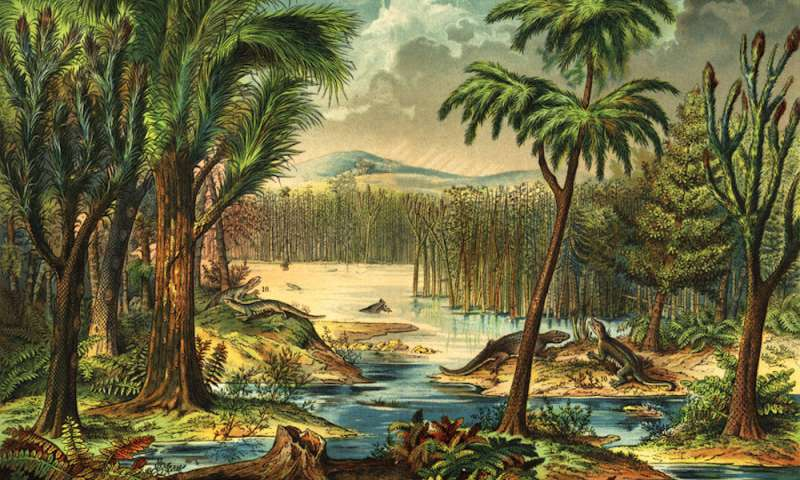
Phys.org has a story about a mass extinction in plants that occurred during the Pennsylvannian Period. Researchers from the University of Birmingham published a paper in the Proceedings of the Royal Society B. The mass extinction seems to have been caused by the onset of a drier climate 307 million years ago. This led to…
-
PLOS Paleo: Vote for the Top 10 Taxa of 2017
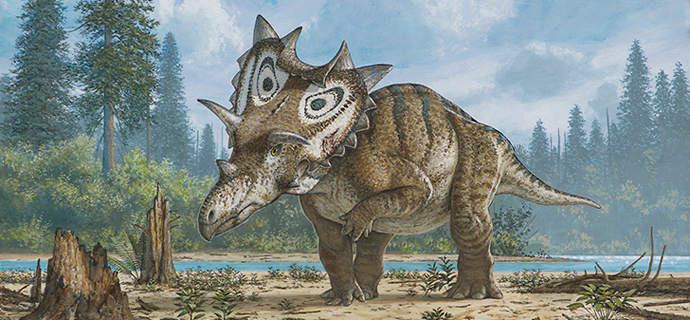
On the PLOS Paleo blog, you can vote for the top 10 taxa of 2017. There’s many interesting choices, both vertebrate and invertebrate, dinosaurs (Burianosaurus augusta and Borealopelta markmitchelli), fish (Babelichthys olneyi), cats (Anatoliadelphys maasae), and beetles (Antarctotechus balli) are just a few of the possible selections. Have fun and tell all your friends! Hurry…
-

The “Tully Monster” is a vertebrate!
A new paper, co-authored by Paul Mayer of the Field Museum, in Nature sheds light on an age-old mystery. Tullymonstrum gregarium, commonly known as the Tully Monster, is the official state fossil of Illinois, designated in 1989. It’s a soft bodied animal found in the late Carboniferous Mazon Creek biota (approximately 309-307 million years…
