Tag: Triassic
-

Microcoprolite morphotypes from the Revueltian (Upper Triassic:Norian) age Homestead Site, Garita Creek Formation, east-centralNew Mexico, USA
The Lauers are back with more science! The paper “Microcoprolite morphotypes from the Revueltian (Upper Triassic: Norian) age Homestead Site, Garita Creek Formation, east-central New Mexico, USA” was published in the journal Ichnos, which is an international journal for plant and animal traces.
-
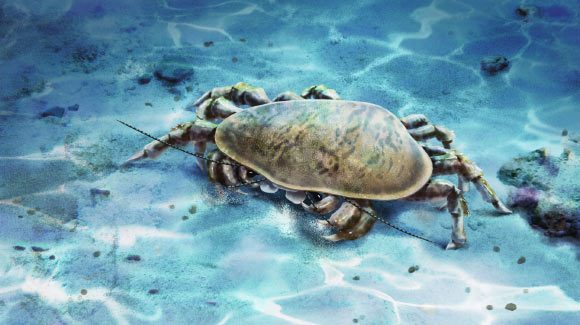
Early Triassic Cyclidan Crustacean Had Powerful Jaws
Sci-News has an article about a distinctive, but enigmatic, group of arthropods called Cyclidans. Cyclidans appeared during the Carboniferous and hung around until the Late Cretaceous.
-
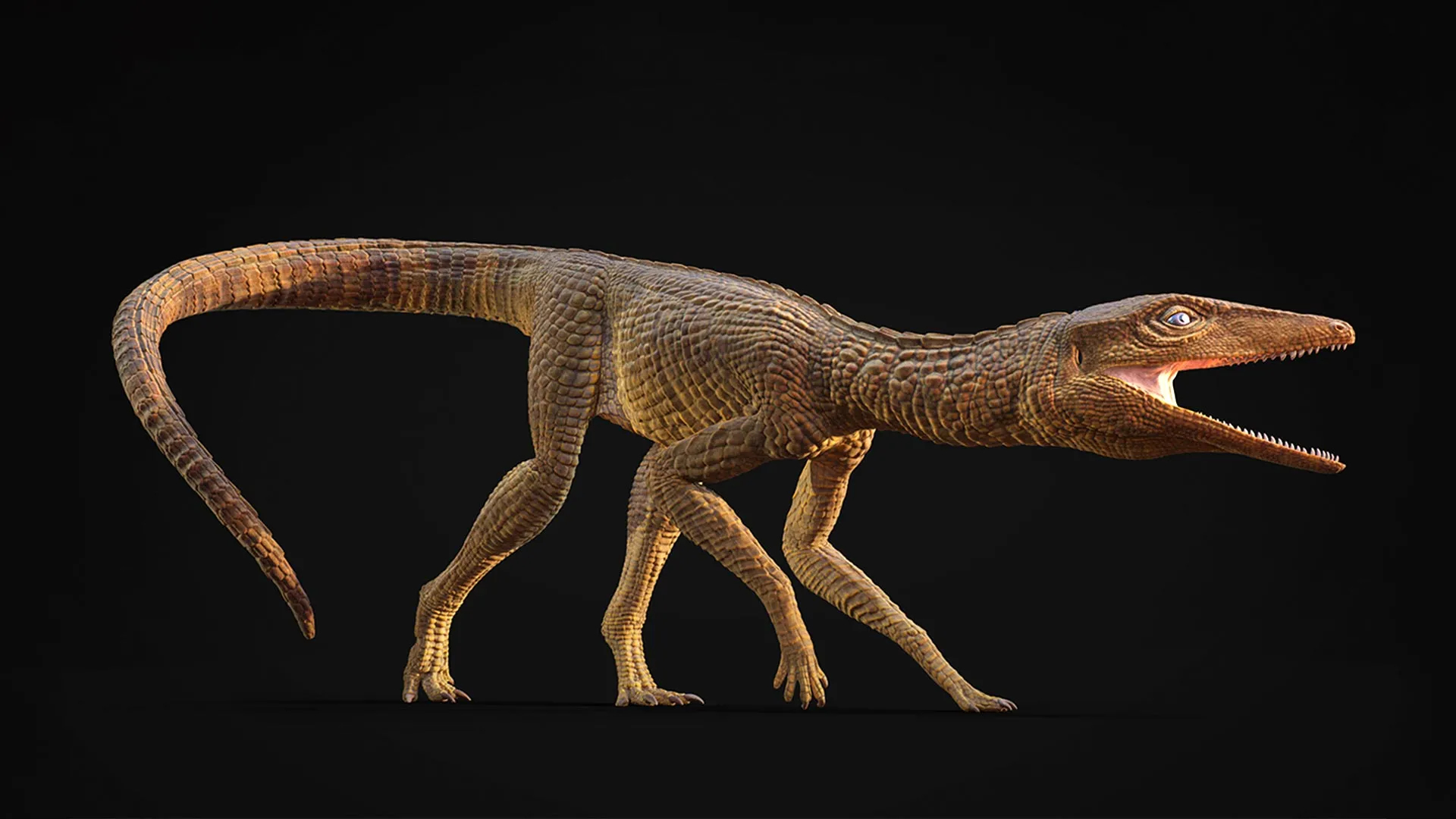
This crocodile ran like a greyhound across prehistoric Britain 200 million years ago
Science Daily has a story about a newly discovered Triassic reptile from the UK. The animal, Galahadosuchus jonesi, lived about 215 million years in what is now Gloucester, UK. It was probably a fast, land-dwelling predator.
-

PNAS: Can paleontologists pinpoint the dawn of the dinosaurs?
PNAS has an interesting news feature about the origin of the dinosaurs. When and where did they first appear? Evidence points to an amimal known as Lewisuchus admixtus that lived in what is now Argentina about 236 million years ago. There’s a small, but fierce, jawbone in Argentina’s national natural science museum in Buenos Aires.…
-
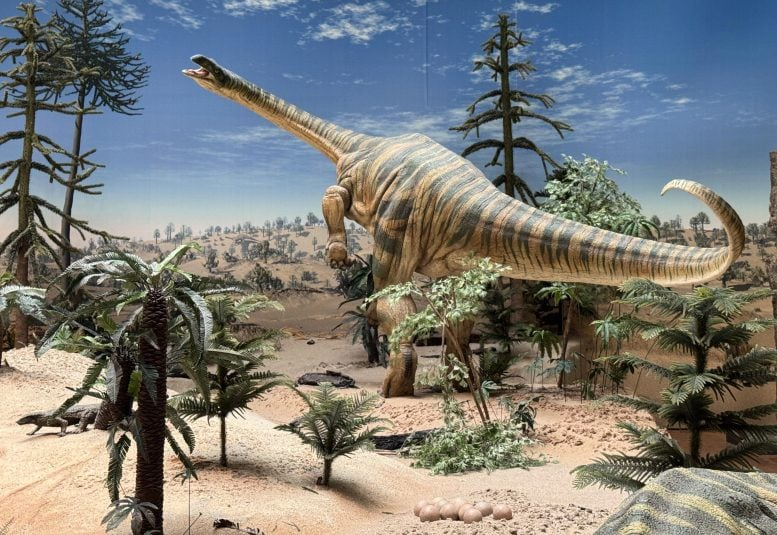
252-Million-Year-Old Fossils Reveal Secrets of Triassic Life
SciTechDaily has an article about a new survey of the Triassic fossils from Germany. Researchers found interesting correlations between fossil animals and their associated palaeoenvironments with implications for modern day consequences of climate change and biodiversity loss. The study “Triassic terrestrial tetrapod faunas of the Central European Basin, their stratigraphical distribution, and their palaeoenvironments” was…
-
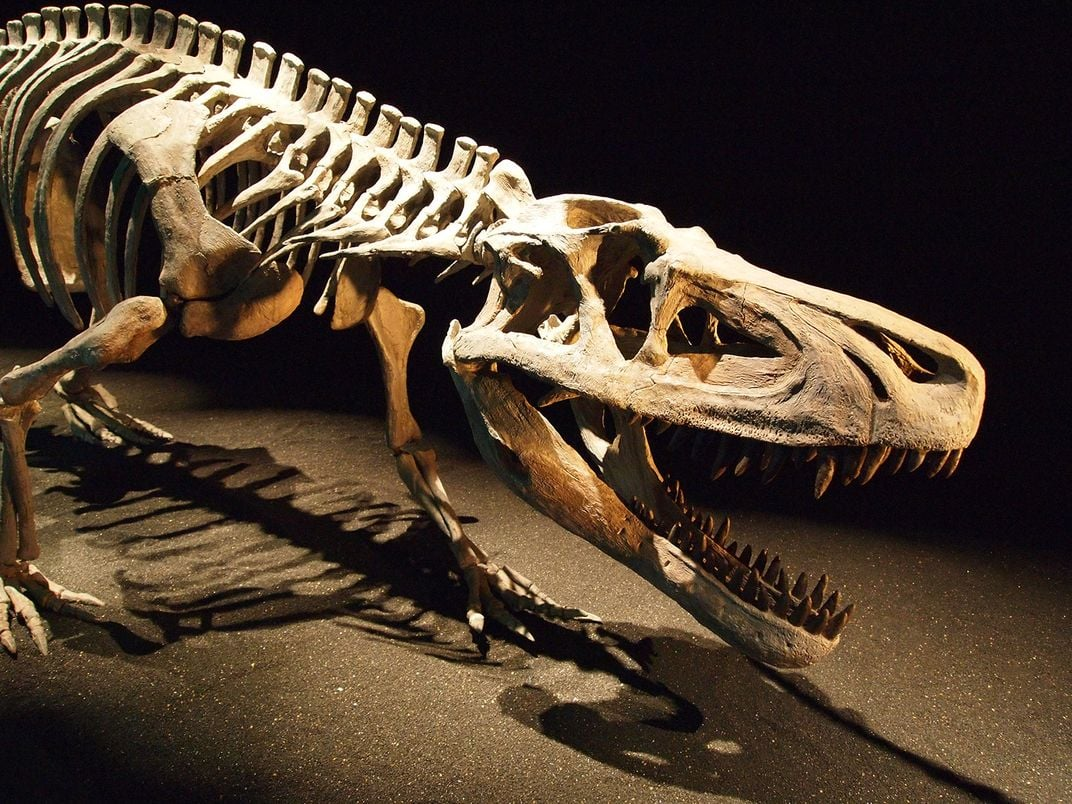
How a Mass Extinction Driven by Ancient Volcanoes Led to the Age of the Dinosaurs
Smithsonian Magazine features a story on the Triassic-Jurassic mass extinction, a pivotal event that reshaped life on Earth. The late Triassic was vastly different from the Jurassic and Cretaceous periods that followed. During this time, early dinosaurs played only minor roles, while the landscape was dominated by giant amphibians, a diverse array of crocodilian relatives—ranging…
-

Triassic Lizard-Like Parareptile Had Unusual Dental Apparatus
SciNews brings news of a new fossil parareptile from southwest England. Threordatoth chasmatos lived between 220 and 210 million years ago in the Triassic Period. It was discovered in Cromhall Quarry in south Gloucestershire, southwest England. The animal is a member of the Leptopleuroninae, a subfamily of extinct lizard-like parareptiles within the clade Procolophonidae. These animals…
-

PBS Eons: Could You Survive the End-Triassic?
PBS Eons has a new episode of their “Surviving Deep Time” podcast. This one is about the Triassic/Jurassic mass extinction. This is the extinction event that lines up with the break up of Pangaea. In the aftermath of the Great Dying, rapid evolutionary radiation resulted in the rise of a bunch of weird creatures in…
-
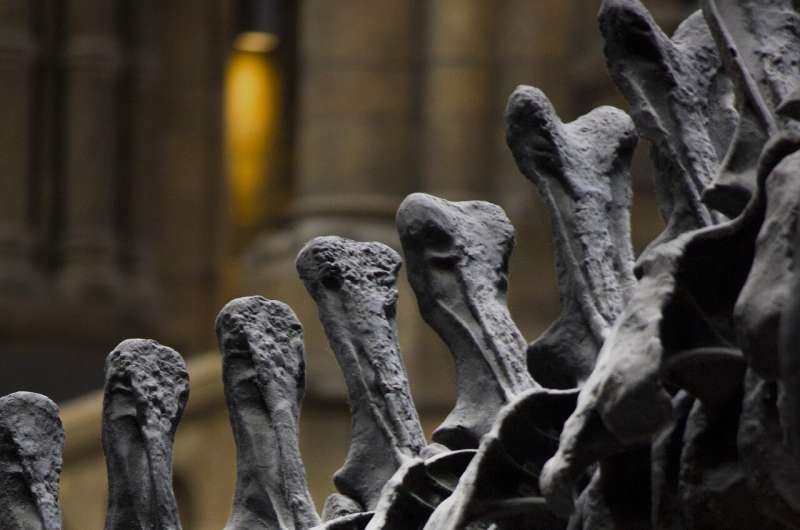
Brazilian researchers discover dinosaur fossil after heavy rains in Rio Grande do Sul
Credit: Pixabay/CC0 Public Domain Phys.org brings news of the discovery of what may be one of the most ancient dinosaurs. The specimen was found near a reservoir in the municipality of Sao Joao do Polesine in the southern state of Rio Grande do Sul after heavy rains in May 2024. The bones are thought to…
-

Triassic Crocodile-Like Reptile Discovered in Brazil
Artistic representation of a Middle-Late Triassic landscape of southern Brazil: (a) a large Prestosuchus chiniquensis feeds on the carcass of a dicynodont while individuals of Parvosuchus aurelioi compete for scraps; (b) and (c) depict details of individuals of Parvosuchus aurelioi. Image credit: Matheus Fernandes. SciNews has a story about the discovery of a new crocodile-like reptile from Brazil. Whereas the…
-

PBS Eons: When The Atlantic Ripped Open A Supercontinent
There’s a new PBS Eons. This one is about the breakup of Pangea and the formation of the Atlantic Ocean. While the eruptions of the volcanoes along the Mid-Atlantic Ridge usually don’t trouble us, their birth was once responsible for ripping a supercontinent apart and creating the Atlantic Ocean that we know today.
-

Paleontologists unearth what may be the largest known marine reptile
Phys.org has a story about the discovery of what might be the largest marine reptile ever found. A father and daughter, Justin and Ruby Reynolds from Braunton, Devon, found pieces of the jawbone of a huge ichthyosaur that lived about 202 million years ago during the Triassic Period. While hunting fossils on the beach at…
-
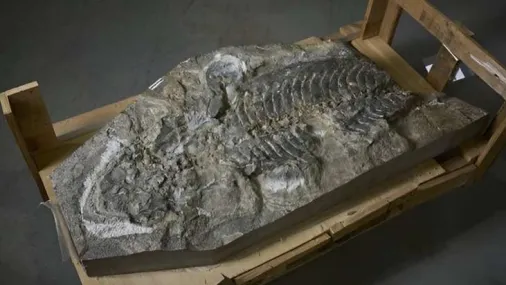
240 million-year-old fossil of salamander-like creature with ‘gnarly teeth’ unearthed in rocks for garden wall
LiveScience has an article about the discovery of a salamander-like animal in Australia. The animal, Arenaerpeton supinatus — meaning “supine sand creeper” — lived about 240 million years ago during the Triassic Period in what is now Australia. It was estimated to be 4 foot (1.2 meters) long and looked similar to the modern Chinese…
-
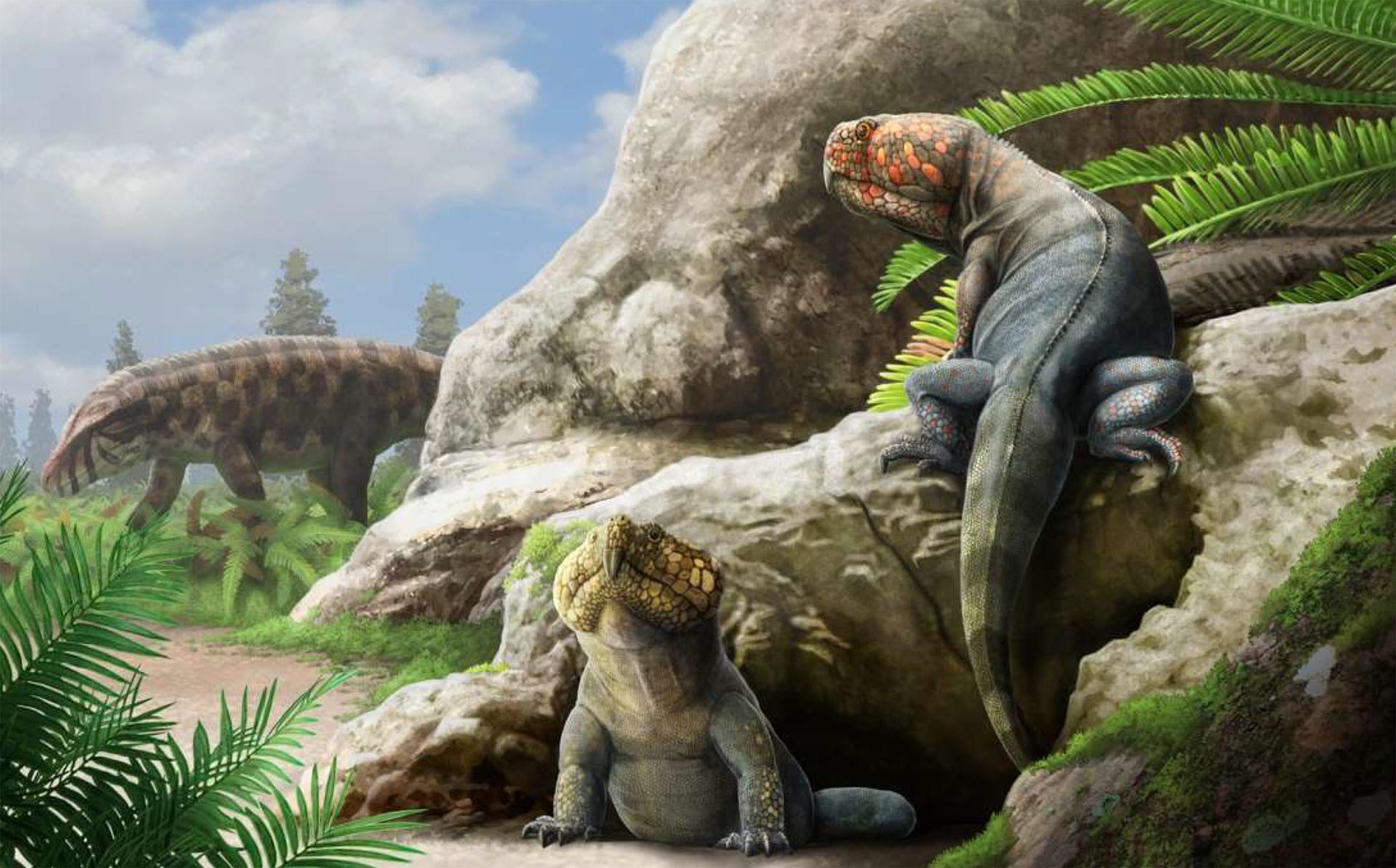
New Species of Rhynchosaur Unearthed in Wyoming
SciNews has a story about a the discovery of a new species of Rhynchosaur. The animal, Beesiiwo cooowuse, lived around 230 million years ago during the Triassic Period. It was found in the Popo Agie Formation in central Wyoming, in the United States. Rhynchosaurs are archosaurs, which makes it a cousin to dinosaurs. This new…
-

Hollow bones that let dinosaurs become giants evolved at least three times independently, shows study
Phys.org has an interesting story about dinosaur evolution. Dinosaurs had hollow bones, which made it possible for them to grow as large as they did. A new study published in the journal Scientific Reports looked at three Brazilian specimens from the late Triassic and found they had hollow places in their vertebra similar to later…
-
Ancient lizard with teeth like butcher knives ‘re-calibrates the whole shebang’ of reptile evolution
LiveScience has a story about a new lizard from the Triassic. Cryptovaranoides microlanius dates to about 202 million years, which makes it the oldest lizard fossil known by about 35 million years. It was discovered in 1950’s near Britol, England and had been incorrectly described as Clevosaurus. The animal was redescribed recently in the journal Science Advances. For the new study, researchers analyzed…
-

Brasilodon is Earliest Known Mammal, New Research Shows
SciNews has a story about the earliest known mammal. The early mammal Brasilodon quadrangularis dates to 225 million years ago. It was found in the Late Triassic outcrops of the Caturrita Formation of Rio Grande do Sul in Brazil and named by J. Bonaparte, A. Martinelli, C. Schultz, and R. Rubert in 2003. New research…
-
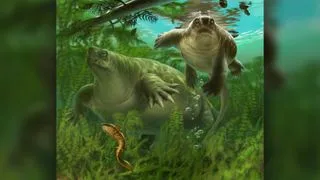
Mammal ancestor looked like a chubby lizard with a tiny head and had a hippo-like lifestyle
Live Science has a article about an mammal ancestor. Lalieudorhynchus gandi lived about 265 million years ago in what is now the Lodève Basin in southern France. At that time, southern France was part of northeastern Pangaea. Mammals had not evolved as a group yet. L. gandi was described in a paper in the journal Paleo…
-

Dinosaurs took over the planet because they could endure the cold, scientists say
LiveScience has a post about how dinosaurs came to dominate in the early Jurassic. It’s long been theorized that dinosaurs were better adapted to hot weather and so took over from their crocodillian cousins around the Triassic/Jurassic extinction event about 202 million years ago. Now, a paper in the journal Science Advances proposes that it…
-
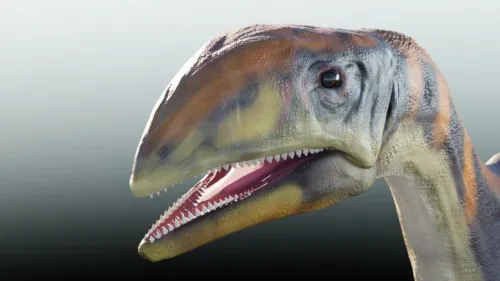
“Cold Bone”: New Dinosaur Species Discovered That Lived on Greenland 214 Million Years Ago
SciTechDaily has a story about a new dinosaur. Called Issi saaneq, which means “Cold Bone”, this animal lived about 214 million years ago during the late Triassic Period in what is now Greenland. Believed to be an ancestor to sauropods, it was medium sized with a long neck, however, it walked on its hind legs. …
-
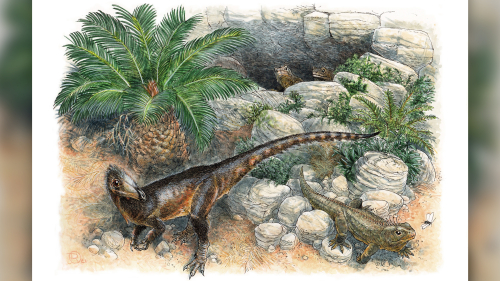
Newfound ‘chief dragon’ dinosaur species was actually the size of a chicken
LiveScience has an article about a newly discovered “dragon”. This animal’s name, Pendraig milnerae, means “chief dragon”, but in reality it was about the size of a chicken. It lived about 215 million years ago during the late Triassic Period in what is now modern day Wales and is one of the oldest known dinosaurs…
-

Volcanic Eruptions Helped Dinosaurs Dominate Planet Earth
The New York Times Trilobites column has an article about volcanic eruptions during the Triassic Period. Recently, a paper published in the Proceedings of the National Academy of Sciences describes striking evidence that volcanoes helped dinosaurs spread across the globe during the Triassic Period about 234 million years ago. It has long been debated what…
-
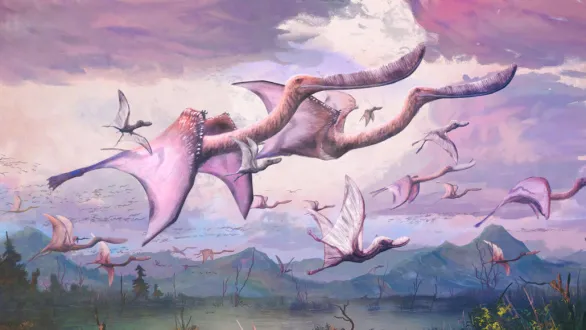
Pterosaurs may have been able to fly as soon as they hatched
ScienceNews has a story about pterosaurs. New research suggests that pterosaur hatchlings might have been able to fly right after hatching. This study was published in the journal Scientific Reports. Pterosaur hatchlings may have been able to fly right out of the shell — although the flight of those ancient baby reptiles might have looked…
-
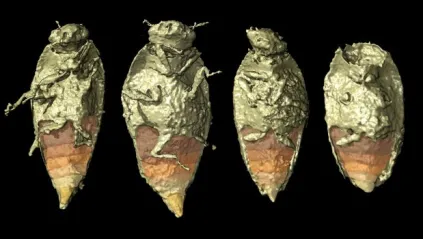
Palaeocast Episode 127: Coprolite Inclusions
Palaeocast has a new episode. This one is relevant given the recent discovery of a beetle in a coprolite from the Triassic of Poland. One of the factors that makes palaeontology such a popular science is its constant ability to surprise us. It seems almost every week that a new study is released that significantly…
-
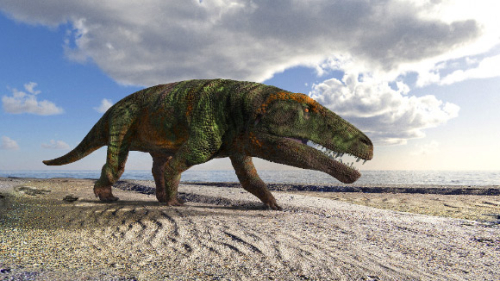
SciNews: 250-Million-Year-Old Archosauriform Footprints Found in Italy
SciNews has a story about fossil footprints from the early Triassic by an archosauriform. Archosauriformes were animals that later evolved into archosaurs (“ruling lizards”), which includes dinosaurs, crocodiles, pterosaurs, and some other extinct groups, The tracks date to about 250 million years ago and were found on the Gardetta Plateau in the Western Alps. For…
-
PBS Eons: The Triassic Reptile With “Two Faces”
PBS Eons has a new episode. This one is about a strange reptile called Adapodentatus “unusual teeth” from the Triassic Lagerstätte of Luoping in China. It’s one of the rare animals that changed its diet from meat to plants. Figuring out what this creature’s face actually looked like would take paleontologists years. But understanding…
-
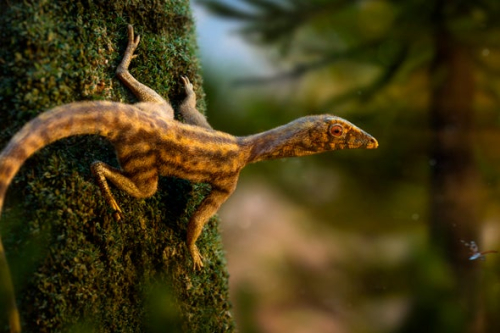
SciAm: Pterosaur Origins Flap into Focus
Scientific American has a piece on the origins of pterosaurs. A group of animals called lagerpetids are now thought to e the ancestors of pterosaurs. These animals lived between 237 and 201 million years ago during the Triassic Period. The details are in a paper in the journal Nature, which was published by Sterling Nesbitt,…
-
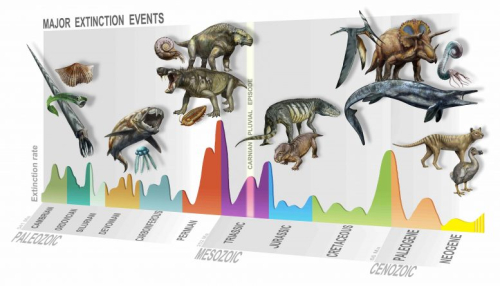
SciTechDaily: Discovery of a New Mass Extinction – Carnian Pluvial Episode – 233 Million Years Ago
SciTechDaily has a story about the identification of a new mass extinction. This one called the “Carnian Pluvial Episode”. It occurred about 233 million years ago during the Triassic Period. The cause is believed to be flood basaltic volcanic eruptions in western Canada. Some of the outcomes was the rise of the dinosaurs and the…
-

LiveScience: ‘Tiny bug slayer’ relative of dinosaurs and pterosaurs would have fit in the palm of your hand
LiveScience has a story about a cousin to both dinosaurs and pterosaurs. Kongonaphon kely, meaning “tiny bug slayer”, lived about 237 million years ago, during the Triassic period, in what is now Madagascar. It was discovered in 1998, but just recently described in a paper that appeared in the journal Proceedings of the National Academy…
-
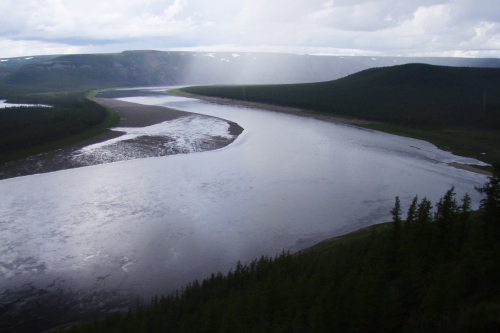
The Epic Siberian Journey to Solve a Mass Extinction Mystery
Wired has an article about research into the Permian-Triassic mass extinction event, which happened about 250 million years ago. Sometimes called “The Great Dying”, this event, which was really a series of events, took out about 70% of land species and more than 95% of marine species. The current theory about its cause is a runaway…

