Tag: theropod
-
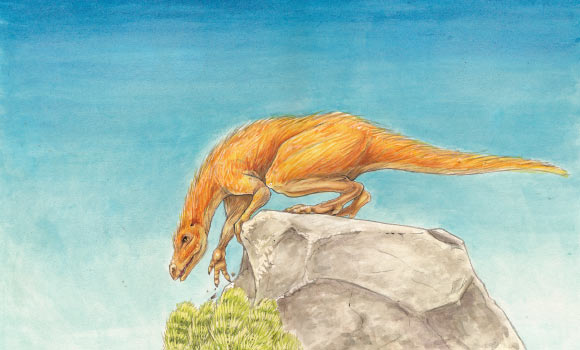
New Species of Jurassic Theropod Dinosaur Identified in England
SciNews brings word of a new dinosaur discovered in England. Dornraptor normani lived about 200 million years ago in the early Jurassic Period, near what is now Dorset, England. The animal belongs to a group called the averostrans, which includes most theropod dinosaurs. The discovery was published in the paper “A new name for old…
-

PBS Eons: Is This A Theropod? A Sauropod? A Third Thing?
PBS Eons has a new episode on Youtube. This one is about therizinosaurs and where they fit into the dinosaur family tree. How the therizinosaurs lived and evolved ended up being just as weird as their mixed-up anatomy.
-
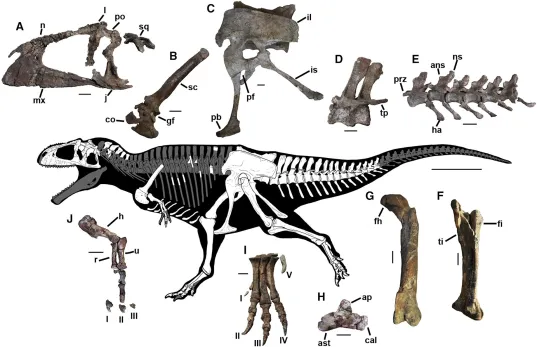
Big head, small arms: A newly discovered gigantic dinosaur evolved in a similar manner to Tyrannosaurus rex
The Conversation has a story about the evolution of meat-eating dinosaurs. Meraxes gigas is a recently named theropod dinosaur from Argentina. It was found near Villa El Chocon in the Huincul Formation and lived about 95 million years ago. Meraxes is a large theropod, the group of bipedal, often meat-eating, dinosaurs which also includes birds, and…
-

Growth Rings From Fossil Bones Reveals T. rex Had Huge Growth Spurts, but Other Dinosaurs Grew “Slow and Steady”
SciTechDaily has a story about Tyrannosaurs rex and how it grew. A new study, published in the journal Proceedings of the Royal Society B, discusses diverse growth strategies in dinosaurs and how that relates to body size. The paper’s authors include Tom Cullen of the North Carolina Museum of Natural History and Peter Makovicky of…
-
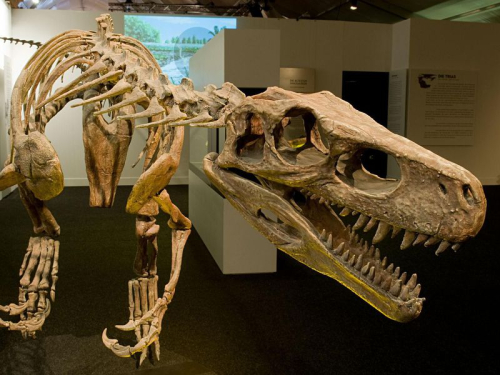
The Rise of Meat-Eating Dinosaurs Is More Complicated Than We Thought
Smithsonian Magazine has an interesting piece about carnivorous dinosaurs. The evolution of large meat eating dinosaurs is a long and complicated story. Dinosaurs evolved around 235 million years ago. At that time, they were lanky and small. One of the largest early meat eaters was Herrerasaursus. It was about 16 feet long and lived in…
-
Flesh-Ripping Dinosaurs Replaced Their Teeth Multiple Times a Year
The Smithsonian has a story about tooth replacement in theropod dinosaurs. A new study published in the journal PLOS ONE has found that Majungasaurus probably replaced its teeth every 56 days. This is faster than the previous highest tooth replacement rate which was about 100 days in Jurassic carnivores Allosaurus and Ceratosaurus. This new rate…
-
PBS Eons: The Case of the Dinosaur Egg Thief
There’s a new PBS Eons episode. This one’s about Oviraptor. The would be “Egg Thief” is now a caring mother… Paleontologists found a small theropod dinosaur skull right on top of a nest of eggs that were believed to belong to a plant-eating dinosaur. Instead of being the nest robbers that they were originally…
-
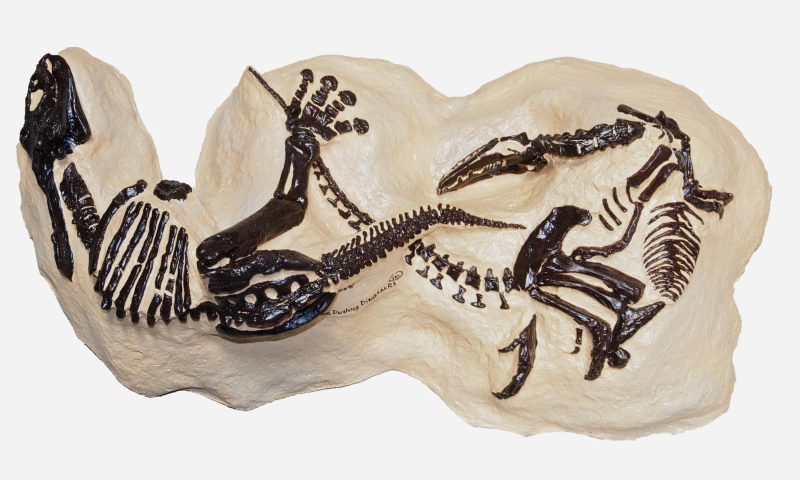
The Guardian: Perhaps the best dinosaur fossil ever discovered. So why has hardly anyone seen it?
The Guardian has an article about the so called “Dueling Dinosaurs”. The “Dueling Dinosaurs” are a large fossil plate that consists of both a 28 foot long ceratoptian (probably Triceratops horridus) and a 22 foot long theropod (possibly Tyrannosaurus rex or the controversial Nanotyrannus lancensis). Both skeletons are fairly complete, with exceptional preservation, fully articulated,…
-
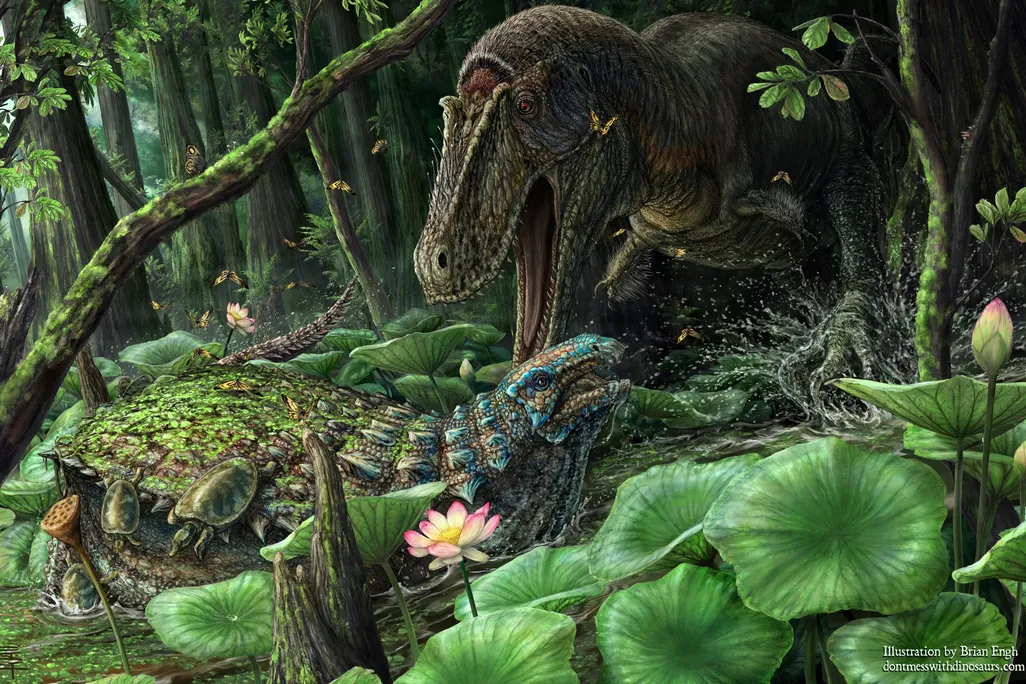
Newly Discovered Tyrant Dinosaur Stalked Ancient New Mexico
The Smithsonian has a post about a new tyrannosaur. Its name is Dynamoterror and it lived about 80 million years ago in what is now New Mexico. The paper, published in PeerJ, describes the 30-foot-long meat eater, which probably snacked on hadrosaurs, armored dinosaurs, and ceratopsians that lived in the hot, humid, and lush forests…
-

Meet the giant dinosaur that roamed southern Africa 200 million years ago
Lara Sciscio, University of Cape Town Globally at around 200 million years ago, in what’s known as the Early Jurassic, small and agile two-legged carnivorous dinosaurs called theropods roamed the ancient landscapes. In southern Africa, we know of their existence from their rare body fossils but also, importantly, from their fossil footprints. Now our team’s…
