Tag: plants
-
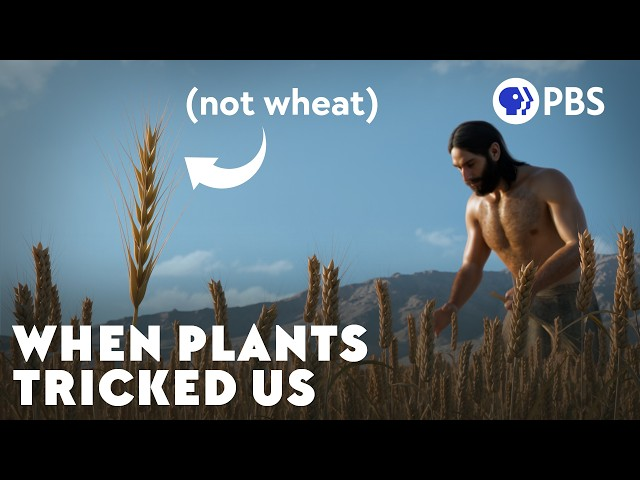
PBS Eons: When Ancient Weeds Fooled Us
PBS Eons has a new episode. This one is about evolution of weeds. Ancient weeds began mimicking early crops again and again over the course of the agricultural revolution, as ancient farmers made similar mistakes in different places at different times.And it turns out, some of our closest plant friends today actually started out as…
-

This Fossil Is Rewriting the Story of How Plants Spread across the Planet
Scientific American Magazine has an interesting story about the spread of terrestrial plants during the Early Devonian Period. A paper in the journal Science Advances looked at the origin of lichens. Did they appear before or after the rise of vascular plants? Lichens, which are a composite organism resulting from a symbiotic relationship between a…
-
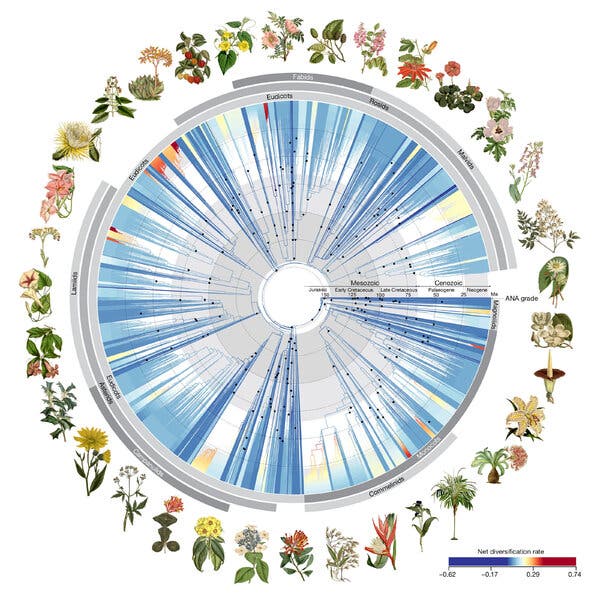
A New Tree of Flowering Plants? For Spring? Groundbreaking.
The New York Times’ Trilobites column has a story about work to understand how plants fit into the tree of life. New research detailed in the journal Nature suggests that more than 80% of major plant lineages evolved in a sudden burst during the Jurassic Period some 150 million years ago. This new study used…
-
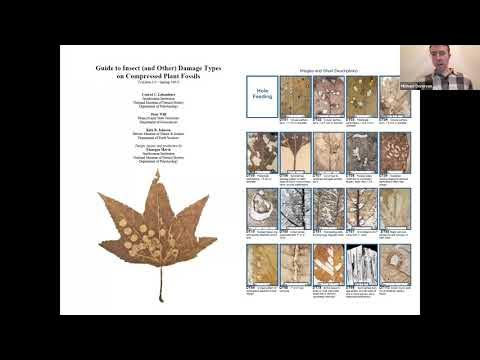
Video for ESCONI December 2023 General Meeting – “Ancient Forest Pests: Plant-Insect Interactions in the Fossil Record”
The December 8, 2023 General Meeting presentation was held via Zoom. It was presented by Michael Donovan, Collections Manager, Paleobotany at the Field Museum will present “Ancient Forest Pests: Plant-Insect Interactions in the Fossil Record”. Plants and insects are the most diverse multicellular organisms on Earth, and their abundant interactions are fundamental components of ecosystems…
-

PBS Eons: Why Only Earth Has Fire
PBS Eons has a new episode. This one is about the evolution of our planet’s atmosphere and how life makes fire possible. To get fire, which exists only on Earth, it took billions of years of photosynthesis – which means fire can’t exist without life. And fire and life have been shaping each other ever…
-
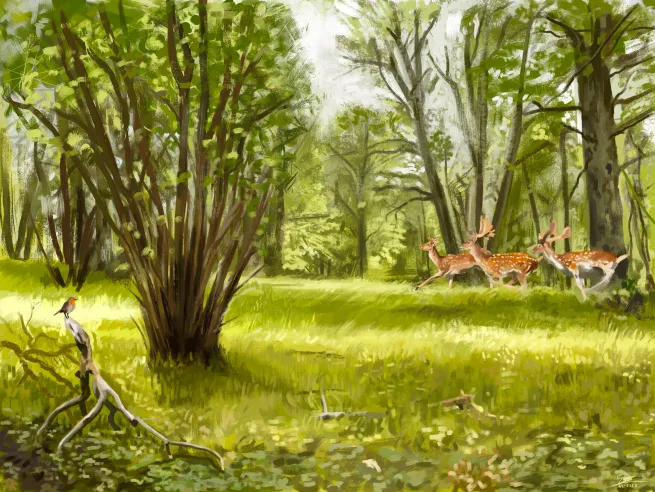
New study shows ancient Europe was not all forest, half was covered in grassland
Palaeoartistic reconstructions of Last Interglacial landscapes in the European temperate forest biome, consistent with our pollen-based estimates of vegetation structure. Credit: Brennan Stokkermans Phys.org has a story about ancient Europe. A recent paper in the journal Science Advances looked at pollen samples from various sites across Europe to determine the distribution of plants during the…
-
PBS Eons: How (Some) Plants Survived The K-Pg Extinction
PBS Eons has a new video over on Youtube. This one is about Angiosperm plants and how many of them survived the K-Pg mass extinction. Perhaps for plants in times of great stress and ecological upheaval, the more DNA the better. Thanks to Franz Anthony (https://franzanth.com) for the incredible reconstruction of plants in the aftermath…
-
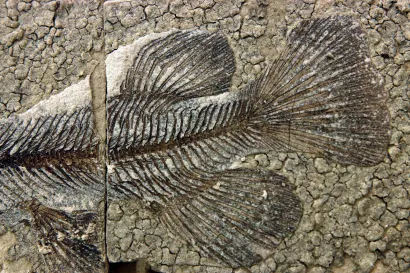
Exquisite Fossils Show an Entire Rain Forest Ecosystem
Scientific American has a story about a fossil deposit in New Zealand. The deposit formed around a shallow-sided volcanic crater about 23 million years ago during the Miocene epoch. This site is about an hour’s drive from the city of Dunedin in New Zealand. There are fossils of plants and animals and the preservation is…
-
PBS Eons: Why Does Caffeine Exist?
PBS Eons has a new episode. This one is about the origins of caffeine and why it evolved. Today, billions of people around the world start their day with caffeine. But how and why did the ability to produce this molecule independently evolve in multiple, distantly-related lineages of flowering plants, again and again?
-
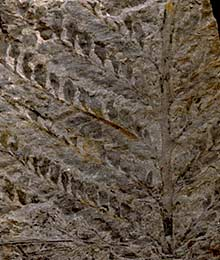
Video for ESCONI April 2022 General Meeting – “Devonian plants from the famous Red Hill location”
The April 2022 General Meeting was held on Friday, April 8th, 2022. The presentation was “Seeing the Forest for the Fossil Trees – Plants at Red Hill” by Dr. Walt Cressler of West Chester University in Pennsylvania. Red Hill is known for the First Modern Tree and a bunch of very early vertebrates. For information…
-
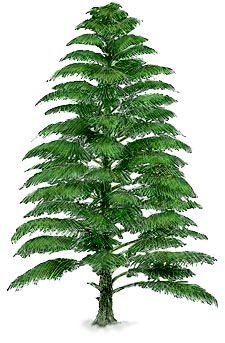
ESCONI April 2022 General Meeting – April 8th, 2022 at 8:00 PM In-person/Zoom – “Devonian plants from the famous Red Hill location”
The April 2022 General Meeting will be held at 8:00 PM on Friday, April 8th, 2022. We will be meeting both via Zoom and in person at the College of DuPage in Room 1038B of the Tech Ed (TEC) Building (Map). The presentation will be given by Dr. Walt Cressler of West Chester University in…
-
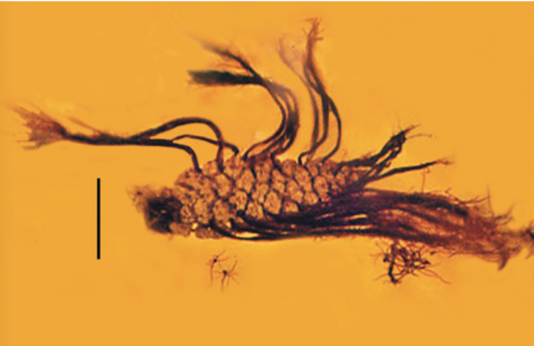
Nature: Ancient Pine Cone Trapped in Amber Shows a Super-Rare Form of Plant ‘Parenting’
Nature ScienceAlert has a story about a pine cone preserved in amber. The fossil, which dates to about 40 million years ago during the Eocene, shows a rare form of parental care in plants. The seeds in the pine cone can be seen to be germinating and sprouting greenery before the cone has fallen to…
-
PBS Eons: When It Was Too Hot for Leaves
There is a new episode of PBS Eons. This one is about environmental change the evolution of early plants. Plants first made their way onto land at least 470 million years ago but for their first 80 million years, leaves as we know them today didn’t exist. What held them back?
-
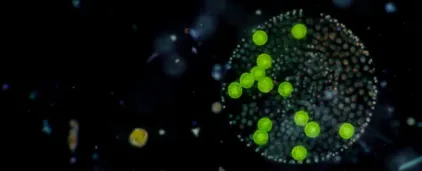
Oldest Fossilized Land Plant Spores Have Scientists Rethinking How Plants Evolved
Science Alert has a story about the oldest land plants. In rock samples from the Canning Basin in Western Australia, scientists have found clues to early land plant evolution. These samples come from deposits that date to the lower Ordovician about 480 million years ago when land plants were small and moss-like. The research can…
-
PBS Eons: How Plants Became Carnivores
There’s a new episode of PBS Eons on Youtube. This one is about how carnivorous plants evolved. Go check out Overview on PBS Terra: https://www.youtube.com/watch?v=NHMZw… Deep Look’s episode on Sundews! https://youtu.be/D4kBrsyWhS4 How and why does botanical carnivory keep evolving? It turns out that when any of the basic things that most plants need aren’t…
-
PBS Eons: How Plants Caused the First Mass Extinction
PBS Eons has a new episode. Climate change has been a large part of all the mass extinctions. The arrival of land plants has a huge impact on the climate and was quite likely a driving event. In the middle of the Cambrian, life on land was about to get a little more crowded.…
-
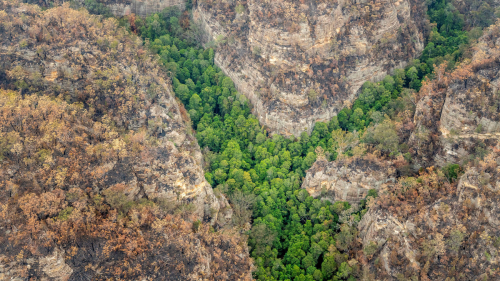
NPR: Aussie Firefighters Save World’s Only Groves Of Prehistoric Wollemi Pines
NPR has a story about the state of the only natural groves of Wollemi Pines. Thought to be extinct the Wollemi Pines were “discovered” in the wilds of Australia back in 1994. It was a lifesaving mission as dramatic as any in the months-long battle against the wildfires that have torn through the Australian bush.…
-

In Defense of Plants: The Rise and Fall of the Scale Trees
I recently ran into an interesting post on the blog “In Defense of Plants”. It’s called “The Rise and Fall of the Scale Trees”. If you collect or are familiar with Mazon Creek fossils, you probably have heard of Lepidodendron, Stigmaria, Psaronius, Cyperites. etc. You might even have a few of these fossils. Some of…
-
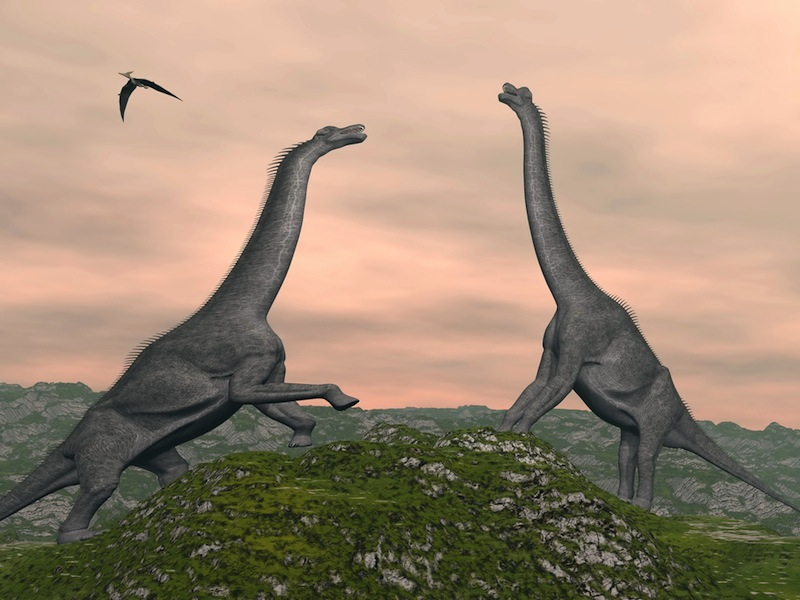
Scientists May Have Wildly Underestimated the Giant Dinosaurs of the Ancient World
LiveScience has an interesting story about sauropod dinosaurs. It seems that their leafy meals were probably a whole lot more hearty, wholesome, and nutrient packed than previously thought. This research appeared in the journal Palaeontology. The conventional wisdom about the big plant-eating dinosaurs, like Brachiosaurus and Argentinosaurus, is that they had to eat huge…
-

Five New Fossil Forests Found in Antarctica
National Geographic has a story about multiple new fossil forests which were recently found in Antarctica. Back in the Permian, Antarctica was covered in prehistoric greenery. The team of scientists, which included Erik Gulbranson from the University of Wisconsin-Milwaukee, that discovered these forests were there to look for clues to what caused the Permian Mass…
-

Researcher uncovers oldest amber ever recorded: The Mystery of Illinois Amber
Via NYTimes: Hat tip: Mark White

