Tag: Ordovician
-

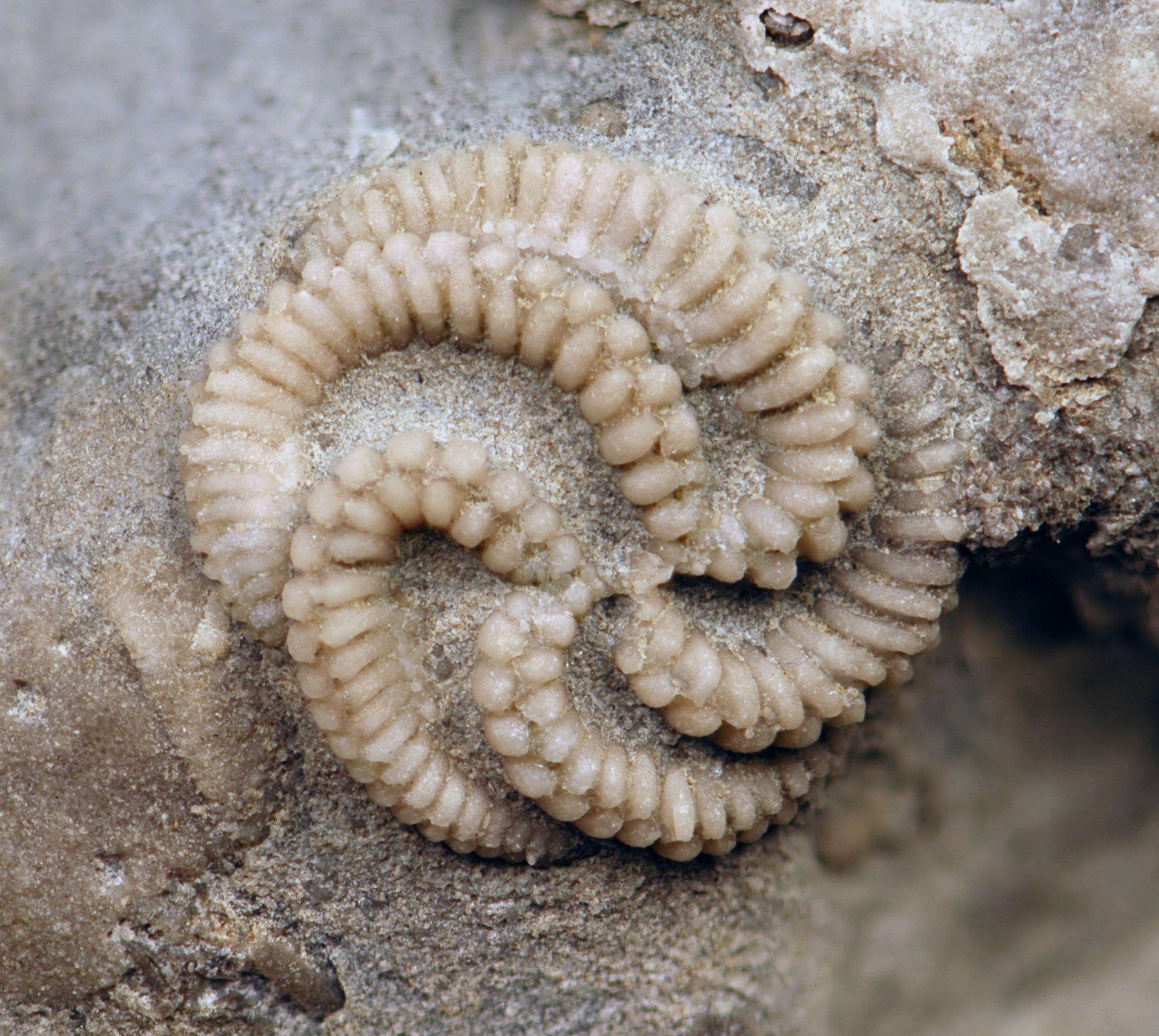
Fossil Friday #305: A Beautiful Receptaculites/Fisherites!
This is the “Fossil Friday” post #305. Expect this to be a regular feature of the website. We will post fossil pictures you send in to esconi.info@gmail.com. Please include a short description or story. Check the #FossilFriday Bluesky/Twitter hash tag for contributions from around the world! Taking a little break from Mazon Creek fossils this week…
-
Video for ESCONI January 2026 Paleontology Meeting – “Getting Lost Can Lead to Treasure – Edrioasteroids”
Jack Kallmeyer President of the Dry Dredgers will present “Getting Lost Can Lead to Treasure – Edrioasteroids – What to Do When You Find Thousands”. The meeting was held on January 17th, 2026 at 7:30 PM. While growing my early collection in the Cincinnatian, one of the most desired fossils that I sought after was…
-
ESCONI January 2026 Paleontology Meeting – January 17th, 2026 at 7:30 PM – “Getting Lost Can Lead to Treasure – Edrioasteroids”
Jack Kallmeyer President of the Dry Dredgers will present “Getting Lost Can Lead to Treasure – Edrioasteroids – What to Do When You Find Thousands”. The meeting will be held on January 17th, 2026 at 7:30 PM. While growing my early collection in the Cincinnatian, one of the most desired fossils that I sought after…
-
Video for ESCONI November 2025 Paleontology Study Group Meeting – “Gonioceras: A Most Unusual Cephalopod”
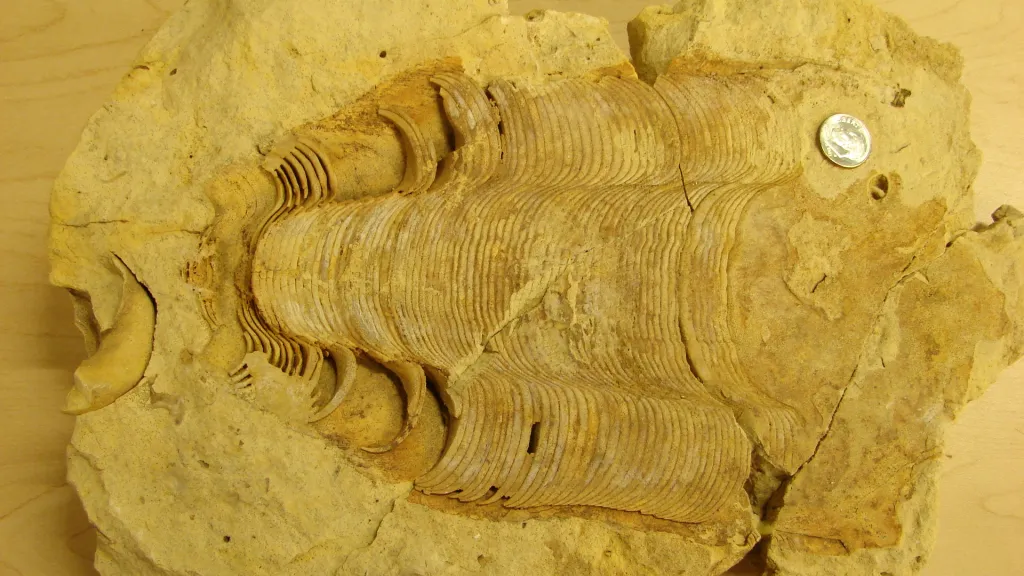
The November 2025 Paleontology Study Group Meeting was held on November 15th, 2025 via Zoom. John Catalani presented “Gonioceras: A Most Unusual Cephalopod”. The diversity of nautiloid shell shapes in the Upper Ordovician of central Laurentia is remarkable. However, one shape is often missing from lists of shell shapes and that is the so-called “flat-fish”…
-

ESCONI November 2025 Paleontology Study Group Meeting – November 15th, 2025 at 7:30 PM via Zoom – “Gonioceras: A Most Unusual Cephalopod”
The November 2025 Paleontology Study Group Meeting will be held on November 15th, 2025 at 7:30 PM via Zoom. John Cataloni will be presenting “Gonioceras: A Most Unusual Cephalopod”. The diversity of nautiloid shell shapes in the Upper Ordovician of central Laurentia is remarkable. However, one shape is often missing from lists of shell shapes…
-

ESCONI Field Trip to Mount Orab for Trilobites – Saturday, September 13th, 2025
ESCONI will have a field trip to Flat Run Fossils in Mt. Orab, Ohio on September 13th, 2025. Flat Run Fossils is a new pay-to-dig site in the famous Mt. Orab trilobite beds. For many years,thousands of gorgeous Flexicalymene and Isotelus trilobites have been collected from this area. Other possible finds include brachiopods, graptolites, cephalopods,…
-

Video for ESCONI Paleontology Meeting May 2025 – “Platteville Oncocerid Nautiloids: Living on the Mohawkian Sea Floor”
Topic: Platteville Oncocerid Nautiloids: Living on the Mohawkian Sea FloorPresenter: John Catalani Although many Ordovician nautiloid faunas are dominated by straight-shelled orthoconic forms, this is not true for the incredibly abundant and diverse Platteville fauna. The Platteville nautiloid fauna consists of 9+ Orders with the Oncocerida accounting for 50+% of the published species. I will…
-
ESCONI Field Trip to Mount Orab for Trilobites – Saturday, June 21st, 2025
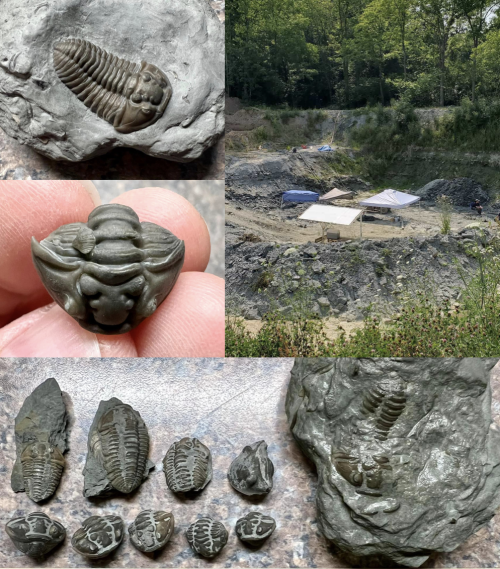
This trip is full. We are taking names for a waiting list. ESCONI will have a field trip to Flat Run Fossils in Mt. Orab, Ohio on June 21st, 2025. Flat Run Fossils is a new pay-to-dig site in the famous Mt. Orab trilobite beds. For many years, thousands of gorgeous Flexicalymene and Isotelus trilobites…
-

Video for ESCONI Paleontology Meeting April 2025 – “A New Cincinnatian Crinoid Species: Discovery, Research, Publication and Working with the Pros”
The April 2025 Paleontology Group Meeting was held on April 19th, 2025. It was a Zoom presentation by Jack Kallmeyer titled “A New Cincinnatian Crinoid Species: Discovery, Research, Publication and Working with the Pros”. Jack’s program will not be a tedious review of the features of the new species of crinoid that he discovered. Rather,…
-

Video for ESCONI General Meeting November 2024 – “From Muldraugh to Museum: Amphoracrinus tenax”
The topic of the November 2024 Paleontology meeting was “From Muldraugh to Museum: The Unexpected Journey of Crinoid Amphoracrinus tenax“. It was presented by ESCONI member Gretel Monreal. This presentation will include the investigative process for recognizing a new species of crinoid and explaining what this simple fossil can tell us. Amphoracrinus tenax was described…
-
450-Million-Year-Old Fossil Arthropod Found Preserved in Fool’s Gold
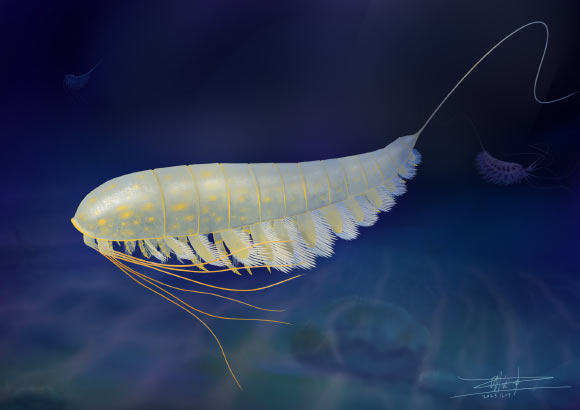
SciNews has news of a new species of arthropod from the Ordovician Period. Lomankus edgecombei lived some 450 million years ago in what is now New York. This specimen was found at a fossil locality that includes the famous Beecher’s Trilobite Bed. That locality is known for equisite pyrite replacement fossils. The legs of trilobites…
-

PBS Eons: Could You Survive The Ordovician Period?
PBS Eons has another episode. This one is about the Ordovician period… could you survive the Earth's first mass extinction? The End-Ordovician Extinction was the first of the so-called ‘Big Five’ mass extinctions in the history of life on Earth – more than 80% of species in the oceans died out. But could you survive…
-

ESCONI Field Trip to the Napoleon Quarry in Napoleon, IN – for Ordovician/Silurian Fossils – Saturday, October 26th, 2024
Cystoid from a field trip to Napoleon – from a University of Kentucky website. There will be a field trip for ESCONI members on Saturday, October 26, 2024, to the quarry just east of Napoleon, Indiana. We need to meet, no exceptions, at the quarry entrance at 8:30 a.m. EDT. We have the chance to collect…
-
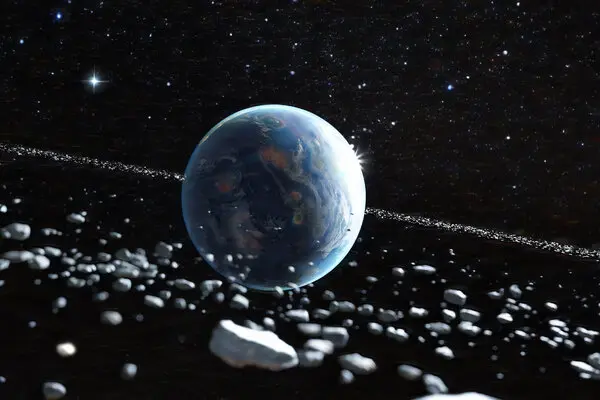
Earth Had a Ring 466 Million Years Ago, Study Says
The New York Times has a nice review of a study published in the journal Science Direct that postulates the Earth had a ring during the Ordovician Period, some 466 million years ago. There are numerous (21!) impact craters that date to the period. At the time, Earth was an island world, with life being…
-

ESCONI Field Trip to the Vulcan DeKalb Quarry, for Ordovician Fossils – Saturday, September 21st, 2024
An enrolled Isotelus found on a pervious field trip Vulcan DeKalb Quarry Field Trip Sept 21, 2024 There will be an ESCONI Field Trip to the Vulcan DeKalb (aka Larson) Quarry on Saturday Sept 21, 2024 from 10:00 AM to 2:00 PM. The quarry is located at 15622 Barber Green Road. The rock at this…
-

PBS Eons: The Second Time Sponges Took Over The World
PBS Eons has a new episode. This one is about the Late Ordovician mass extinction and the animals that survived it. Was Sponge Bob king? Researchers have discovered a piece of a weird, but critical, time in the deep past…a time when the first-ever mass extinction may have turned Planet Earth into Sponge World.
-
ESCONI Field Trip to Napoleon, IN for Silurian/Ordovician Fossils – Saturday, June 1, 2024
Cystoid from a field trip to Napoleon – from a University of Kentucky website. There will be a field trip for ESCONI members on Saturday, June 1, 2024, to the quarry just east of Napoleon, Indiana. We need to meet at the quarry entrance at 8:30 a.m. EDT. We have the chance to collect Silurian…
-
ESCONI January 2024 Paleontology Study Group Meeting – Saturday, January 20th, 2024 at 7:30 PM via Zoom – “Publishing a New Fossil Find: Our Journey in Cyclocystoids (Echinodermata)”
The January 2024 Paleontology Study Group Meeting will be held on January 20th, 2024 at 7:30 PM via Zoom. The presenters are ESCONI member Asa Kaplan and Terry Frank of Missouri Fossil Hunter. They will be speaking about their experiences publishing a new fossil find. The new find was a cyclocystoid (Echinodermata). Cyclocystoid are odd…
-
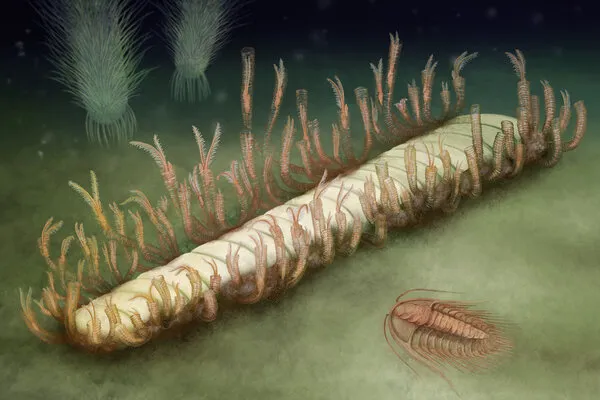
Fossil Reveals Ancient Seafloor Communities
An artist’s reconstruction of the tube-like animals attached to the dead phragmocone..Credit…Franz Anthony The New York Times Trilobites column has a story about some very old ocean floor communities. Research published recently in the journal Communications Biology looked at a 480-million-year-old cephalopod from Morocco that was posthumously converted into a condominium. It’s the earliest known…
-
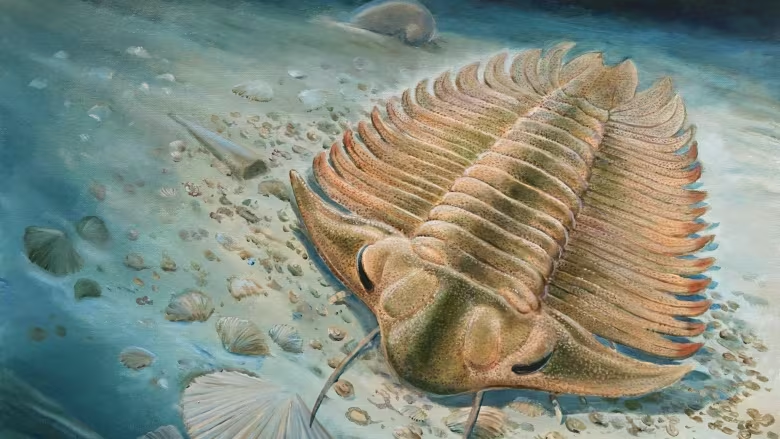
Trilobite Tuesday #46: Trilobite’s last meal
CBC Radio’s Quirks and Quarks show has a segment about a trilobite’s last meal. The trilobite specimen, Bohemolichas incola, was found in a 465 million year old (Ordovician Period) shale deposit. A 465 million year old trilobite fossil with remarkably preserved gut contents reveals for the first time what these extinct arthropods ate. Per Ahlberg, a…
-
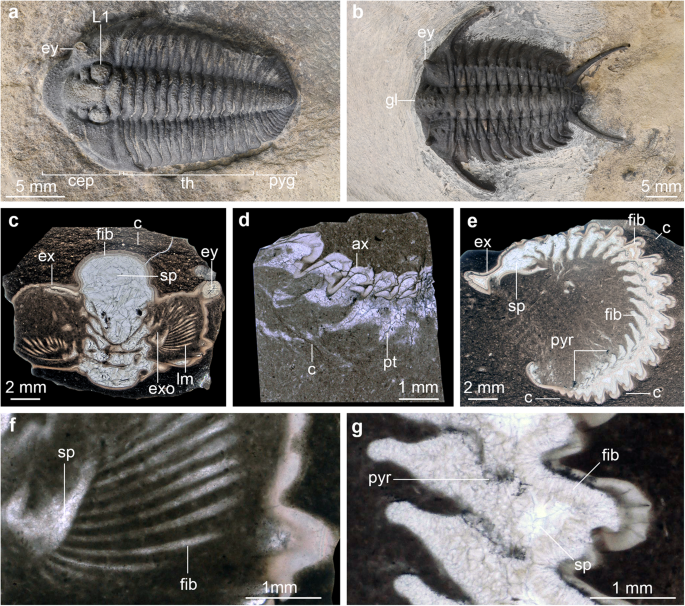
Trilobite Tuesday #45: Taphonomy of non-biomineralized trilobite tissues preserved as calcite casts from the Ordovician Walcott-Rust Quarry, USA
Nature’s journal communication Earth & environment has a paper about the preservation of trilobites in the Wolcott-Rust quarry. The Walcott-Rust quarry was discovered by Charles Wolcott in the 1870’s. It dates to the Ordovician Period and yielded the first known trilobite appendages. This paper details research into the mechanism of the delicate, three dimensional preservation.…
-
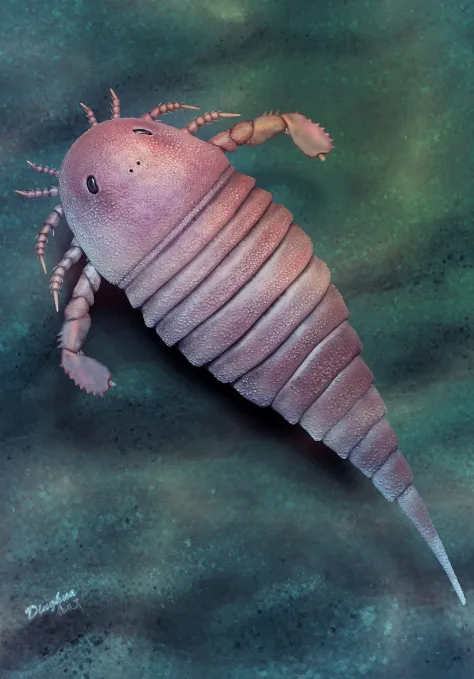
Earliest sea scorpion from China found in end-Ordovician Anji Biota in Zhejiang
Phys.org has a story about sea scorpions. Eurypterids are iconic animals of the Paleozoic. They first show up in the fossil record during the Darrowillian stage of the Ordovician 467 million year ago and go extinct at the end Permian mass extinction event about 250 million years ago. Now, a new paper published in the…
-
ESCONI Paleontology Meeting Saturday, May 20th, 2023 at 7:30 PM Hybrid “Echinoderms of the Platteville and Galena Formations”
A starfish (Hudsonaster) from the Ordovician Platteville Limestone, Wisconsin. Photo of YPM IP 538069 by Jessica Utrup (Yale Peabody Museum of Natural History on GBIF.org, CC0 1.0 Universal/public domain dedication). The May 2023 ESCONI Paleontology Study Group Meeting will be held on May 20th, 2023 at 7:30 via Zoom and at the College of DuPage Tech Ed…
-
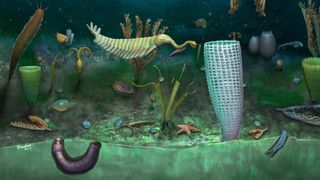
462 million-year-old fossilized eyes and brains uncovered in ‘secret’ Welsh fossil site
Live Science has an article about the exciting discovery of a new fossil site in Wales, UK. The locality is being called “Castle Bank” and could rank among the world’s most important. It dates to the Ordovician Period about 462 million years ago. “Castle Bank” preserves a variety of soft bodied animals with exquisite preservation,…
-
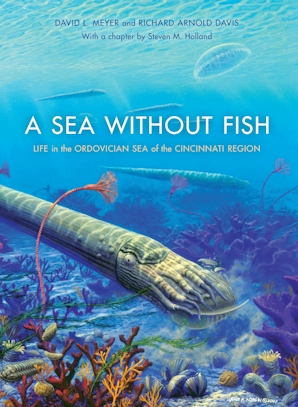
Video for ESCONI November 2022 General Meeting – “A Sea Without Fish, Ordovician Fossils of the Cincinnati Region”
For the November 2022 General Meeting, our speaker was Dr. David Meyer from the University of Cincinnati. The title of his talk was “A Sea Without Fish, Ordovician fossils of the Cincinnati region“. His book has the same name as his presentation. Checkout his page at the University of Cincinnati. Book Description: The region around Cincinnati, Ohio, is…
-

Fossil site reveals giant arthropods dominated the seas 470 million years ago
Phys.org has a story about some interesting arthropod fossils from Morocco. The fossils date to the Ordovician Period about 470 million years ago. The locality holds new species and while some are fragmentary, the fragments suggest large animals, maybe up to 2 meters long. The research was published in Science Advances. Discoveries at a major…
-

Oldest Pterodactylus fossil found in Germany
Phys.org has a story about the oldest Pterodactylus ever found. This specimen was found in 2014 near Painten in central Bavaria. The animal lived about 152 million years ago, which is about a million years older than all other Pterodactylus specimens. All the details were published in a recent paper in the journal Fossil Record.…
-

Welsh ‘weird wonder’ fossils add piece to puzzle of arthropod evolution
Phys.org has a story about a new “weird wonder” from the Ordovician Period. This new animal is called Mieridduryn bonniae and is thought to be related to Opabinia, which is one of the iconic animals discovered in the Burgess Shale by Charles Walcott in 1909. Many of the Burgess Shale animals were termed “weird wonders”…
-

ESCONI November 2022 General Meeting – November 11th, 2022 at 8:00 PM via Zoom – “A Sea Without Fish, Ordovician Fossils of the Cincinnati Region”
On November 11th our speaker will be Dr. David Meyer from the University of Cincinnati. The title of his talk is “A Sea Without Fish, Ordovician fossils of the Cincinnati region“. His book has the same name as his presentation. Checkout his page at the University of Cincinnati. Book Description: The region around Cincinnati, Ohio,…
-

Trilobite Tuesday #42: Trilobites’ growth may have resembled that of modern marine crustaceans
Phys.org has a story about trilobite growth. Research published in the journal Paleobiology shows that trilobites grew in a fashion similar to modern extant crustaceans. Data for the study came from exceptionally preserved trilobites from “Beechers Trilobite Bed” in upstate New York. For more information about “Beecher’s Trilobite Bed”, have a look at Trilobite Tuesday…

