Tag: mammals
-

Video for the ESCONI October 2026 General Meeting – Lazaro Vinola from the Field Museum Presenting Live from the Dominican Republic
For the October General Meeting, we are doing something new. Lazaro Vinola from The Field Museum presented live from the field in the Dominican Republic. For this meeting, Lazaro’s team will be processing sediment for microfossils. During the first half of the trip, they will stay at a small motel in the town of Oviedo,…
-

This surprising mammal fossil is giving scientists something to chew on
NPR has a story about a new Jurassic mammal from China. The animal, Megacauda sungei , was described recently in the journal Nature. The fossil remains are incredibly detailed and show an animal capable of chewing and swallowing its food and suckling, traits shared by all mammals. The fossil was about the size of a chihuahua,…
-
ESCONI October 2026 General Meeting, Friday, October 9th, 2026 at 8:00 PM via Zoom – Lazaro Vinola from the Field Museum Presenting Live from the Dominican Republic
For the October General Meeting, we are doing something new. Lazaro Vinola from The Field Museum will be presenting live from the field in the Dominican Republic. Earlier this year, you may recall Lazaro found a Tully Monster on his first visit to Pit 11. We used the fossil for Fossil Friday #319. For this…
-
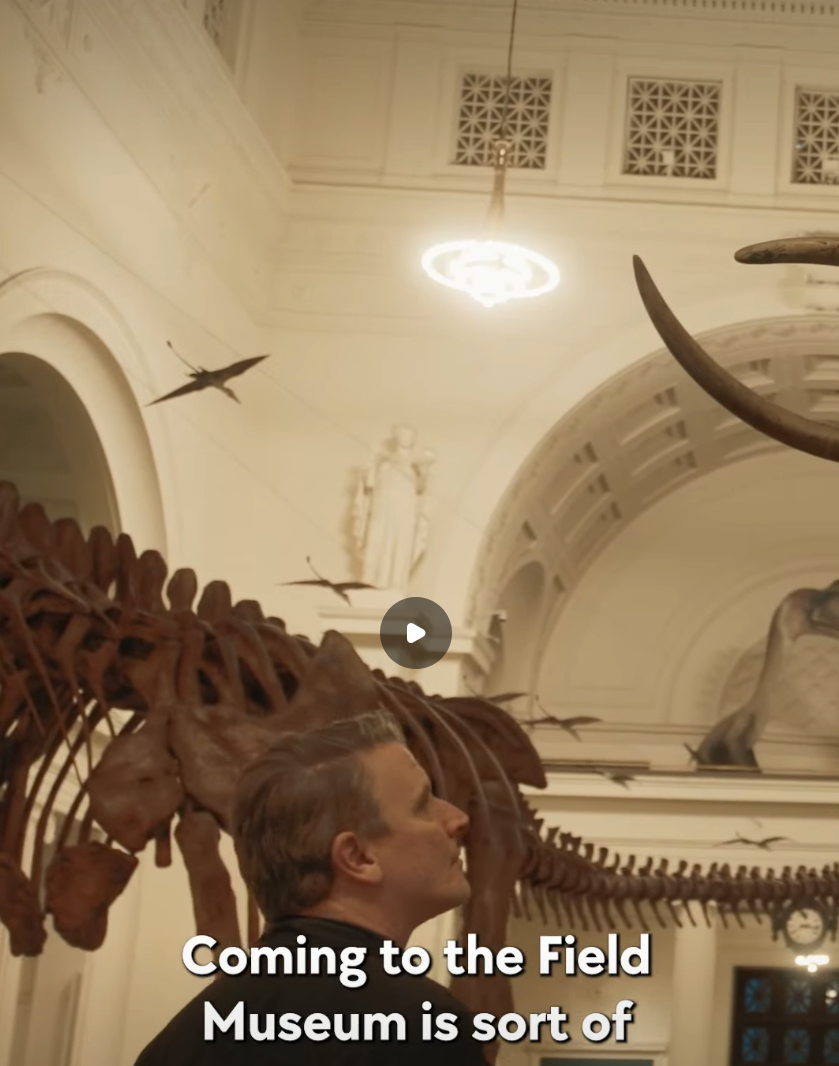
PBS Eons at the Field Museum!
View this post on Instagram A post shared by Eons (@eonsshow) PBS Eons posted this video a few days ago on Instagram. In making Life and Death on Pangea, not only did we get to tell the story of one of the most dramatic times in Earth’s history, but we got visit places that were…
-

PBS Eons: How Dinosaurs May Have Cursed Us With Aging
PBS Eons has a new episode. This one is about how aging in mammals might be due to evolved traits while we lived alongside dinosaurs.
-
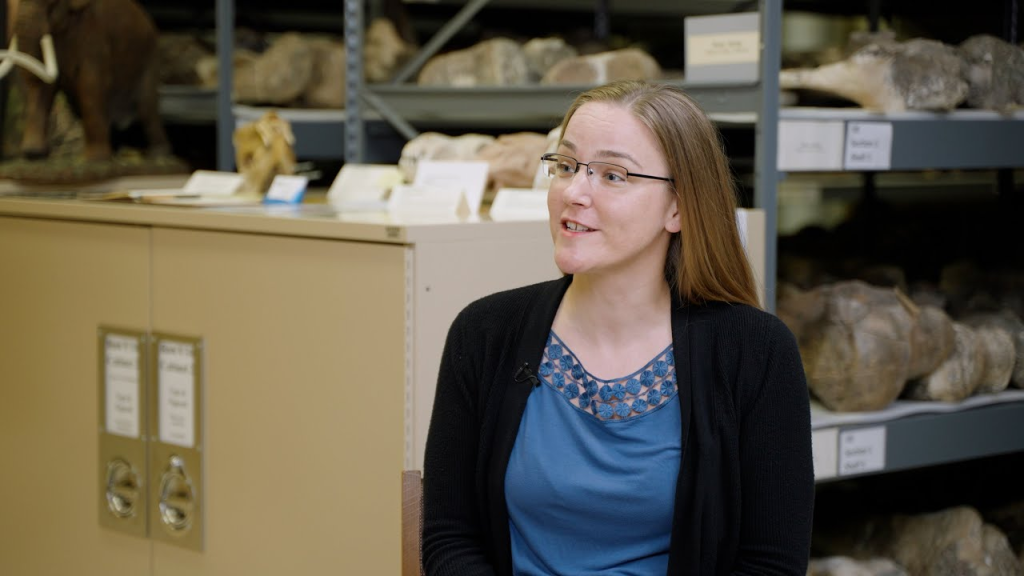
Video for ESCONI November 2025 General Meeting – “Mammals of Illinois’ Ice Ages”
The November 2025 General Meeting was held on Friday, November 14th, 2025 via Zoom. Melissa Pardi, Curator of Geology at the Illinois State Museum, presented “Mammals of Illinois’ Ice Ages”. Did you know that Illinois used to have elephants? During the last ice age, North America was home to a wide variety of large, now…
-
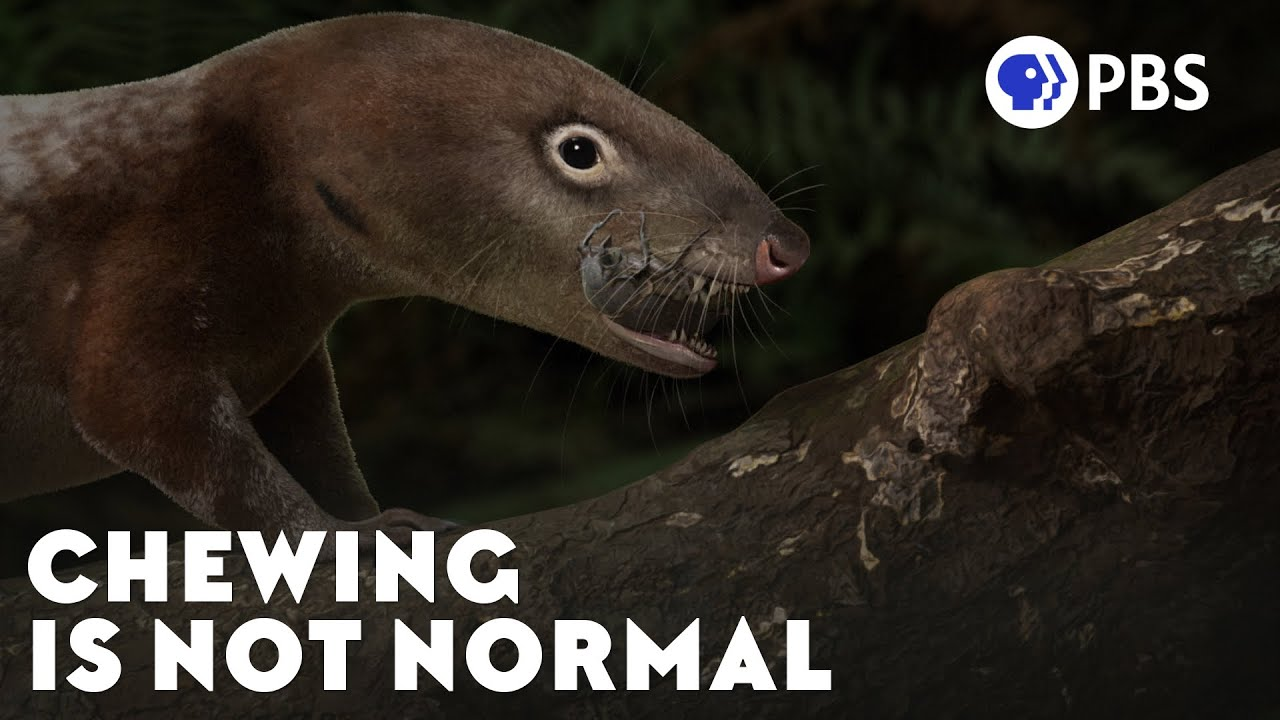
PBS Eons: How Chewing May Have Beat Extinction
There’s a new episode of PBS Eons. This one is about teeth and chewing and how they may have helped mammals survive after the K-Pg extinction. Help understand what you enjoy and what you would want to see us make more of: https://to.pbs.org/2025SurveyEons 66 million years ago, after an asteroid slammed into the Earth and…
-
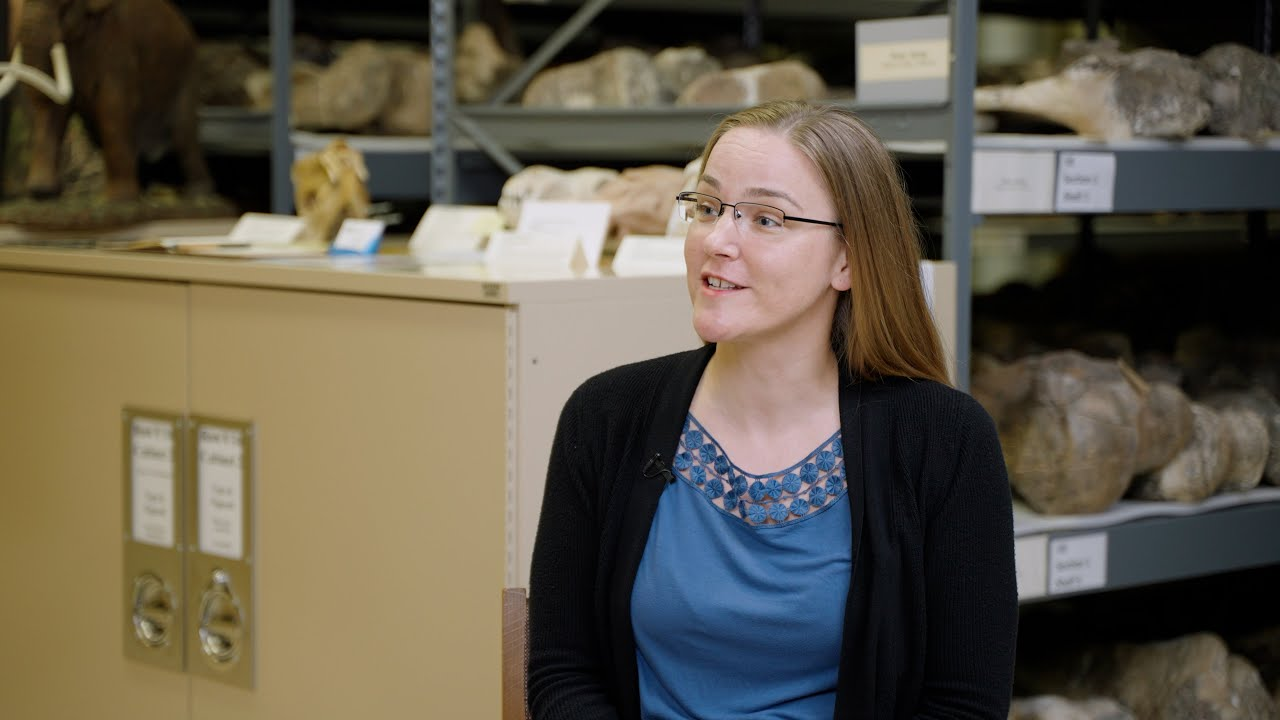
ESCONI November 2025 General Meeting – November 14th, 2025 at 8:00 PM via Zoom – “Mammals of Illinois’ Ice Ages”
The November 2025 General Meeting will be held on Friday, November 14th, 2025 at 8:00 via Zoom. Melissa Pardi, Curator of Geology at the Illinois State Museum, will be presenting “Mammals of Illinois’ Ice Ages”. Did you know that Illinois used to have elephants? During the last ice age, North America was home to a…
-

Field Museum: After the Age of Dinosaurs
The Field Museum has a new exhibit that looks at the time after the non-avian dinosaurs went extinct during the K-Pg Event about 66 million years ago. How did the world recover? And, how long did it take? Chicago-based illustrator Jay Ryan created original artwork for the Field Museum’s “After the Age of Dinosaurs” exhibition.
-
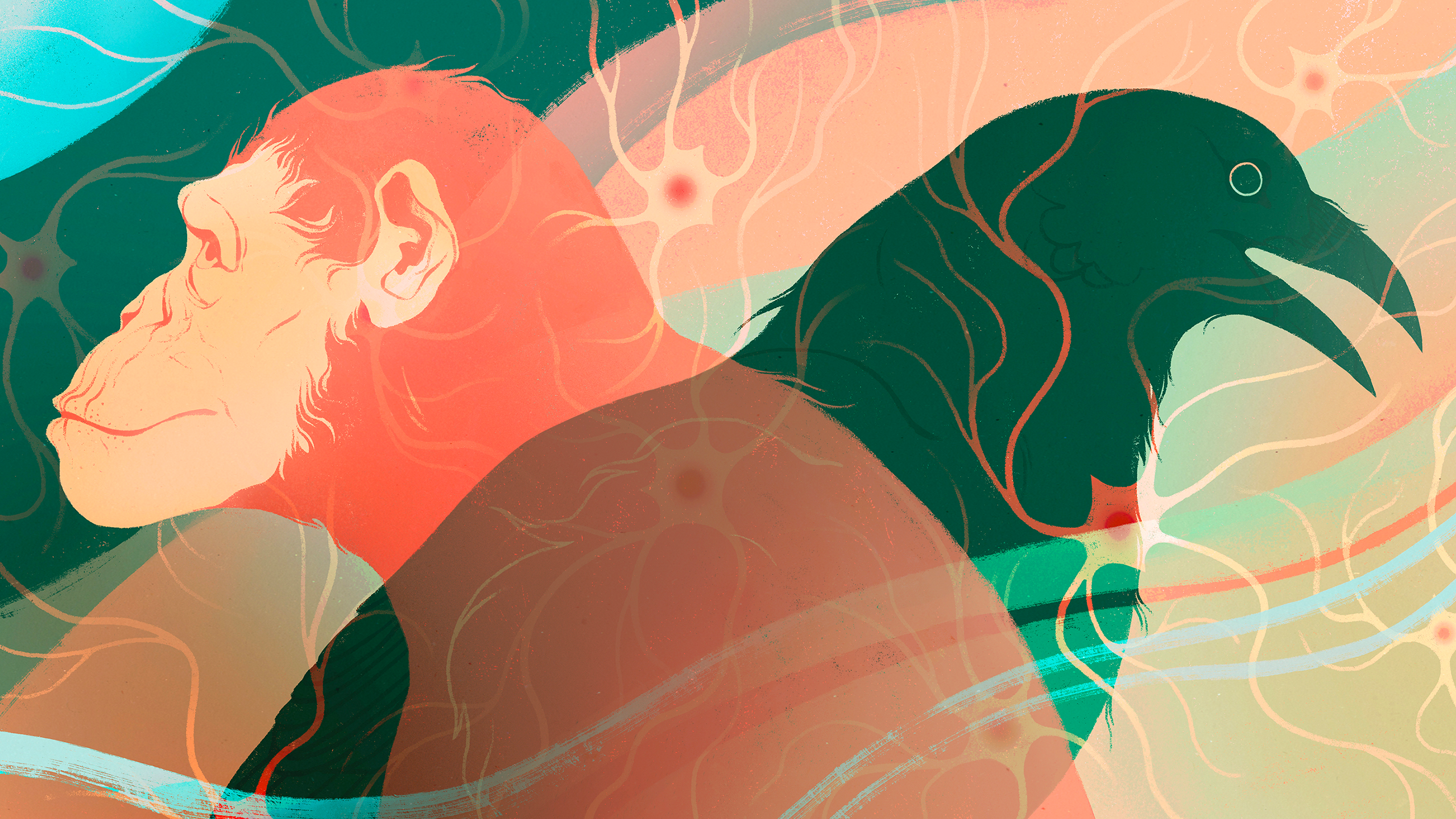
Intelligence Evolved at Least Twice in Vertebrate Animals
Quanta Magazine has an interesting piece about the evolution of intelligence. A variety of nonhuman species display intelligent behavior and advanced cognitive abilities. When did it evolve? Were the basic neural pathways inherited from a common ancestor or did it evolve separately in a case of convergent evolution? A series of studies published in the…
-

PBS Eons: What Happened To The Other Mesozoic Mammals?
There's a new episode of PBS Eons. This one is about the rise of modern mammals through the Cretaceous Period. In 2003, a fossil belonging to a mammaliaform was discovered in an ancient lakebed in what's now China. It was an almost complete skeleton the size of a platypus, a find that complicated the history…
-
Fossil Hints That Jurassic Mammals Lived Slow and Died Old
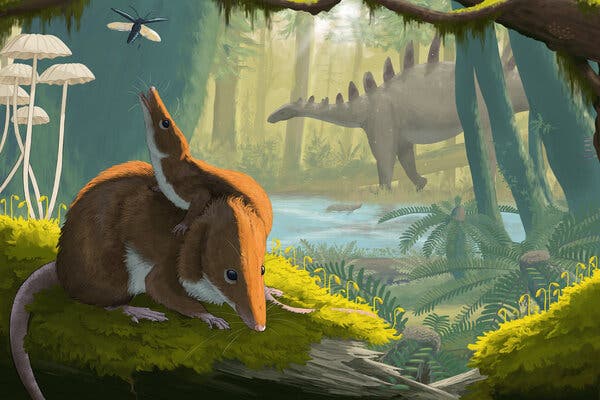
A life reconstruction of Krusatodon. Not only are the specimens remarkably complete, but one belongs to a juvenile — making it the oldest known juvenile mammal fossil.Credit…Maija Karala The Trilobites column at the New York Times has a post about some unexpected discovery in some Jurassic mammals. Small mammals usually live fast and die young. …
-

The Last Stand of the Woolly Mammoths
Mammoths remained on Wrangel Island, about 80 miles from the Siberian coast, for about 6,000 years after they vanished from the rest of Asia, Europe and North America.Credit…Beth Zaiken Carl Zimmer has an article about the last of the Woolly Mammoths over on the New York Times. A small population of mammoths on Wrangel Island…
-
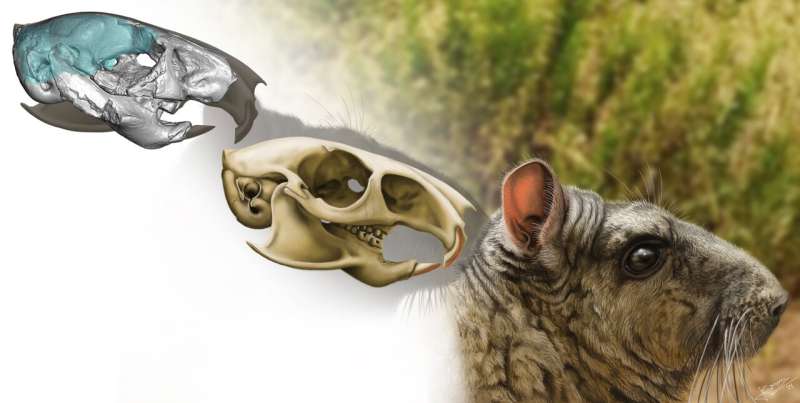
30 million-year-old cousin of chinchillas shows signs of enhanced hearing and living in groups
Brain virtual endocast inside the translucent skull (left), skull reconstruction (middle) and life reconstruction (right) of the late Oligocene Incamys bolivianus (YPM VPPU 21945) from the Salla-Luribay Basin in Bolivia. Credit: Jesús Gamarra González / Institut Català de Paleontologia Miquel Crusafont. Phys.org has a story about a 30 million year old cousin of chinchillas. A…
-

Video for ESCONI April 2024 General Meeting – “Ice age mammals from the frozen North”
The ESCONI General Meeting for April 2024 was held on Friday, April 12th, 2024 at 8:00 PM zia Zoom. The topic of the presentation is “Ice age mammals from the frozen North“. It was given by Yukon Paleontologist Grant Zazula. Ever since the Klondike Gold Rush of 1898, Yukon miners in search of shiny gold nuggets…
-
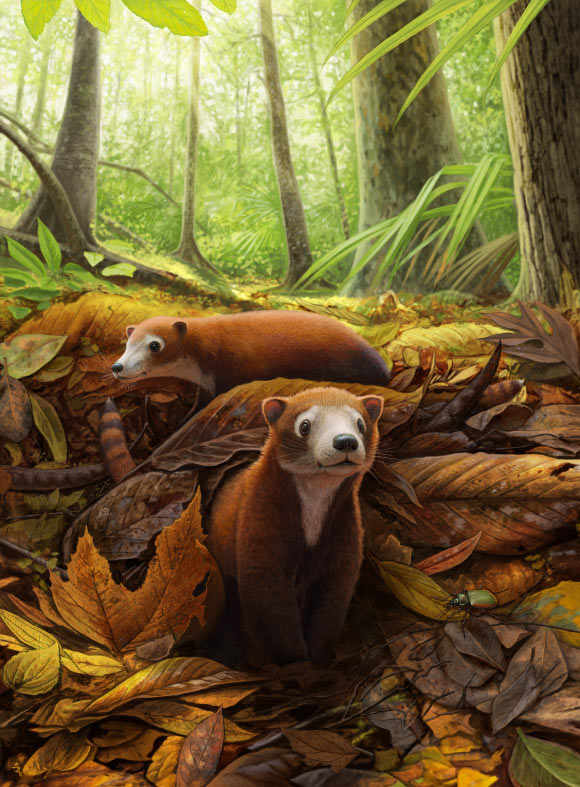
Newly-Discovered Species of Mammal Lived 610,000 Years after Dinosaur Extinction
SciNews has a story about the discovery of a new mammal from just after the end Cretaceous mass extinction. Militocodon lydae was found in the Corral Bluffs east of Colorado Spings, Colorado, within the Denver Basin. M. lydae was about the size of a chinchilla and likely omnivorous. It belongs to a group of mammals…
-

ESCONI Events April 2024
Field trips require membership, but visitors are welcome at all meetings! Fri, Apr 12th ESCONI General Meeting 8:00 PM – Topic: “Ice age mammals from the frozen North” by Yukon Paleontologist Grant Zazula Zoom link Sat, Apr 13th ESCONI Junior Meeting – 6:30 PM at College of DuPage – Topic: Mazon Creek fauna (animals) Specifics…
-
Could dinosaurs be the reason humans can’t live for 200 years?
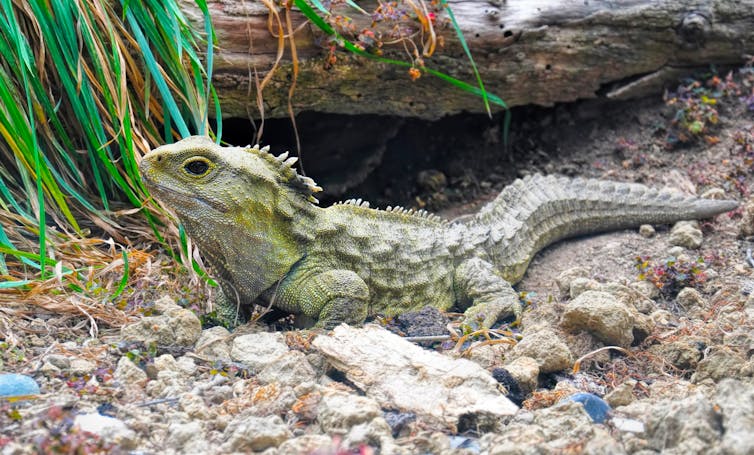
The Conversation has an interesting post about the evolution of mammals. Did being small during the time of dinosaurs lead to limitations on how long mammals live? Mollusks, reptiles, and Greenland Sharks have been found to live 100’s of years. Actually, many animals don’t age and continue to grow throughout their lifetimes. All human beings…
-
Reminder: ESCONI November 2023 General Meeting – Friday, November 10th, 2023 at 8:00 PM via Zoom – “Finding Fossil Mammals in Canada’s High Arctic and Alaska”
The November 2023 General Meeting will feature Jaelyn Eberle, the Interim Director, University of Colorado Museum of Natural History and Curator of Fossil Vertebrates at the University of Colorado. She will present “Finding Fossil Mammals in Canada’s High Arctic and Alaska”. Jaelyn’s research focuses on the study of mammalian faunas during past intervals of climate…
-
ESCONI November 2023 General Meeting – Friday, November 10th, 2023 at 8:00 PM via Zoom – “Finding Fossil Mammals in Canada’s High Arctic and Alaska”
The November 2023 General Meeting will feature Jaelyn Eberle, the Interim Director, University of Colorado Museum of Natural History and Curator of Fossil Vertebrates at the University of Colorado. She will present “Finding Fossil Mammals in Canada’s High Arctic and Alaska”. Jaelyn’s research focuses on the study of mammalian faunas during past intervals of climate…
-
PBS Eons: Are Giant Animals Inevitable?
PBS Eons has a new episode on Youtube. This one is about large animals, are they inevitable? The journey the thunder beasts took to reach such mega proportions from such humble beginnings forces us to ask an important question, one that paleontologists have been asking for more than a century: from an evolutionary perspective, is…
-

5 million-year-old fossils reveal 2 new species of saber-toothed cats in South Africa
LiveScience has a story about some fossil discoveries in South Africa. Two new species of saber-toothed cats, Dinofelis werdelini and Lokotunjailurus chimsamyae, have been discovered near the town of Langebaanweg on the west coast of South Africa. These animals lived about 5.2 million years ago. While excavating the fossil bones, two known species were also found,…
-
This Fossil Is a Freeze-Frame of a Mammal Fighting a Dinosaur
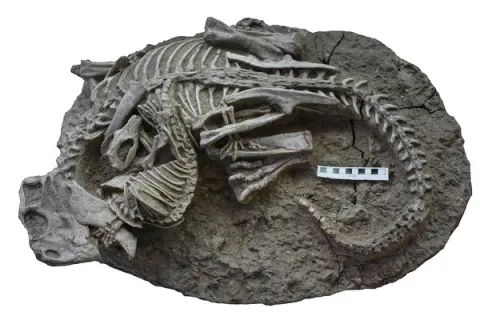
The New York Times has a story about an interesting dinosaur fossil from China. A 125 million year old fossil of a Psittacosaurus and a Repenomamus seems to show a fight to the death between a dinosaur and an ancestral mammal. It was discovered in 2012 by farmers in the Chinese province of Liaoning. Liaoning…
-
A jaw-dropping conundrum: Why do mammals have a stiff lower jaw?
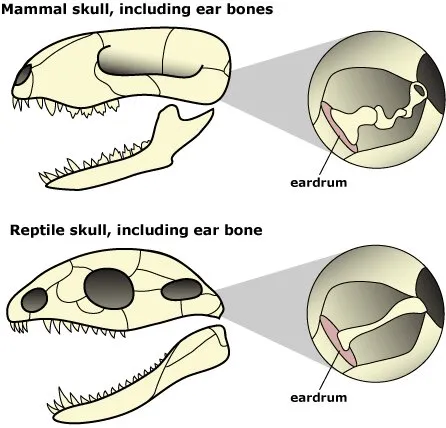
Phys.org has an interesting article about the structure of mammal jaws. Vertebrate skeletons and thus mammal skeletons are very conservative. We all have pretty much the same bones, however they are generally reshaped, reoriented, and possibly repurposed. The general vertebrate lower jaw consists of multiple bones, for mammals some of the smaller bones around the…
-
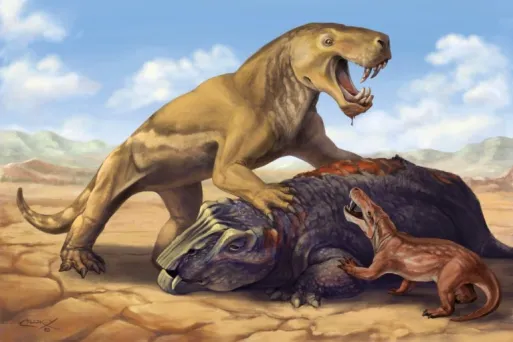
Fossil of sabre-toothed mammal ancestor discovered
Nature has a story about a sabre-toothed mammal. Fossils of a new large protomammal have been discovered in South Africa. Inostrancevia africana lived about 251.9 million years ago in what is now the Karoo Basin. This gorgonopsid was described in a paper recently published in the journal Current Biology. Jennifer Botha, professor at the Evolutionary Studies…
-
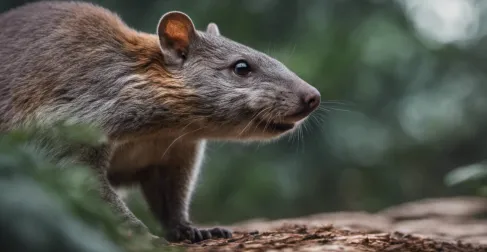
Marsupials might be the more evolved mammals
Phys.org has an interesting article about mammal evolution. A new paper in the journal Current Biology claims that marsupial mammals are more evolutionarily derived than placental mammals. This discovery is very surprising as marsupial mammals have long been thought to be an intermediate state between egg laying and placental birth. The study, published in Current Biology,…
-
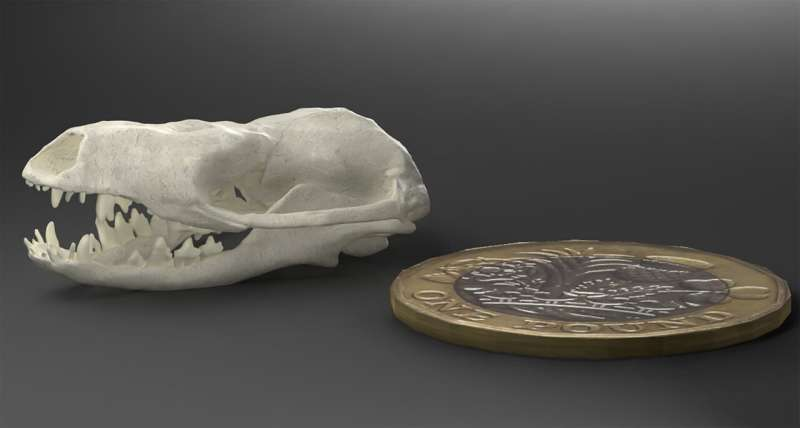
Starting small and simple was key to success for evolution of mammals, reveals new study
Phys.org has a story about the evolution of mammals. A new paper in the journal Communications Biology, found that being small led to more efficient feeding, The international team of paleontologists used computer analysis and stress analysis to understand the process of skull simplification in early mammals. In mamy vertebrate groups, like fish and reptiles,…
-
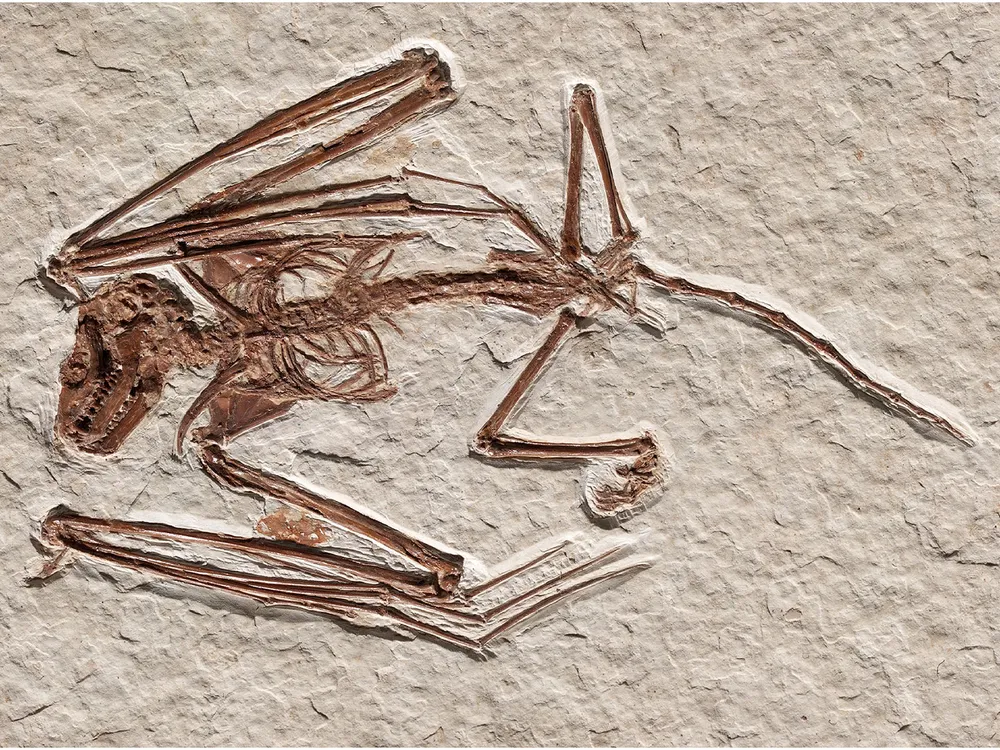
Smithsonian: Paleontologists Discover 52-Million-Year-Old Bat
Smithsonian Magazine has a story about a fossil bat from Wyoming. Bats are underrepresented in the fossil record due their small size and even smaller bones. Unfortunately, they also live in areas that don’t usually form fossils. The Green River Formation in Wyoming, which dates to the Eocene about 52 million years ago, has yield…
-
ESCONI April 2023 General Meeting – Saturday, April 8th, 2023 at 1:00 PM via Zoom – “Beasts Before Us; the Untold Story of Mammal Origins and Evolutions”
Mark your calendars ahead of time as you do not want to miss the April General Meeting presentation. The meeting (via Zoom) will be on Saturday, April 8th at 1 PM. Joining us from the National Museum of Scotland will be Dr. Elsa Panciroli presenting “Beasts Before Us; the Untold Story of Mammal Origins and…
-
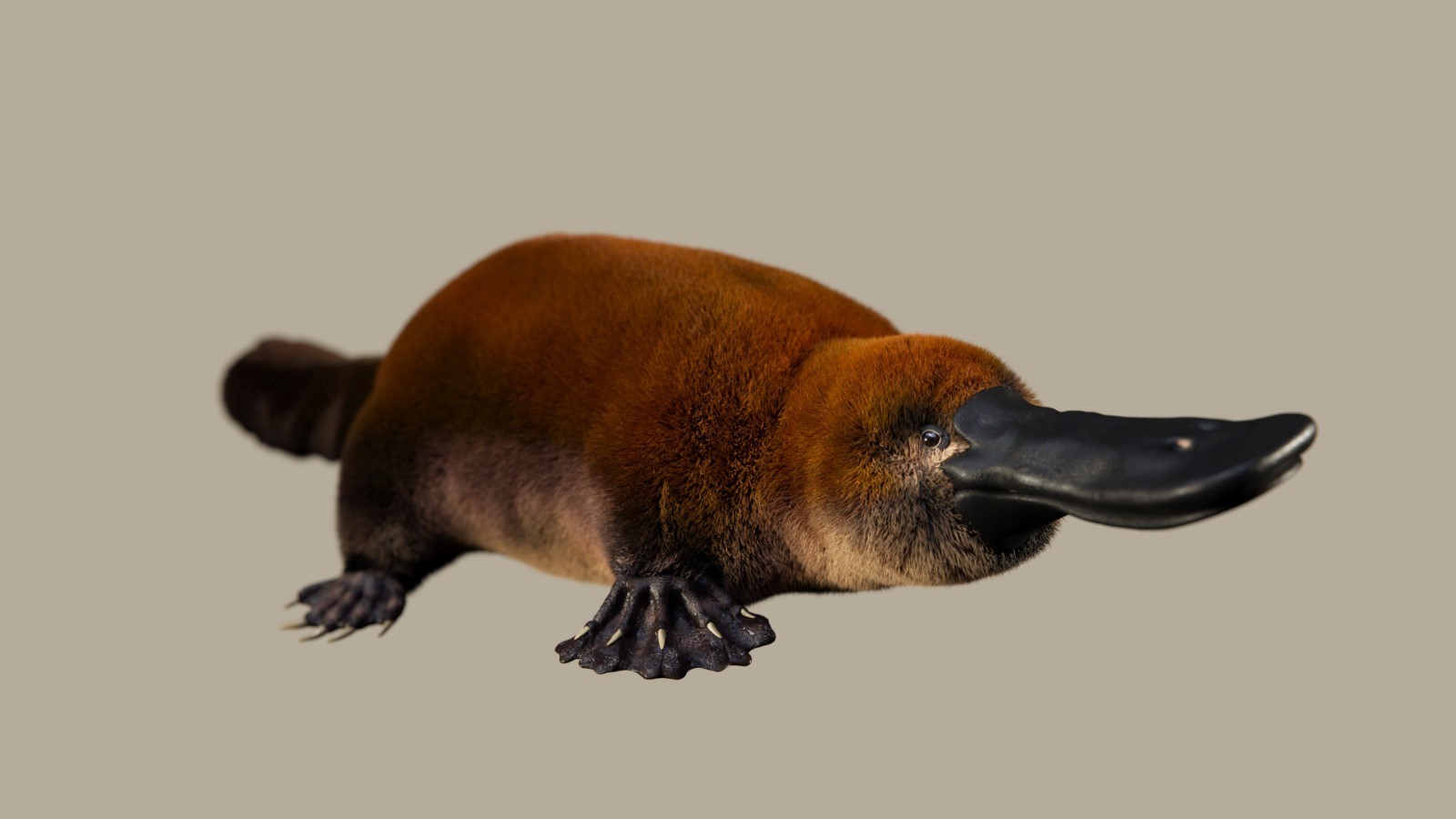
Ancient platypus-like fossil could rewrite the history of egg-laying mammals
LiveScience has a story about an platypus-like animal from… South America. Patagorhynchus pascuali lived about 70 million years ago in what is now Argentina. It’s was a monotreme, which is an egg laying mammal like Australia’s platypus. This fossil represents the oldest evidence of egg laying mammals ever found in South America. This fossil was…

