Tag: K-Pg
-
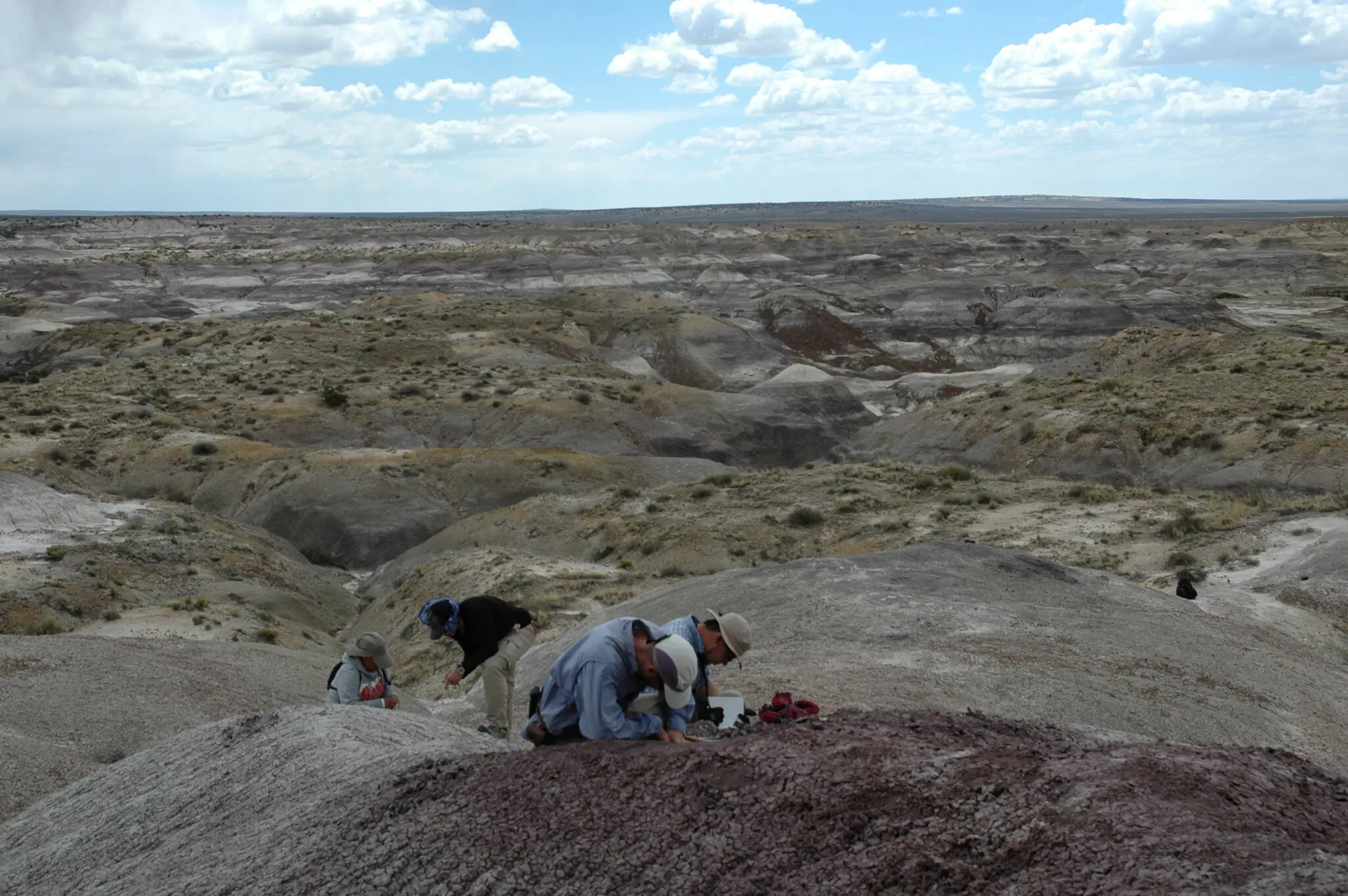
Fossils of Some of the Last Dinosaurs in North America Have a Story to Tell
The New York Times “Trilobites” column has a story about the extinction of the non-avian dinosaurs some 66 million years ago. A long standing question about the extinction has been whether the age of dinosaurs came to a sudden end or were dinosaurs in decline when the asteroid struck the Yucatan Peninsula. The diversity of…
-

PBS Eons: Could You Survive the K-Pg Extinction?
PBS Eons has another of their longer form videos which address major events in the history of the Earth. This one is about the K-Pg mass extinction event about 66 million years ago at the end of the Cretaceous Period. Would/could you survive? Remember, this event took out the non-avian dinosaurs, the ammonites, and many,…
-
PBS Eons: How (Some) Plants Survived The K-Pg Extinction
PBS Eons has a new video over on Youtube. This one is about Angiosperm plants and how many of them survived the K-Pg mass extinction. Perhaps for plants in times of great stress and ecological upheaval, the more DNA the better. Thanks to Franz Anthony (https://franzanth.com) for the incredible reconstruction of plants in the aftermath…
-
Dino death due to volcano-asteroid double whammy
EarthSky has a story about the K-Pg mass extinction. The Big Five Mass Extinctions all involved multiple events or conditions to bring about the destruction they wrought. Volcanoes were usually a part of it. A recent paper in the journal Proceedings of the National Academy of Sciences proposes that it was both the flood basalt…
-

Scientists shine light on 66-million-year-old meteorite wildfire mystery
Phys.org has a story about the K-Pg mass extinction event. It’s well established science that a meteorite struck the Yucatan peninsula about 66 million years ago. An event that brought about the extinction of the non-avian dinosaurs, pterosaurs, ammonites, and many other animals that lived alongside them. There have been many theories and debates about…
-
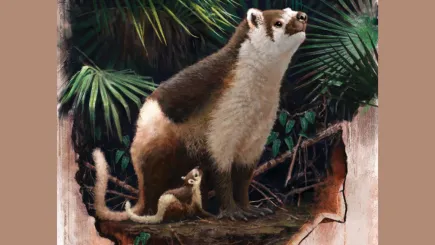
Living fast may have helped mammals like ‘ManBearPig’ dominate
Science News has a story about early mammals. A mammal nicknamed the ManBearPig” that emerged after the K-Pg mass extinction may help explain how mammals came do dominate the world when the dinosaurs disappeared. The animal was described in a recent paper in the journal Nature. During the age of the dinosaurs, mammals “only got…
-
How the dinosaur extinction changed plant evolution
Phys.org has a story about plant evolution after the K-Pg mass extinction. Mass extinction always have irreversible effects on the evolution of life on Earth. The end Cretaceous extinction took out about 75% of species, including non-avian dinosaurs, pterosaurs, ammonites, and other countless others. The Plant Kingdom isn’t always discussed, but it suffered heavy losses,…
-

Tanis: Fossil of dinosaur killed in asteroid strike found, scientists claim
Artwork: The thinking is that a water surge buried all the creatures at Tanis The BBC has an article about a fossil site that preserves a snapshot of what may have been the last day of the non-avian dinosaurs. Nicknamed Tanis and located in North Dakota, the site has fossils of exquisite detail that are…
-
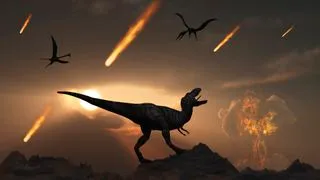
How did cockroaches survive the dino-killing asteroid strike?
Live Science has an article that discusses the heartiness of roaches. Three quarters of all plant and animal species went extinct after the meteor struck Chicxulub at the end of the Cretaceous Period, how is that roaches made it through the extinction that followed? When the rock now known as the Chicxulub impactor plummeted from outer space…
-
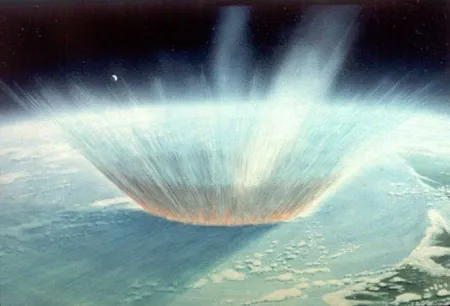
CBC Quirks and Quarks: Darkness doomed the dinosaurs
The CBC Radio show/Podcast Quirks and Quarks has a segment entitled “Darkness doomed the dinosaurs — the extinction asteroid turned out the lights on Earth”. They speak with Peter Roopnarine from the California Academy of Sciences about the after effects of the meteor strike that took out the non-avian dinosaurs at the end of the Cretaceous.…
-

How did birds survive the dinosaur-killing asteroid?
Live Science has a story about the survival of the birds across the K-Pg boundary. A paper in the journal Science Advances looks at brain size of a fossil birds and theorizes that was a factor that helped them survive. When the dinosaur-killing asteroid collided with Earth about 66 million years ago, it triggered a…
-
ScienceMag: Giant tsunami from dino-killing asteroid impact revealed in fossilized ‘megaripples’
Science Magazine has a piece about some “megaripples” found in central Louisiana. These fossilized trace fossils are thought to be from the tsunami caused by the meteor which brought about the KPg mass extinction at the end of the Cretaceous Period about 66 million years ago. A new paper in the journal Earth and Planetary…
-

NPR: Dinosaur-Killing Impact Came From Edge Of Solar System, New Theory Suggests
NPR has a story about the extinction of the non-avian dinosaurs. New research from Harvard University proposes that a comet and not a meteor impacted in the Yucatan peninsula. The research is detailed in a paper that was published in the journal Scientific Reports. For decades, the prevailing theory about the extinction of the…
-
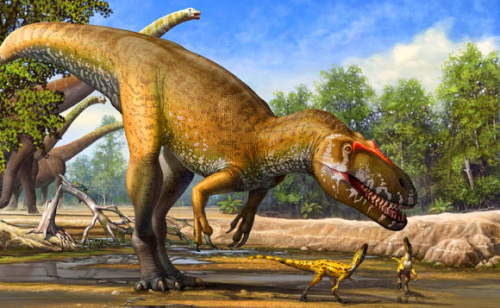
SciNews: Non-Avian Dinosaurs Were Not in Decline Prior to Their Extinction
SciNews has a story about the extinction of the dinosaurs. One long controversial point around the K-Pg mass extinction, which took out the non-avian dinosaurs about 65 million years ago, has been whether their diversity was in decline before the meteor struck in Chicxulub. This is often sited in arguments about whether the volcanic…
-
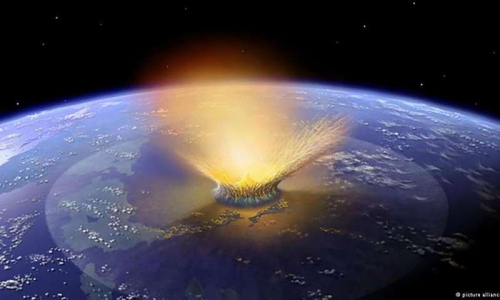
Phys.org: New evidence suggests it was matter ejected from the Chicxulub crater that led to impact winter
Phys.org has a story on new research about the extinction of the non-avian dinosaurs. Since it’s discovery 40 years ago by Walter and Luis Alvarez, this mass extinction, which occurred approximately 66 million years ago, has been a source for much research. The cause is generally thought to be the large meteor that struck the…
-
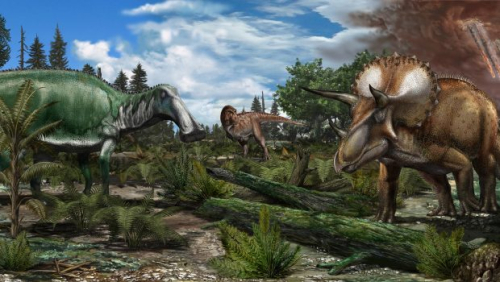
Palaeocast Episode 112: Extinction of the dinosaurs
Palaeocast has an episode on the extinction of the dinosaurs. The episode is an interview with Dr Alessandro Chiarenza about some very thorough analysis that compares the Chicxulub asteroid event with the volcanic eruptions at the Deccan Traps. The paper detailing this analysis can be found in the journal Proceedings of the National Academy of…
-

Quanta: A Rapid End Strikes the Dinosaur Extinction Debate
Quanta Magazine has an interesting piece about the extinction of the dinosaurs. The article is an interview with Yale Paleontologist Pincelli Hull. Her principle sub-field of study is marine plankton fossils. In the interview, she discusses some new evidence that the full blame for the K-T extinction lies with the asteroid that struck the Yucatan…
-

Roy Plotnick: Existence Locates a Path
Roy Plotnick has a new post over on Medium. The post is about extinction… mass extinction. We have a roll in the current and a past extinction. Time for action! Mass extinctions and their causes are topics of intense interest. Nearly forty years after the 1980 paper on the end-Cretaceous impact, significant new research on…
-
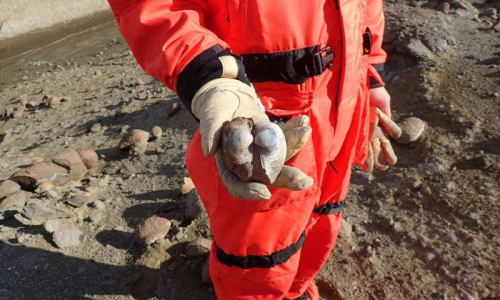
Earth was stressed before dinosaur extinction
Phys.org has an interesting story about the extinction of the dinosaurs. A new study, led by researchers from Northwestern University, shows that the chemistry of fossilized clam and snail shells changed greatly in the years leading up to the K-Pg mass extinction event. This change is likely due to a large influx of carbon into…
-

The Dinosaur-Killing Asteroid Acidified the Ocean in a Flash
New York Times has a story about the K-Pg mass extinction event. A recently published paper in The Proceedings of the National Academy of Sciences finds that the meteor at the end of the Cretaceous had an immediate and catastrophic effect on the ocean. What happened to the dinosaurs when an asteroid about six miles wide struck…
-

The Forgotten Paleontologist: A Commentary by Keith Robitschek
The discovery: Paleontological events are based on theory and evidence is required to prove that an event actually occurred. Today, the event that occurred sixty-six million years ago at the Yucatan peninsula has been proven through scientific research based on core samples at the impact site and iridium analyses in the K-Pg boundary that was…
-
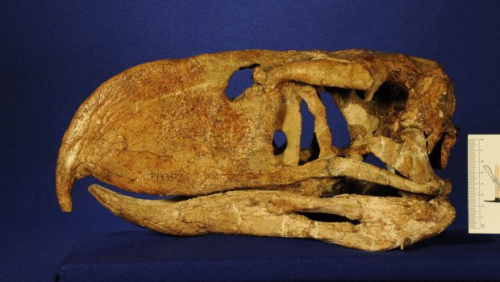
Palaeocast Episode 103: Terror birds
A new episode of Palaeocast is out. This one is about Terror birds. These are large flightless birds that evolved after the K-Pg extinction event. They originated in South America and migrated up to North America when the Isthmus of Panama formed almost 3 million years ago. Personally, I’ve always found these animals fascinating! Terror…
-

Mammals and their relatives thrived, diversified during so-called ‘Age of Dinosaurs’
Phys.org has an article about Mammals during the “Age of Dinosaurs”. In a paper in Trends & Evolution, a review paper summarizes the latest fossil evidence of the state of Mammals and their relatives during the Jurassic and Cretaceous periods. It seems that Mammals were flourishing and experienced a couple ecological radiations during this time.…
-
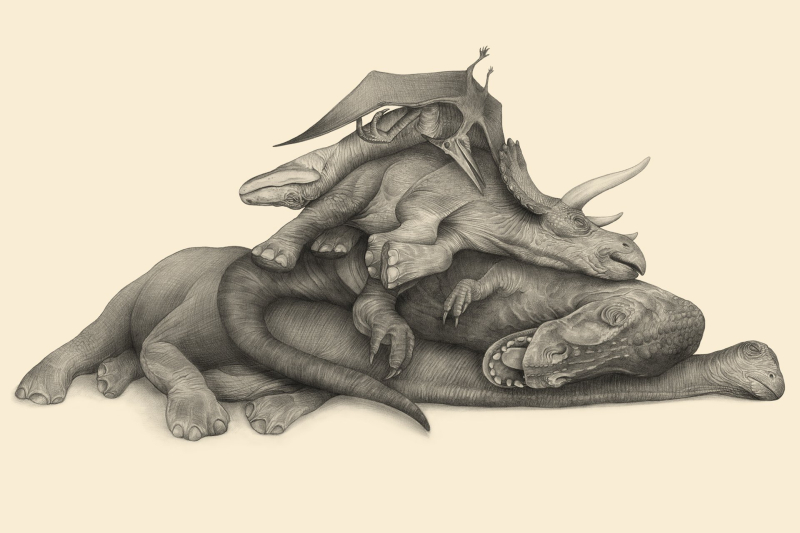
The Nastiest Feud in Science
The Atlantic has an article about Gerta Keller and her differences with the consensus view on the causes of the K-Pg mass extinction. It’s a good read, but there are some errors. Gerta’s position is that the meteor strike was just a bit player in the whole event. There are many good books on either…

