Tag: geology
-

Roy Plotnick: Exploring Chicago’s Geoheritage
Roy Plotnick has a new post over on Medium. This one is about the Chicago’s rich geological history. There is a list of significant sites near Chicago that can be visited easily… even during a pandemic. I recently participated in a workshop on America’s Geoheritage. What is geoheritage? One definition is that this an area with…
-
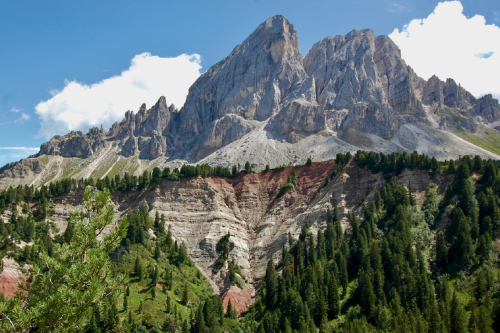
NYT: Burning Fossil Fuels Helped Drive Earth’s Most Massive Extinction
The New York Times Trilobites column has a story about the Permian Mass Extinction event. A paper published in the journal Geology adds more evidence to the theory that this mass extinction was driven by volcanic eruptions through ancient oil and coal deposits in Siberia. The study looked at chemical traces in the rocks in…
-
Mazon Monday #34: Pit 14
This is Mazon Monday post #34. What’s your favorite Mazon Creek fossil? Tell us at email:esconi.info@gmail.com. The Mazon Creek fossil deposits consists of numerous different localities. These localities are the Mazon River, which has been collected since at least the 1850’s (and probably earlier) to the shaft mines, which date to the late 1800’s and…
-
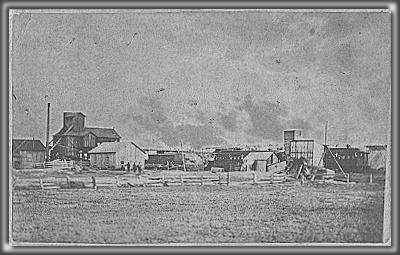
Mazon Monday #30: The Diamond Mine Disaster At Braidwood
This is Mazon Monday post #30. What’s your favorite Mazon Creek fossil? Tell us at email:esconi.info@gmail.com. This week’s Mazon Monday isn’t about fossils… we are recalling a coal mine disaster in Diamond, IL on February 16th, 1883. ESCONI had a great lecture about this event back in June 2019 by Michele Micetich, of the Carbon Hill…
-

‘Giant impact’ theory of moon’s formation gets another boost
Space.com has a story about the formation of the moon. A recent paper in the journal Proceedings of the National Academy of Scieces lends more evidence for the “Giant-Impact Hypothesis” of the creation of the moon. Scientists have found fresh evidence in lunar rocks showing that the moon was likely formed after a Mars-sized planet crashed into…
-
Sand: What’s It Really Made Of?
Gimlet’s podcast “Every Little Thing” has an interesting episode about sand… what it is and where it comes from. Caller Hank wants to know where the sand on his central California beach came from. ELT gets the surprising scoop on how beaches are born. Guest: Kiki Patsch, California State University Channel Islands. Special thanks to Gary…
-
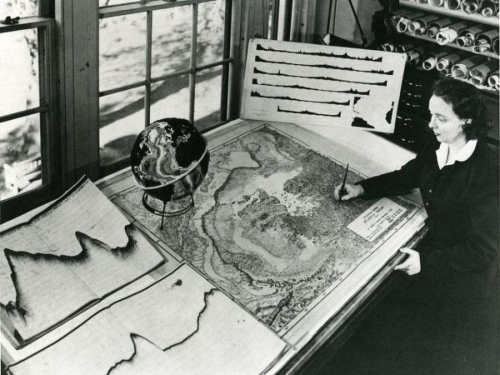
How Marie Tharp Changed Geology Forever
Forbes has a story about Marie Tharp and her contributions to geology. During the International Geophysical Year 1857, Marie Tharp noticed a series of valleys and ridges in the middle Atlantic Ocean. These “lines” are essentially the mark of the sea floor spreading at the tectonic plate boundary, although at the time, the concept of…
-
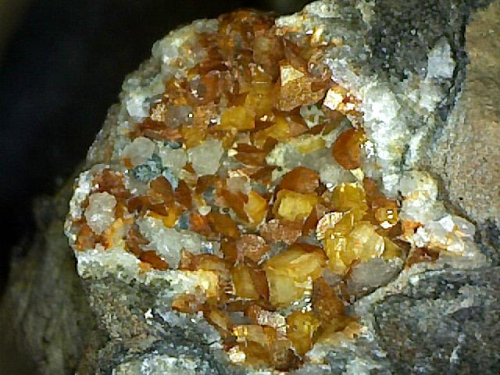
Crystals from the Maquoketa Formation
Unfortunately, we don’t have enough mineral posts, but here’s one from ESCONI VP Dave Carlson about crystals in the Maquoketa Formation. If any has an article or information they’d like to contribute, please send us an email at esconi.info@gmail.com. I wanted to share pictures of some crystals found over the years at the Vulcan DeKalb…
-

PBS Eons: The World Before Plate Tectonics
There’s a new episode of PBS Eons. This one is about plate tectonics and how they got started. Ever hear of super continent Nuna? The video of plate movement is very cool! There was a time in Earth’s history that was so stable, geologists once called it the Boring Billion. But the fact is,…
-

Discovery of ancient super-eruptions indicates the Yellowstone hotspot may be waning
From the “Maybe Some Good News Department”, phys.org has an article about the hot spot under Yellowstone National Park. This paper, from the journal Geology, looked at past Yellowstone eruptions of the super volcano to assess trends and found that the interval and the intensity of eruptions have been decreasing. Throughout Earth’s long history, volcanic…
-
PBS Eons: When a Billion Years Disappeared
PBS Eons has a new episode on the Great Unconformity, which is a massive gap in sedimentary rocks worldwide. This event might help to explain what brought about the evolution of biomineralization… think bones, teeth, shells, etc. In some places, the rocks below the Great Unconformity are about 1.2 billion years older than those…
-

Roy Plotnick: Looking back, looking forward: Chicago and the Anthropocene
Our friend, Roy Plotnick has a new article over on Medium. This one is a summary of the changes to the natural geology of Chicago from the last ice age about 20,000 years ago until the present. As always, it’s a good read! About 20,000 years ago, where I am sitting in Chicago was covered…
-
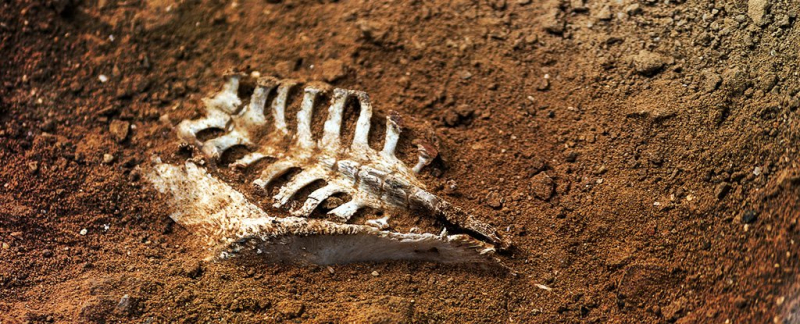
Scientists Argue a ‘Corpse Signal’ Will Be Left in The Fossil Record of Our Time
Science Alert has an interesting story about whether humans will leave a signature in the fossil record. We have had a huge impact on the current direction of life on Earth, but will any of that impact be preserved in the fossil record… that is subject to much debate. Today, the vast majority of scientists…
-
PBS Eons: That Time the Mediterranean Sea Disappeared
PBS Eons has a new episode. This one combines paleontology and geology to discuss the history of the Mediterranean Sea. How could a body of water as big as the Mediterranean just…disappear? It would take decades and more than 1,000 research studies to even start to figure out the cause — or causes —…
-
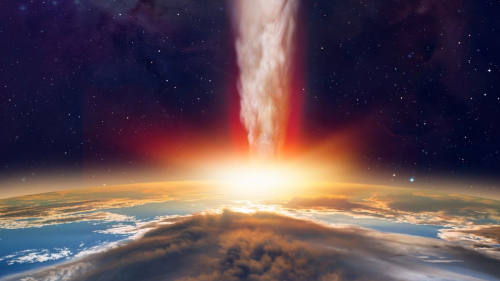
800,000 Years Ago, a Meteor Slammed Into Earth. Scientists Just Found the Crater
LiveScience has a story about a century long search to find a meteor crater. About 790,000 years ago, a meteor hit the Earth and spread tektites, shiny black lumps of rock, over about 10% of the surface of the planet. The tektites were found from Indonesia to eastern Antarctica and from the Indian Ocean to…
-
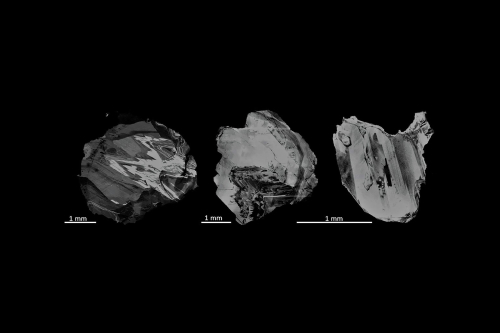
Reminder: ESCONI January 2020 General Meeting Michelle Wenz – “Earth’s Inner Workings Revealed through Mineral Inclusions in Diamond” on January 10, 2020
Electron microscope images of diamonds from the Juína area of Brazil.Credit…Suzette Timmerman The speaker at our January 10, 2020 meeting will be Michelle Wenz, a PhD student from Northwestern University. The title of her talk is “Earth’s Inner Workings Revealed through Mineral Inclusions in Diamond”. She is working on an suite of superdeep diamonds from…
-
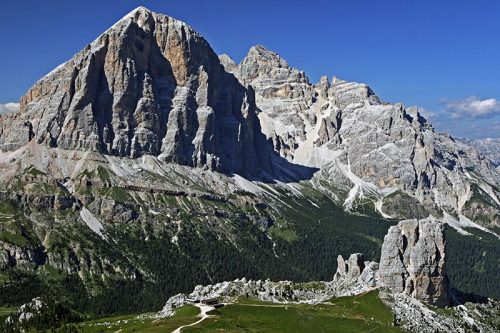
Did a million years of rain jump-start dinosaur evolution?
Nature has an interesting post about a spell of wet weather in the middle Triassic that may have spurred the evolution of the dinosaurs. This wet spell occurred for about a million years about 232 million years ago. The evidence for the very wet period (pluvial episode) is contained in Triassic rocks from the Carnian…
-
We Could Be Witnessing the Death of a Tectonic Plate, Says Earth Scientist
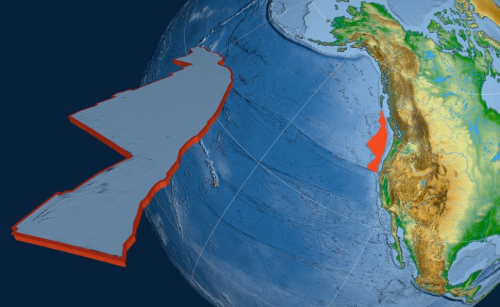
Live Science has a story about the tectonic plates along the West Coast of the United States. The plate named Juan de Fuca (pronounced “wahn de fyoo-kuh”), which is about the size of Michigan, has a large tear. The plate is located off the coast of Northern California extending north past Oregon, Washington, up to…
-

Roy Plotnick: Who knows where the time flows?
Roy Plotnick has a new post over on Medium. The topic is clear representation of data. Whether the topic is geology, chemistry, physics, or economics, it’s important to present data clearly and during a presentation or paper to describe it for all to understand. When I was a graduate student, my fellow student Anne Raymond…
-

Phys.org: New way to date rocks
Phys.org has a post about a new way to date rocks. Scientists at the University of Queensland have developed a way to date rocks by analyzing a silicate mineral known as garnet. The method is detailed in a paper which appeared in the Journal GSA Bulletin. A new way to date a common mineral could…
-
Letters From Gondwana: The Great Female Scientists of the Victorian Era
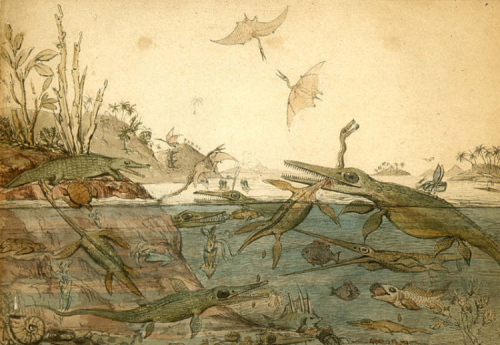
The blog Letters From Gondwana has a great post about the great female scientists of the Victorian Era. Of course, there’s Mary Anning and the Philpot sisters. Also included are Barbara Hastings, Etheldred Bennet, Mary Buckland née Morland, Charlotte Murchinson, Elizabeth Cobbold, Mary Buckland née Morland, Charlotte Murchinson, Mary Sommerville, Jane Marcet, Delvalle Lowry, and…
-
ScienceMag: Geologists uncover history of lost continent buried beneath Europe
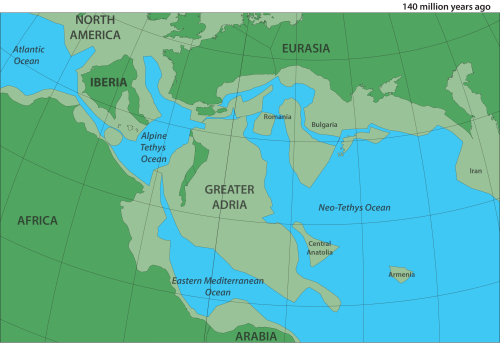
Science Magazine has a piece about the discovery of a lost continent under Europe. Plate tectonics has done much to reshape the surface of our planet over the last 4+ billion of years. It has created and destroyed super continents multiple time. And, most likely, it has erased large landmasses in the process of remolding…
-
PBS Eons: How Volcanoes Froze the Earth (Twice)
PBS Eons has a new episode. This one is about Snowball Earth, which is the theory that the whole earth was covered by ice. This happened at least twice in the last 700 million years. Over 600 million years ago, sheets of ice coated our planet on both land and sea. How did this…
-
Roy Plotnick: I’m not lying
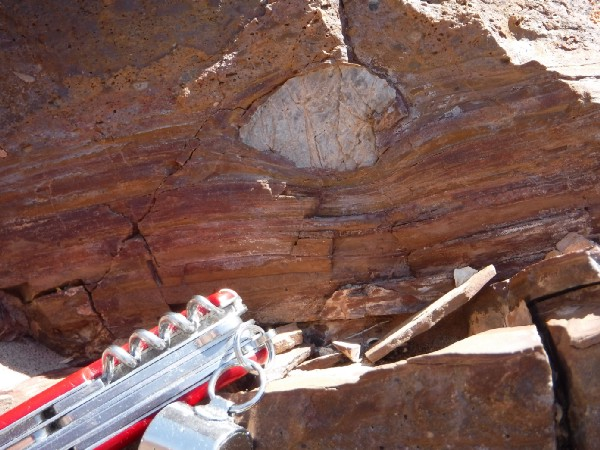
Roy Plotnick has yet another insightful blog post over on Medium. Take his advice, get out and experience nature first hand! I began teaching physical geology in Fall 1982. Like all other instructors of this type of course, I would discuss a wide variety of landforms and show textbook provided slides (you know, pieces of…
-
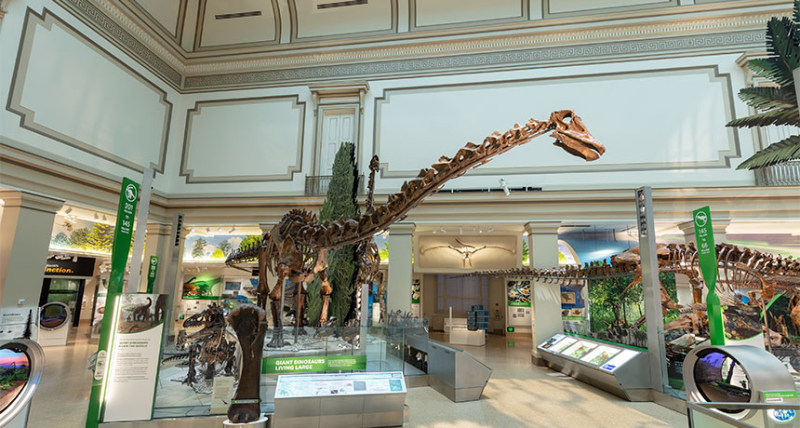
ScienceNews: The Smithsonian’s ‘Deep Time’ exhibit gives dinosaurs new life, Reopens today, June 8th, 2019!
ScienceNews has an article about the reopening of the dinosaur hall at the Smithsonian National Museum of Natural History in Washington, D.C. Today, June 8th, 2019 is the long awaited day. It’s called the “David H. Koch Hall of Fossils – Deep Time“. The renovations have taken 5 years to complete. The exhibit starts with…
-
Reminder: ESCONI General Meeting on April 12th, 2019 – “Geology of the Illinois Valley”
The speaker at our April meeting will be Mike Phillips, Geology Professor at Illinois Valley Community College in Oglesby, IL. The title of his program is "Geology of the Illinois Valley".
-
ESCONI General Meeting on April 12th, 2019 – “Geology of the Illinois Valley”
The speaker at our April meeting will be Mike Phillips, Geology Professor at Illinois Valley Community College in Oglesby, IL. The title of his program is “Geology of the Illinois Valley”.
-
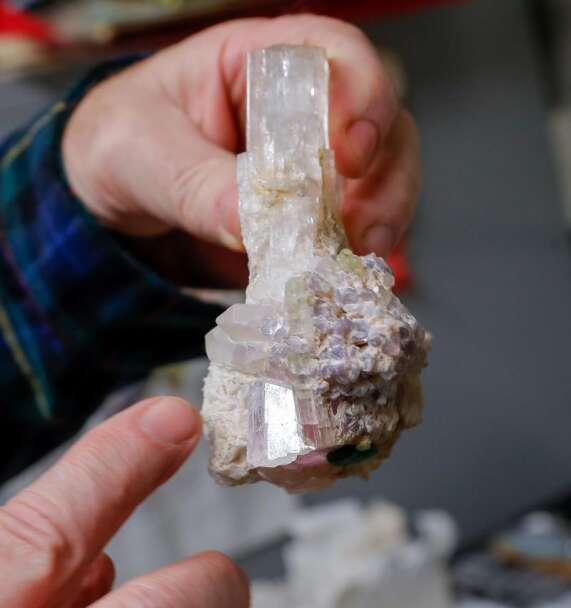
DH: Wheaton College is selling rocks in April. For departing geology professor, it’s a test of time
The DailyHerald has a story about Wheaton College’s Annual Rock Sale held this year on April 6th, 2019. For retired geology professor Jeff Greenberg, it’s his “swan song” from academia. When you think of Wheaton College, here’s what probably doesn’t come to mind: the geology department’s rock and mineral collection. In the lower level of…
-
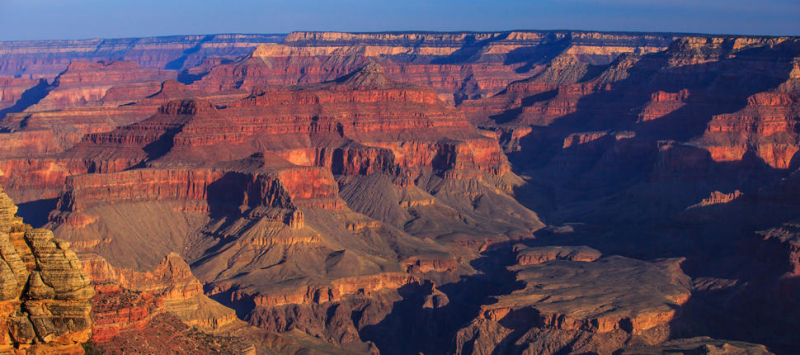
Happy 100th Birthday – Grand Canyon National Park!
The Grand Canyon National Park is 100 years old today. There’s many posts out on the internet. Here are a few… NPR, CNN, Fortune, and Outside Magazine. On February 26, 2019, the Grand Canyon celebrates 100 years since it’s designation as a national park. A UNESCO World Heritage Site, Grand Canyon welcomes approximately six million…
-
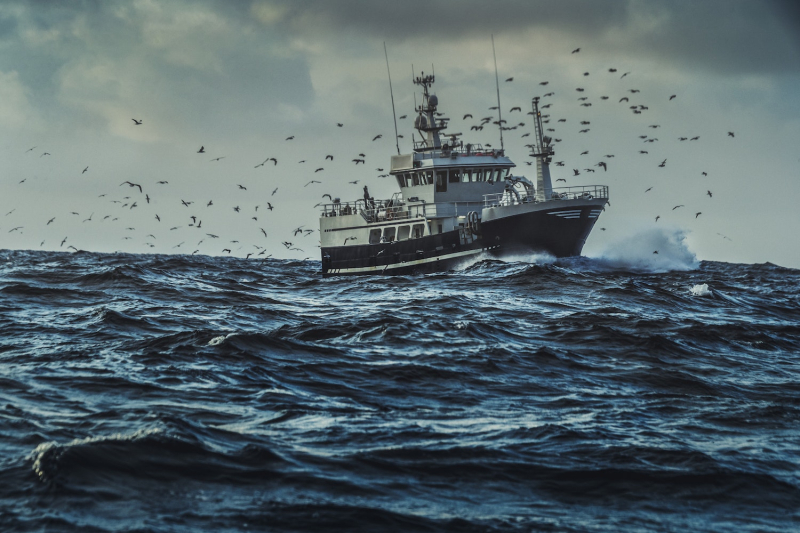
Geophysicists propose new theory to explain origin of water
Cosmos Magazine has an article about the origin of Earth’s water. A paper in the Journal of Geophysical Research: Planets challenges the widely-accepted ideas – maybe it didn’t come from an asteroid impact. Earth’s water may not have originated solely from material carried by asteroids, according to new US research. A study in the Journal…
