Tag: genetics
-
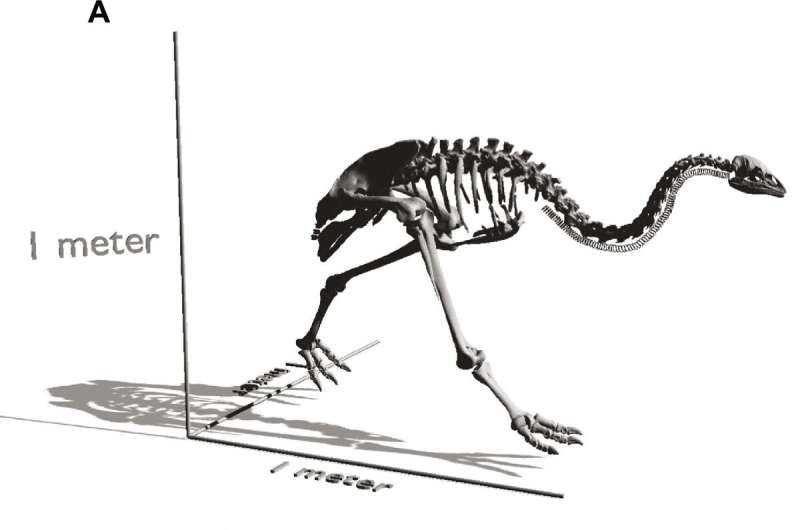
Researchers reconstruct genome of extinct species of flightless bird that once roamed the islands of New Zealand
Phys.org has a story about an extinct flightless bird from New Zealand. The genome of Anomalopteryx didiformis, the little bush moa, has been sequenced by a team of researchers that included scientists from Harvard University, the Max Planck Institute for Biological Intelligence, East Carolina University, Osaka University and the University of Toronto. A. didiformis went…
-
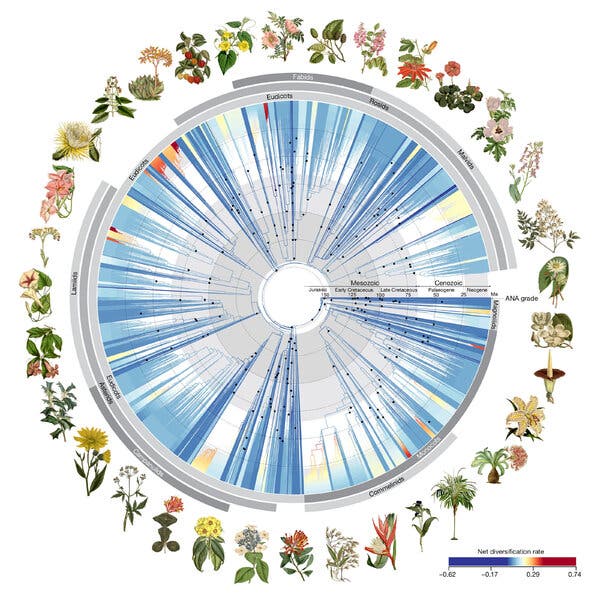
A New Tree of Flowering Plants? For Spring? Groundbreaking.
The New York Times’ Trilobites column has a story about work to understand how plants fit into the tree of life. New research detailed in the journal Nature suggests that more than 80% of major plant lineages evolved in a sudden burst during the Jurassic Period some 150 million years ago. This new study used…
-
Zoom Link: ESCONI December 2020 General Meeting – December 4th, 2020 at 8:00 PM via Zoom – “What Genetics Tells Us About the Peopling of the Americas”
The title for our Dec 4th program is “What Genetics Tells Us About the Peopling of the Americas” by Dr. Jennifer Raff, of the University of Kansas. Dr. Raff’s research includes ancient DNA, anthropological genetics, human evolution and population history, migration, bioarchaeology, and scientific literacy. You can find more about her on her page at…
-
ESCONI December 2020 General Meeting – December 4th, 2020 at 8:00 PM via Zoom – “What Genetics Tells Us About the Peopling of the Americas”
The title for our Dec 4th program is “What Genetics Tells Us About the Peopling of the Americas” by Dr. Jennifer Raff, of the University of Kansas. Dr. Raff’s research includes ancient DNA, anthropological genetics, human evolution and population history, migration, bioarchaeology, and scientific literacy. You can find more about her on her page at…
-

Humans Today Have Even More Neanderthal DNA Than We Realised
George Dvorsky Oct 6, 2017, 6:00pm Before this new study, only four Neanderthal specimens have had their genomes sequenced. Of these, only one — an Altai Neanderthal found in Siberia — was of sufficient quality, where scientists were able to accurately flag variations in the genome. The new analysis, enabled by a remarkably well-preserved genome…
