Tag: arthropods
-

125-Million-Year-Old Scorpion Fossil Uncovered in China
SciNews has a story about a 125 million year old scorpion. The amazing fossil was discovered in the Yixian Formation at Heishangou village, Chifeng city, Nei Mongol, China. The fossil animal has been named Jeholia longchengi and dates to the early Cretaceous Period. The paper “First Mesozoic scorpion from China and its ecological implications” was…
-
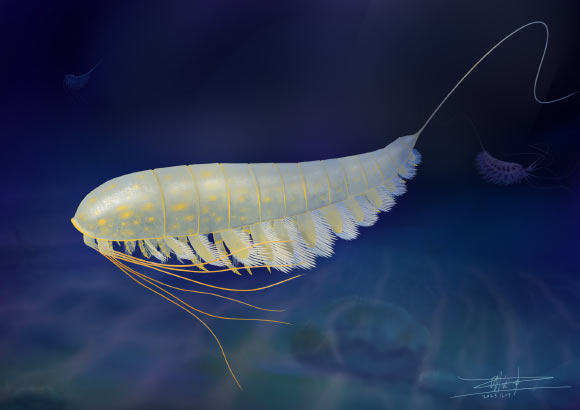
450-Million-Year-Old Fossil Arthropod Found Preserved in Fool’s Gold
SciNews has news of a new species of arthropod from the Ordovician Period. Lomankus edgecombei lived some 450 million years ago in what is now New York. This specimen was found at a fossil locality that includes the famous Beecher’s Trilobite Bed. That locality is known for equisite pyrite replacement fossils. The legs of trilobites…
-

PBS Eons: How Ancient Microbes Rode Bug Bits Out to Sea
PBS Eons has a new episode. This one is about the evolution of microbes and how it might be connected to the evolution of the chiton exoskeletons of arthropods. Tiny exoskeleton fragments may have allowed some of the most important microbes in the planet’s history to set sail out into the open ocean and change…
-
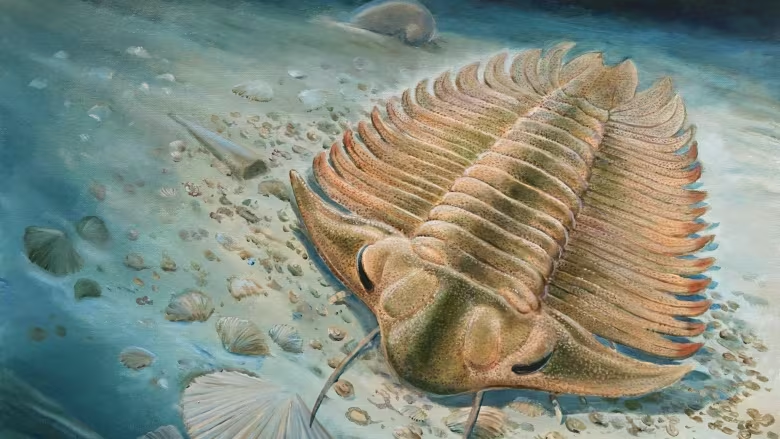
Trilobite Tuesday #46: Trilobite’s last meal
CBC Radio’s Quirks and Quarks show has a segment about a trilobite’s last meal. The trilobite specimen, Bohemolichas incola, was found in a 465 million year old (Ordovician Period) shale deposit. A 465 million year old trilobite fossil with remarkably preserved gut contents reveals for the first time what these extinct arthropods ate. Per Ahlberg, a…
-
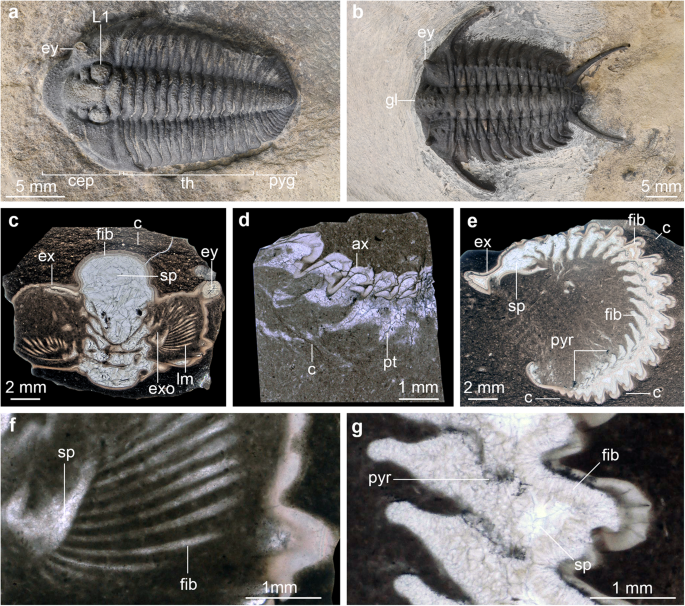
Trilobite Tuesday #45: Taphonomy of non-biomineralized trilobite tissues preserved as calcite casts from the Ordovician Walcott-Rust Quarry, USA
Nature’s journal communication Earth & environment has a paper about the preservation of trilobites in the Wolcott-Rust quarry. The Walcott-Rust quarry was discovered by Charles Wolcott in the 1870’s. It dates to the Ordovician Period and yielded the first known trilobite appendages. This paper details research into the mechanism of the delicate, three dimensional preservation.…
-

Three-eyed distant relative of insects and crustaceans reveals details of early animal evolution
Phys.org has a story about the evolution of insects and crustaceans. Kylinxia zhangi is an early arthropod related to insects and crustaceans. It lived about 520 million years ago during the Cambrian Period. It was part of the famous Chengjiang fossil locality, which is located in the Yunnan Province in southern China. A team…
-
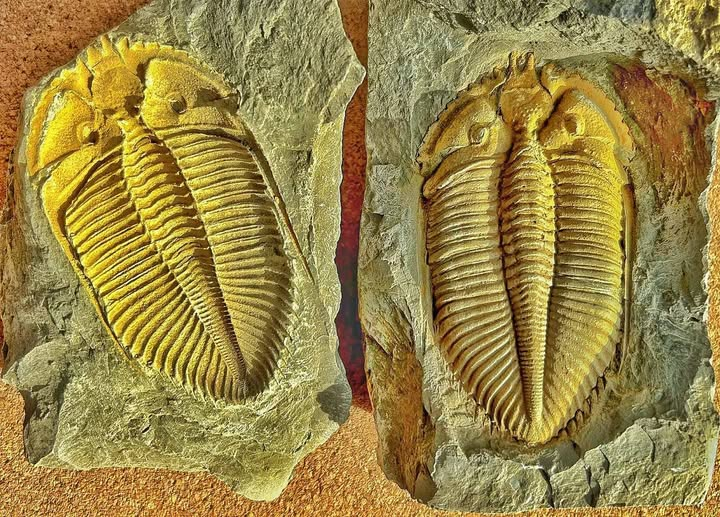
Trilobite Tuesday #44: Trilobite of the Month, August 2023
Sam Ohu Gon III posted some awesome photos for Trilobite of the Month, August 2023 over on Facebook. If you don’t know of Sam’s work, have a look at trilobites.info for everything you ever wanted to know about trilobites!
-
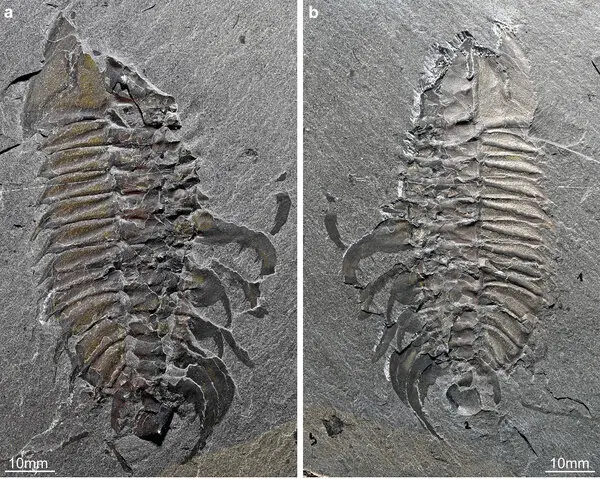
Trilobite Tuesday #39: Before There Were Birds or Bees, This Is How Trilobites Made Babies
The New York Times Trilobites column has a story about trilobite reproduction. Trilobites first show up in the fossil record back in the Cambrian Period, some 500 million years ago. Their closest living relative is most likely the horseshoe crab. Now, a team of paleontologists from Harvard have published a paper in the journal Geology that looks into the…
-
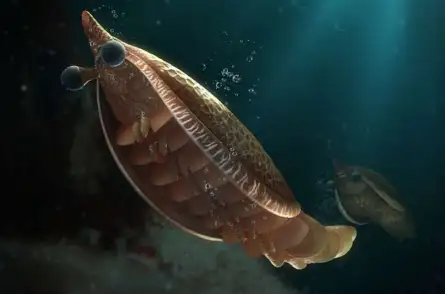
New fossil reveals origin of arthropod breathing system
Phys.org has a story about a new Cambrian arthropod. Erratus sperare was discovered in the Chenjiang Fossil Site in Yunnan, China. That site dates to about 520 million years ago during the Cambrian Period. The researchers were looking for evidence of the evolution of biramous limbs from specialized flaps. In both cases, the limbs are…
-

A Milwaukee Suburb Is Full of Ultrarare Fossils
Hakai Magazine has a story about a special fossil deposit in Waukesha, Wisconsin. The deposit dates to the Ordovician Period about 440 million years ago. It was discovered in 1984 by amateur paleontologists Jerry Gunderson and Ron Meyer. They found fossilized soft tissue why splitting open rocks from a thin layer called the Brandon Bridge…
-

Trilobite Tuesday #33: Some trilobites crushed their prey to death with their legs
The Science News column from the Natural History Museum in London has a story about trilobites. A new paper by Dr. Greg Edgecombe, a researcher at the museum who focuses on the evolutionary history of arthropods, about how some trilobites fed was published in the Royal Society B. Instead of teeth, it appears that these…
-
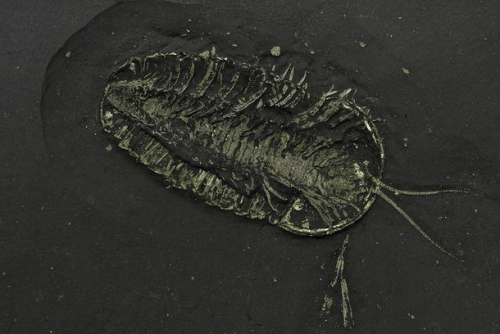
Trilobite Tuesday #31: Sexual Dimorphism / Trilobite Eggs
For many types of animals, there are differences between males and females, sometimes it’s size, sometimes color, and sometimes structure – either or both soft and hard body structures. Unfortunately, color and soft-body structures aren’t usually preserved and even when it’s preserved it doesn’t leave enough information in the fossil record. For size and hard…
-
The Big Hill Lagerstätte
The University of Michigan has an interesting post about a new Lagerstatte, which was discovered in the Upper Peninsula of Michigan back in 2013. This fossil deposit dates to the Silurian Period about 430 million years ago. Over 40 species of animals have been discovered at the locality, including soft bodied animals like Jellyfish.…
-

Trilobite Tuesday #29: Why did trilobites go extinct?
LiveScience has a piece about the extinction of the trilobites. Trilobites existed on Earth for about 270 million years from the early Cambrian until the Permian Mass Extinction. Many organisms went extinct during that time… perhaps upward of 90% of species. But, it’s still an open question that has not been completely answered. During their…
-
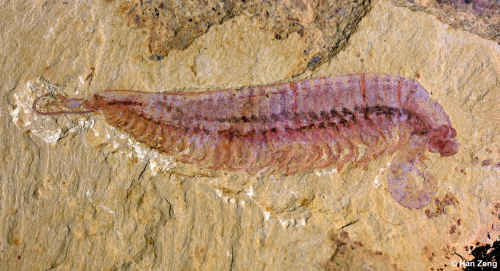
SciTechDaily: Five-Eyed 520-Million-Year-Old Fossil Reveals Arthropod Origin
SciTechDaily has a story about arthropod origins. Researchers from the Nanjing Institute of Geology and Palaeontology of the Chinese Academy of Sciences (NIGPAS) have revealed a new shrimp-like fossil with five eyes. The animal, called Kylinxia, lived about 520 million years ago in what is now China’s Yunnan Province. The paper describing this discovery appeared…
-
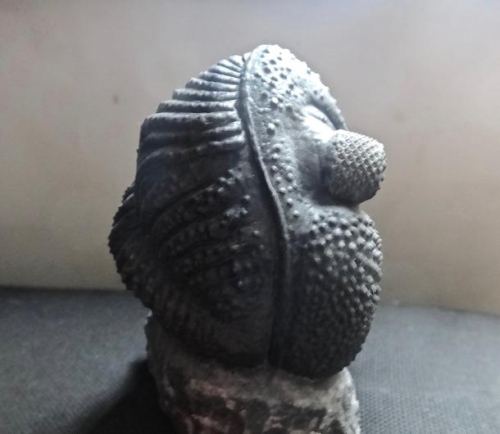
Trilobite Tuesday #26: Trilobite Enrollment
As we’ve said previously, the AMNH has an awesome Trilobite website. Today, we want to highlight the one about Trilobite Enrollment. It is generally accepted that trilobites enrolled to protect themselves from predators and other potentially other events in the surrounding environment. This page has a good discussion about the history and the usefulness of…
-
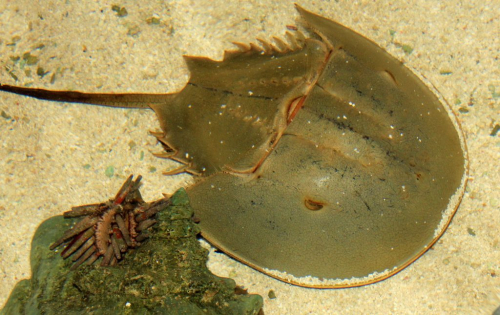
Palaeocast Episode 114: Horseshoe Crabs
There’s a new episode of Palaeocast #114… Horseshoe Crabs. Everything you ever wanted to know about their past and present. The horseshoe crabs (Xiphosura) are a group of large aquatic arthropods known from the East coast of the USA, and the Southern and Eastern coasts of Asia. Despite their name, they are not actually crabs…
-

Trilobite Tuesday #21: Pathology: Bites, Injuries & Healing
The AMNH’s Trilobite Website has a page on trilobite injuries. Over the many years that trilobites existed and considering the many, many fossil specimens that have been (and will be) found, there had to be some with signs of predation. And, of those, there had to be some that got away from the predator. There…
-
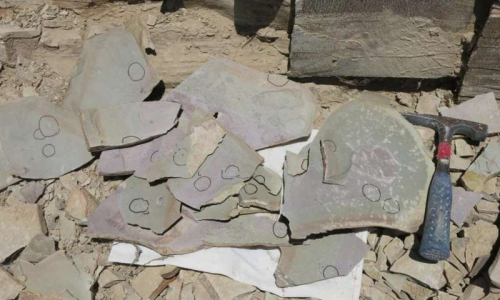
Trilobite Tuesday #16: Growing up trilobite
Phys.org has an article about probably the most common trilobites, Elrathia kingii. The article is about new research that used this trilobite to understand the ontogeny of this iconic species. The research can be found in a paper in the journal Papers in Palaeontology. If you’ve ever held a trilobite fossil, seen one in a…
-

Trilobite Tuesday #13: Trilobite Conga Line
Clues to animal behavior are very rare in the fossil record. However, a Moroccan fossil of 22 small trilobites might provide some of the earliest evidence. These trilobites lived about 480 million years ago. And, their lineup might be a display of complex social behavior long before it was expected. The details appear in a…
-

Laelaps: Strange Fossil Filter Feeder Was an Ancient Survivor
Over on the Laelaps blog on National Geographic, there’s an interesting post about a new Anomalocaridids – “anomalous shrimp”. The group was named originally by Joseph Frederick Whiteaves, because he only had the front appendages. Much later, the rest of the body of the large arthropod was described by Conway Morris and Harry B. Whittington. …
-
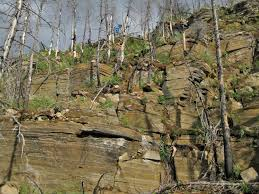
500 million years ago, this critter had a really bad day
The Globe and Mail has a fantastic piece on the newest fossil discoveries of animals that lived during the “Cambian Explosion” in British Columbia. The new locality has been dubbed “Marble Canyon”. It features a slightly different assemblage of animals than what was found in the “Burgess Shale”. The exact location has been kept secret;…
-
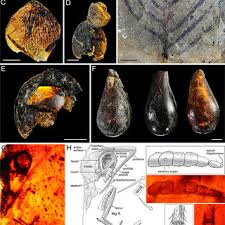
Oldest-ever bugs found preserved in amber
From Discover Magazine: (hat tip Floyd) Three tiny creatures from the Triassic period are the oldest ever to be discovered preserved in amber – about 100 million years older than any other amber arthropod ever collected…. … But even though arthropods are more than 400 million years old, until now the oldest record of the…
