Tag: ants
-

PBS Eons: You’re Living On An Ant Planet
PBS Eons has a new episode over on Youtube. We are all living on an ant world…. How did ants take over the world? Well, it looks like they didn’t achieve world domination all by themselves. They may have just been riding the wave of a totally different evolutionary explosion.
-
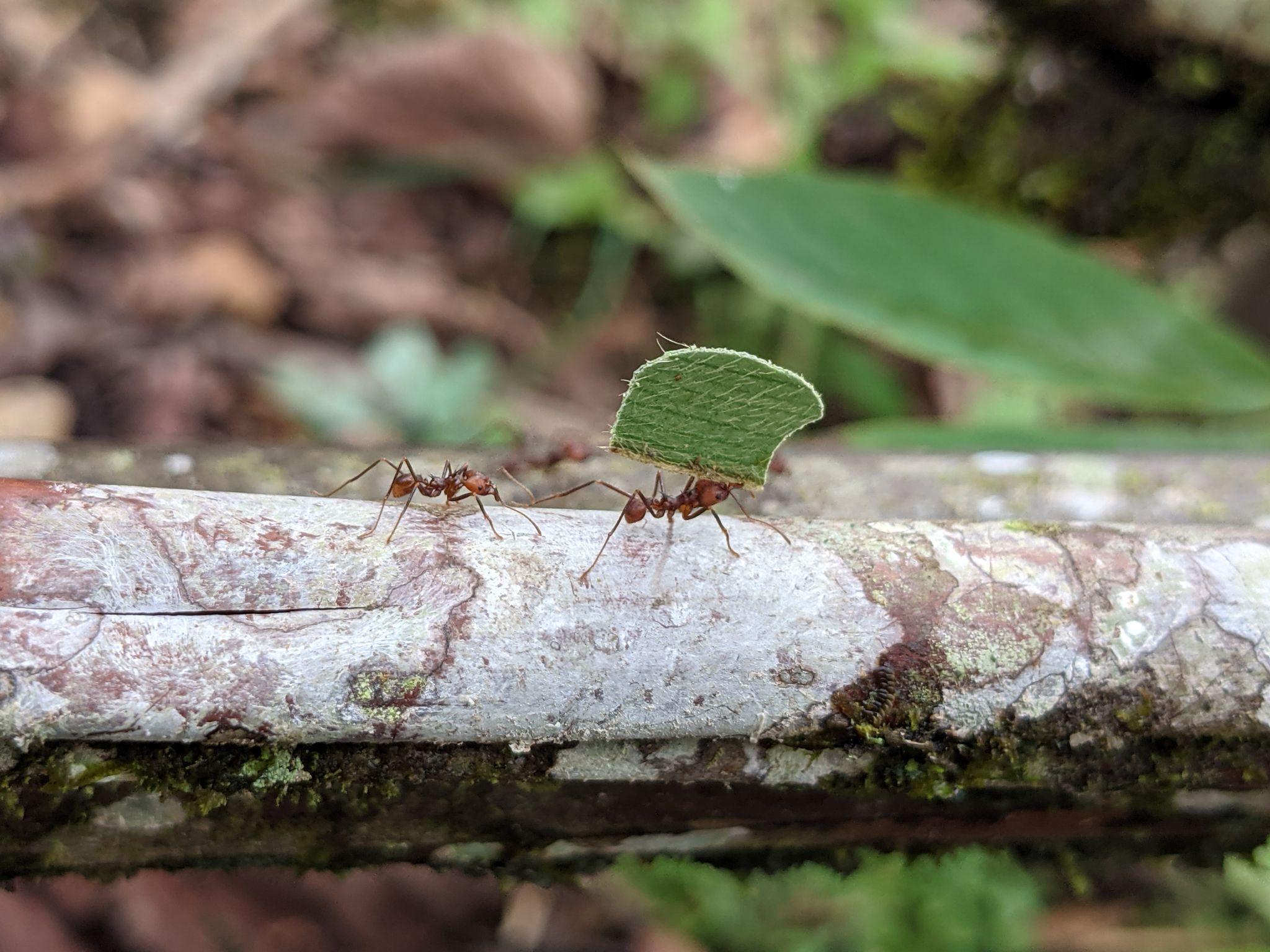
Ants took over the world by following flowering plants out of prehistoric forests
The Field Museum has a press release about research performed at the museum. The research looked at the evolutionary relationship of ants and flowering plants. Ants took advantage of the diversification of flowering plants, which led to the thousands of species of modern ants which exist today. A paper detailing the research can be found…
-
PBS Eons: The Fungi That Turned Ants Into Zombies
PBS Eons has a new episode on Youtube. This one is about a fungus that can control ants. This fungus was actually manipulating ants’ movements, forcing them to do something they’d never ordinarily do, something strange, yet specific…
-

Fossil-finding ants amass huge haul of ancient creatures
National Geographic has a story about tiny fossil collector. The tiny collectors are harvester ants. They uncovered more than 6000 micro fossils as they built their mounds, The micro fossils included small teeth and jaw fragments – all at most a few millimeter wide. These micro fossils are believed to be parts of ten new…
-
PBS Eons: When Ants Domesticated Fungi
There's a new episode of PBS Eons. This one is about one of Earth's first farmers… ants! While we’ve been farming for around 10,000 to 12,000 years, the ancestors of ants have been doing it for around 60 million years. So when, and how, and why did ants start … farming?
-
PBS Eons: The Reign of the Hell Ants
There’s a new episode of PBS Eons. This one is about the Hell Ants… an extinct group of ants that might give us clues about eusociality. This ancient species had the same six legs and segmented body that we’d recognize from an ant today. But it also had a huge, scythe-like jaw and a…
-
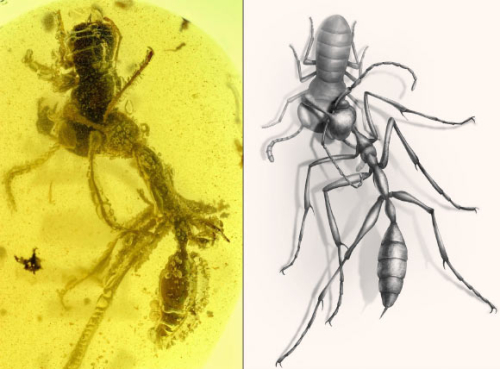
99-Million-Year-Old ‘Hell Ant’ Attack Captured in Amber
SciNews has a story about an interesting ant found in amber. Found in Burma, the “hell ant” (Ceratomyrmex ellenbergeri) lived during the Cretaceious Period about 78 million years ago. The “hell ants” due to their horn-like appendages on their head. Details can be found in a paper in the journal Current Biology. “Fossilized behavior is exceedingly…
